Etsy
Etsy is an online marketplace for handmade goods, vintage items, craft supplies, personalized products, small shops, and creative sellers. Founded in 2005 and headquartered in Brooklyn, it connects buyers looking for distinctive products with millions of independent sellers.
What Etsy is
Etsy is a two-sided online marketplace where sellers open shops on Etsy.com and buyers search for handmade goods, vintage items, craft supplies, personalized products, digital files, gifts, decor, jewelry, clothing, art, and creative materials. Its identity is built around human-made or human-curated commerce rather than standardized retail inventory.
Creative marketplace origins
Etsy was founded in 2005 during the early wave of marketplace and Web 2.0 companies. It gave independent makers a place to sell online without building a full ecommerce site, handling discovery, listings, payments, reviews, and marketplace trust inside one platform.
Shops instead of warehouses
Unlike a traditional retailer, Etsy usually does not own the products listed on its marketplace. Sellers run individual shops, set prices, photograph items, manage production or sourcing, answer customer questions, and ship orders. Etsy supplies the marketplace layer around those small businesses.
Handmade, vintage, and supplies
Etsyโ€s rules center on creative categories: items made by a seller, designed by a seller, handpicked by a seller, or sourced by a seller for buyer creativity. Vintage goods and craft supplies are part of the platform, which means Etsy is not purely handmade even though handmade remains central to its brand.
Search, taste, and discovery
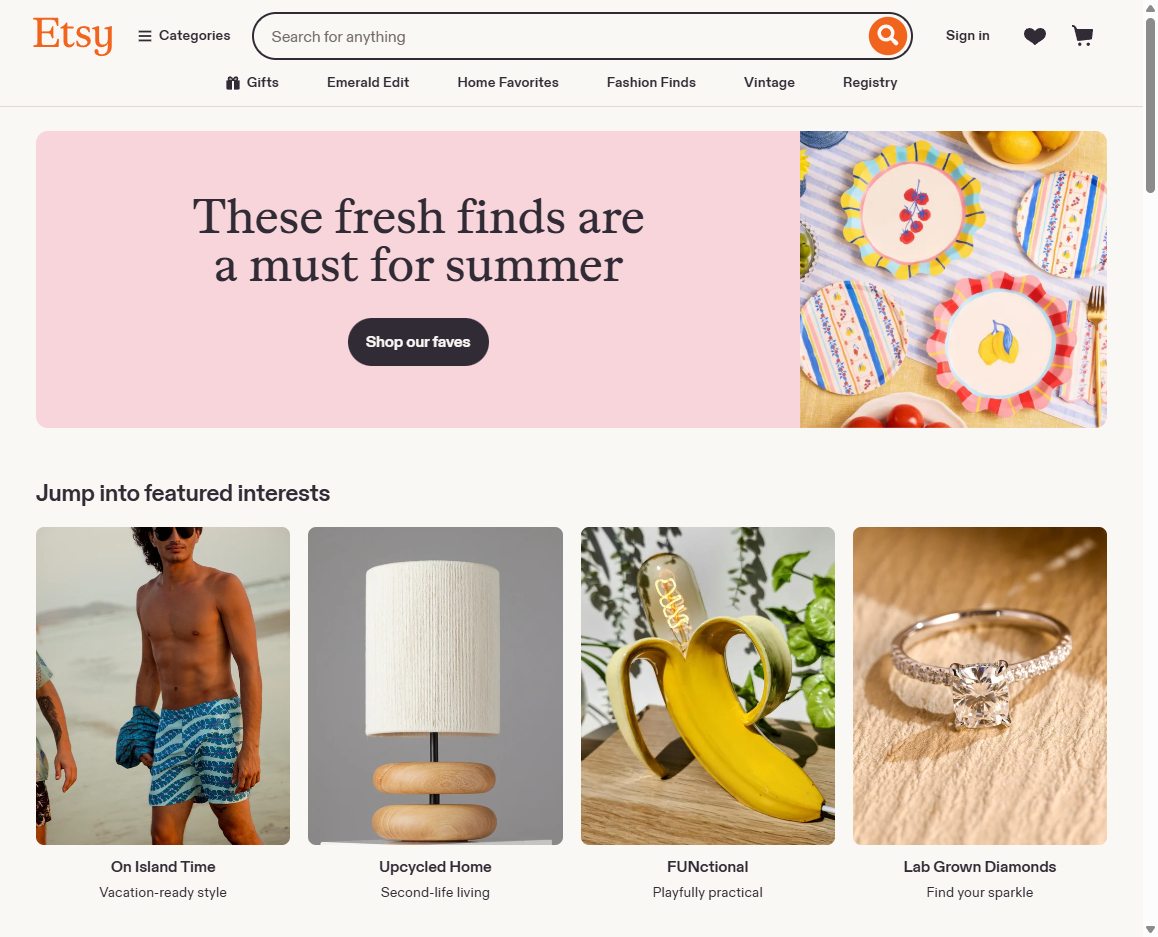
Etsyโ€s shopping experience depends heavily on search, tags, categories, photos, reviews, personalization, and seasonal gift behavior. Buyers often arrive with a mood or occasion rather than a specific product model, so discovery and presentation matter as much as price comparison.
Fees and seller tension
Etsy earns revenue through marketplace fees, payments, advertising, shipping labels, subscriptions, and seller services. Those same tools can create tension when sellers feel squeezed by fees, algorithm changes, advertising pressure, competition from resellers, or policy enforcement that affects what counts as creative work.
Rise and pressure
Etsy rose by giving independent makers and vintage sellers access to a global audience. Its pressure comes from trying to grow like a public ecommerce company while preserving the trust and handmade feel that made it special, especially as buyers compare it with Amazon, eBay, Shopify stores, Pinterest discovery, and social commerce.
Why it matters
Etsy matters because it made small-scale creative commerce visible on the mainstream web. It showed that online shopping could be built around personality, craft, rarity, customization, and seller stories, not only speed, scale, and uniform products.