Instacart
Instacart is an online grocery and retail delivery website and app that lets customers order from local stores for delivery or pickup while giving retailers, shoppers, and brands tools for commerce.
What Instacart is
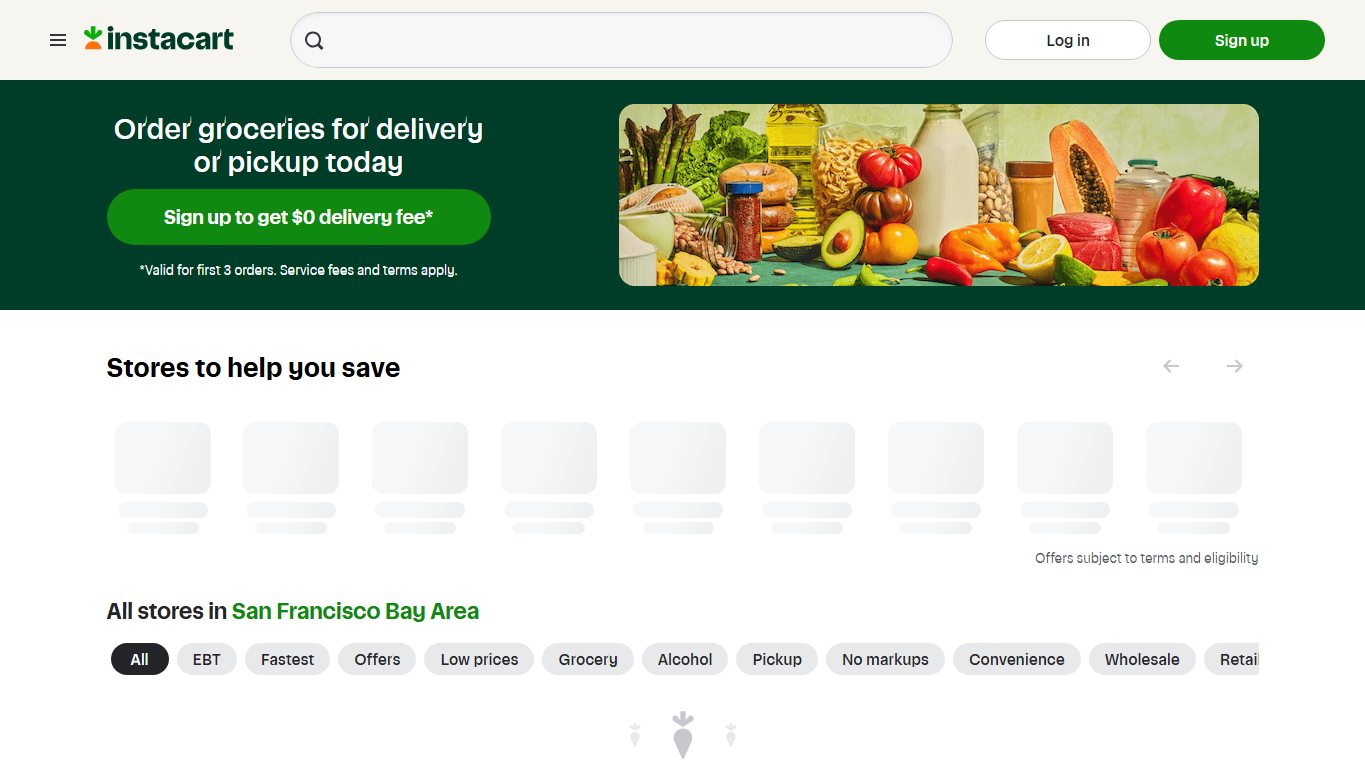
Instacart is an online grocery and retail delivery marketplace. On Instacart, customers can choose a local store, add groceries or everyday items to a cart, and schedule delivery or pickup through the website or mobile app.
How grocery orders work
The basic flow is simple from the customer side, but it involves several parties behind the screen. A customer places an order, a shopper may pick the items in a store, the order is checked out, and the groceries are delivered or prepared for pickup. Availability, fees, substitutions, delivery timing, and pickup options depend on the store, location, inventory, and checkout choices.
For customers
For shoppers at home, Instacart is mainly about convenience and local selection. People can browse stores near them, reorder past items, approve or reject replacements, compare delivery windows, use eligible promotions, and manage grocery trips without visiting every aisle in person.
For shoppers and retailers
Instacart also operates as a work and commerce platform. Shoppers use it to accept and fulfill orders, while retailers use it to offer online ordering, pickup, delivery, digital storefronts, fulfillment support, and customer-facing shopping tools without building every system alone.
Retail technology and ads
The company is broader than a delivery app. Instacart offers retailer technology, advertising products for brands, and store tools such as smart carts under the Caper name. Those products make Instacart part marketplace, part logistics layer, and part retail software provider.
Why it matters
Instacart matters because grocery shopping is frequent, local, time-sensitive, and tightly connected to household routines. Moving that activity online affects how stores reach customers, how brands compete for attention, how delivery work is organized, and how shoppers think about price, convenience, substitution quality, and trust.
Limits and tradeoffs
A grocery marketplace cannot fully control store inventory, product freshness, traffic, shopper availability, building access, or a customer's substitution preferences. Customers still need to review fees, tips, delivery windows, item replacements, retailer prices, refund rules, and membership terms before placing an order.
WHOIS domain data
Data pulled: May 19, 2026View current WHOIS record
- Domain
- instacart.com
- IP address
- 52.85.193.111
- Registrar
- Amazon Registrar, Inc.
- WHOIS server
- whois.registrar.amazon
- Referral URL
- http://registrar.amazon.com
- Created
- October 31, 1996
- Updated
- January 10, 2023
- Expires
- October 30, 2029
- Nameservers
- ns-1394.awsdns-46.org (205.251.197.114); ns-1943.awsdns-50.co.uk (205.251.199.151); ns-132.awsdns-16.com (205.251.192.132); ns-589.awsdns-09.net (205.251.194.77)
- Domain status
- clientDeleteProhibited; clientTransferProhibited; clientUpdateProhibited
- Contact privacy
- Registrant, admin, technical, and billing contacts are redacted; the visible registrant location is CA, US, and the listed contact email is info [at] domain-contact [dot] org.