Yahoo Search
Yahoo Search grew from Yahoo's human-edited web directory, one of the defining ways people found websites in the 1990s. Its history shows the shift from curated directories to algorithmic search, portal strategy, Google competition, Bing-powered results, and newer AI answer-engine experiments.
What Yahoo Search is
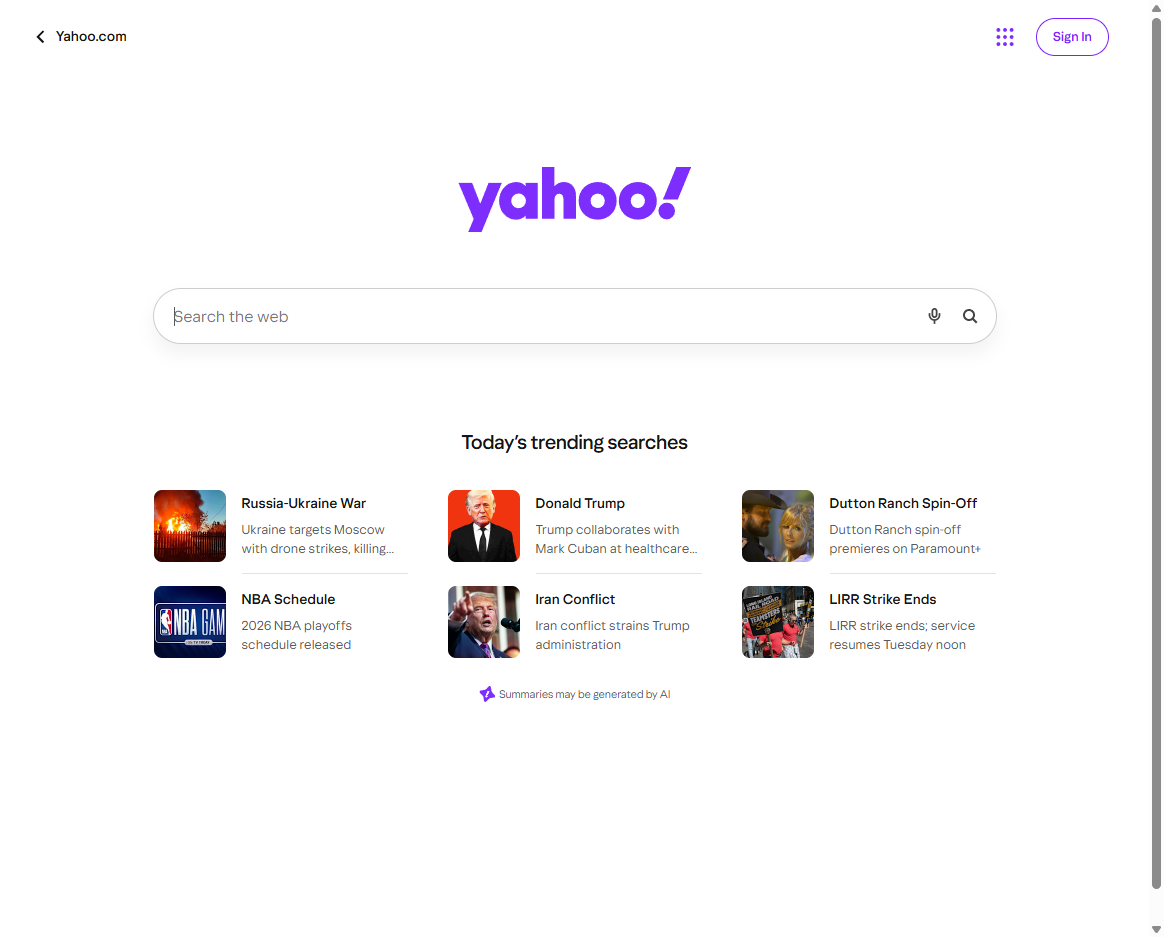
Yahoo Search is Yahoo's search experience, but its history begins with something older than a modern search engine: a hand-organized directory of websites. In the 1990s, Yahoo helped many people enter the web through categories, links, search boxes, news, email, finance, and portal pages.
Directory before algorithm
Jerry Yang and David Filo started Yahoo as a list of useful web links while they were graduate students at Stanford. The early Yahoo Directory organized sites by topic, much like a library shelf or phone book for the web. That human curation was valuable when the web was smaller and people wanted a trusted starting point.
Search as the web grew
As the web expanded, directories could not keep up with every page, update, and niche query. Yahoo added search and relied at different times on internal technology and outside partners. The search box became more important because users increasingly expected to type a few words and find a specific page, not browse down a category tree.
Portal power
Yahoo's strength was not only search. It became a portal: a daily destination for email, news, sports, finance, groups, shopping, and entertainment. This made Yahoo central to web life, but it also meant search was one feature among many. Google later showed that a focused search experience could beat a crowded portal when relevance and speed mattered most.
Rise and fall in search
Yahoo rose as the most familiar gateway to the early web, first through directory browsing and then through search. Its search influence fell as Google gained users with cleaner pages, stronger ranking, and search advertising built around intent. Yahoo remained a major internet brand, but it lost the position of defining how people searched the web.
The Bing partnership
In 2009, Yahoo and Microsoft announced a search agreement in which Microsoft would power Yahoo's algorithmic search results while Yahoo kept its own search experience and advertising role. This made Yahoo Search less of an independent search engine under the hood, but still a visible search brand with its own interface, audience, and integrations.
Yahoo Scout and answer engines
Yahoo's 2026 launch of Scout shows the search story continuing into AI answer engines. Scout is designed to summarize information from Yahoo and the open web while linking back to sources. In a sense, it returns to Yahoo's old question: how can a web gateway organize information for ordinary users when the internet is too large to browse manually?
Why it matters
Yahoo Search matters because it connects three eras of finding information online: human-edited directories, algorithmic search engines, and AI answer engines. It shows that search is not only a technical problem. It is also about trust, defaults, business models, interface design, media habits, and who controls the gateway to the web.