Dropbox
Dropbox is a cloud storage and file synchronization platform for saving, sharing, syncing, backing up, signing, and collaborating on digital files. Founded in 2007 by Drew Houston and Arash Ferdowsi, it helped make cross-device file access feel simple for consumers and teams.
What Dropbox is
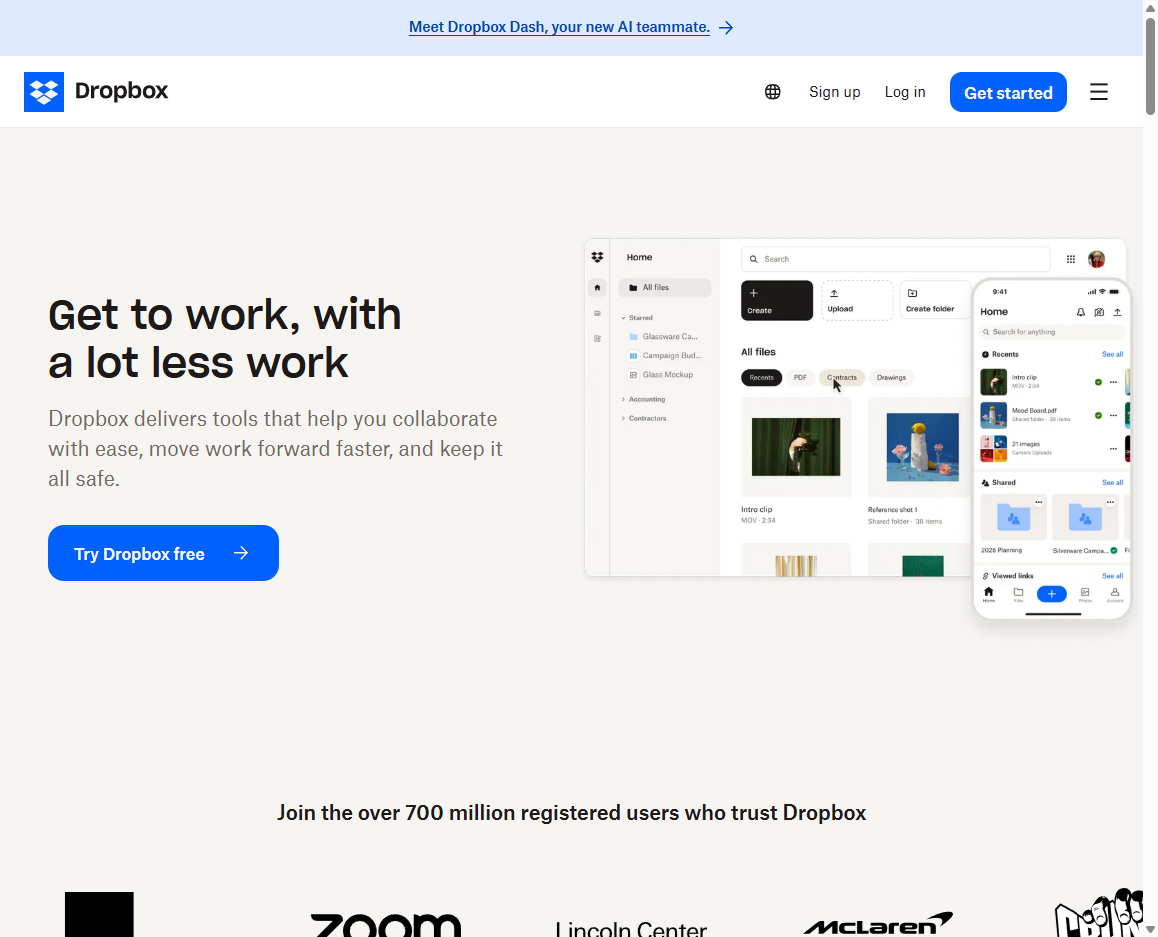
Dropbox is a cloud storage, file synchronization, backup, sharing, and collaboration service. On Dropbox.com, people and organizations keep files available across computers and phones, send links instead of attachments, organize shared folders, recover versions, request signatures, and coordinate work around documents.
The sync problem
Dropbox became popular because it solved a boring but painful problem: files were scattered across laptops, desktops, USB drives, emails, and office machines. Its early magic was a folder that behaved like an ordinary local folder while quietly syncing changes through the cloud.
Startup origins
Drew Houston and Arash Ferdowsi founded Dropbox in 2007 after Houston grew frustrated with carrying and forgetting storage devices. The company came through the Y Combinator startup ecosystem and used a simple demo-video growth strategy to show why automatic sync was easier than existing file-transfer habits.
Sharing and collaboration
Dropbox expanded from personal sync into shared folders, team spaces, link permissions, file requests, comments, document previews, transfer tools, and collaboration features. That shift made it useful not only for storage, but for creative teams, agencies, freelancers, schools, and businesses moving work between people.
Business model
Dropbox uses a freemium subscription model: many people start with limited free storage, while individuals and teams pay for more space, recovery features, controls, security, admin tools, and collaboration products. Its paying-user count is a key investor metric because free users do not always convert into revenue.
Security and trust
File storage services hold sensitive personal and business material, so security is central to Dropboxโ€s value. Encryption, permissions, account recovery, device management, audit logs, retention controls, and compliance features all matter, but users still need good habits around sharing links, passwords, and access control.
Rise and pressure
Dropbox rose by making cloud sync simple before cloud storage became a default expectation. Its pressure now comes from Microsoft OneDrive, Google Drive, Apple iCloud, Box, collaboration suites, Slack-style workflows, and AI-native productivity tools that bundle file storage into larger ecosystems.
Why it matters
Dropbox matters because it changed how people think about files. It helped move work away from device-bound storage and email attachments toward synced folders, shared links, cloud backups, and collaborative access that follows users across devices and workplaces.