Google Search
Google Search is the web search engine that grew from Larry Page and Sergey Brin's Stanford research into the dominant gateway for finding information online. Its history connects PageRank, web crawling, ranking systems, search advertising, SEO, antitrust scrutiny, and the shift toward AI-generated answers.
What Google Search is
Google Search is a web search engine that helps users find pages, images, videos, news, maps, products, facts, and answers across the internet at Google.com. It is not just a search box. Behind it are crawlers, indexes, ranking systems, spam defenses, advertising auctions, interface features, and increasingly AI-generated summaries.
BackRub and PageRank
Google began as BackRub, a Stanford research project by Larry Page and Sergey Brin. Their key insight was that links could act as signals: if many important pages linked to a page, that page might also be important. PageRank did not solve search by itself, but it helped Google rank results in a way that felt unusually useful compared with many crowded portals and early search engines.
Crawling, indexing, ranking
Search starts before a user types anything. Google crawls web pages, processes their contents, stores information in large indexes, and then ranks matching results when someone searches. Ranking systems consider many signals, including words on the page, links, freshness, location, usability, meaning, quality, and spam indicators. The exact mix changes constantly.
Clean interface and trust
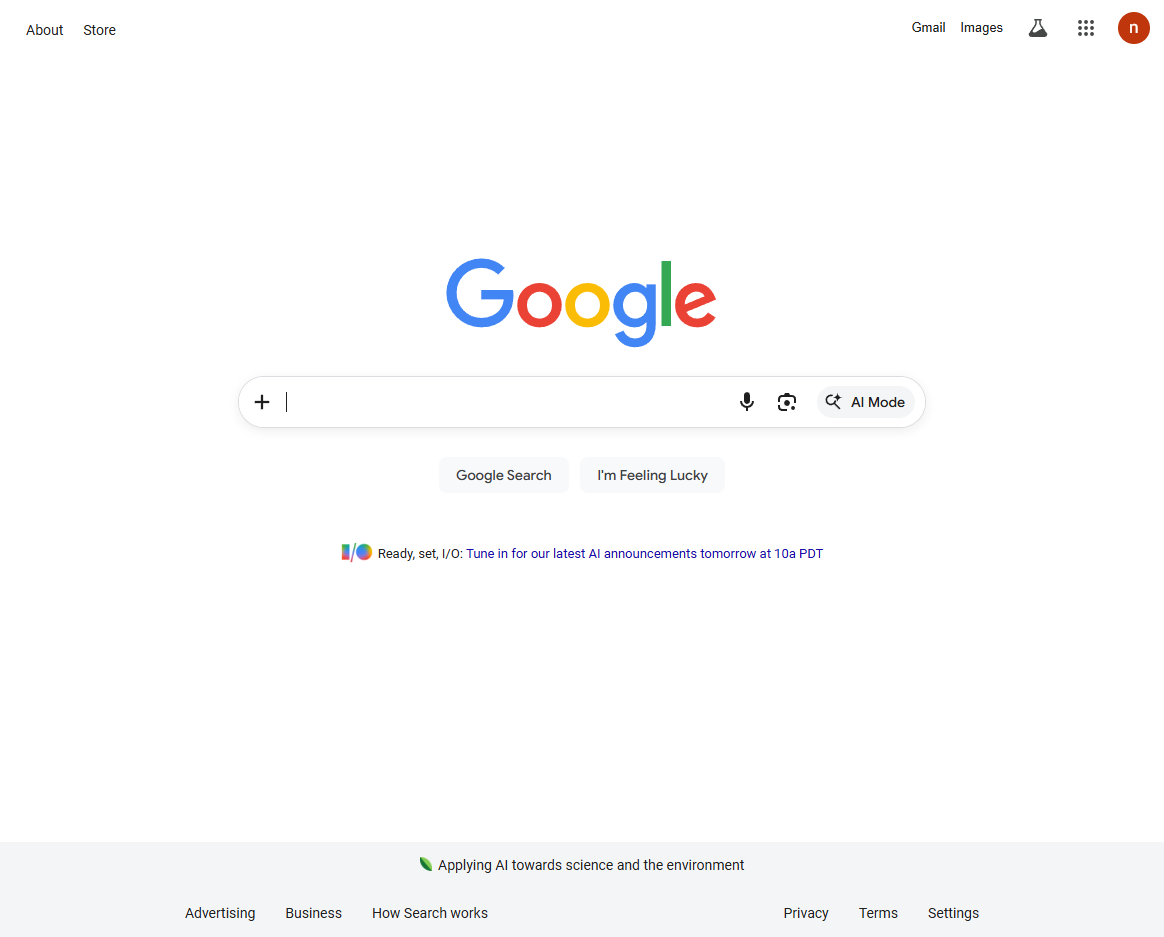
Google's early homepage was famously sparse: a logo, a search box, and little else. That design contrasted with portal pages filled with news, directories, and ads. The clean interface made Google feel fast and focused, while the result quality trained users to trust the first page of links.
Search ads and incentives
Google's business model depends heavily on search advertising. Ads appear around queries where users may be looking to buy, compare, or act. That model made search extremely profitable, but it also created tensions: Google must balance paid placement, organic results, user trust, advertiser demand, and competition from publishers, merchants, and rival platforms.
Rise and dominance
Google rose because it made search feel faster, cleaner, and more relevant at a moment when the web was exploding. It later reinforced that lead through browser defaults, distribution deals, mobile search, Android, Chrome, maps, local results, shopping features, and advertising scale. Its dominance has made Google Search both a daily utility and a target for antitrust scrutiny.
SEO and the open web
Because Google can send or withhold enormous traffic, website owners try to understand and influence ranking through search engine optimization, or SEO. Good SEO can make useful pages easier to find, but the same incentives can produce spam, thin content, manipulative links, and pages written more for ranking systems than for readers.
AI Overviews and AI Mode
Google is moving search toward generated answers as well as links. AI Overviews summarize information for some queries and point to supporting pages, while AI Mode lets users ask follow-up questions in a more conversational flow. This changes the old search bargain: users may get faster answers, but publishers worry about traffic, attribution, errors, and who captures value from the web's content.
Why it matters
Google Search matters because it shapes what billions of people see first when they ask a question. Its ranking systems influence journalism, commerce, education, health information, politics, local businesses, software documentation, and culture. Understanding Google Search is really about understanding who organizes the web, how trust is earned, and how discovery changes when search becomes answer generation.