GitLab
GitLab is a web-based DevSecOps platform that combines source code hosting, planning, code review, continuous integration, deployment, security scanning, and software delivery workflows.
What GitLab is
GitLab is a web-based platform for software teams. On GitLab.com, developers can host Git repositories, review code through merge requests, track issues, run CI/CD pipelines, manage releases, and add security checks inside one connected workflow.
More than code hosting
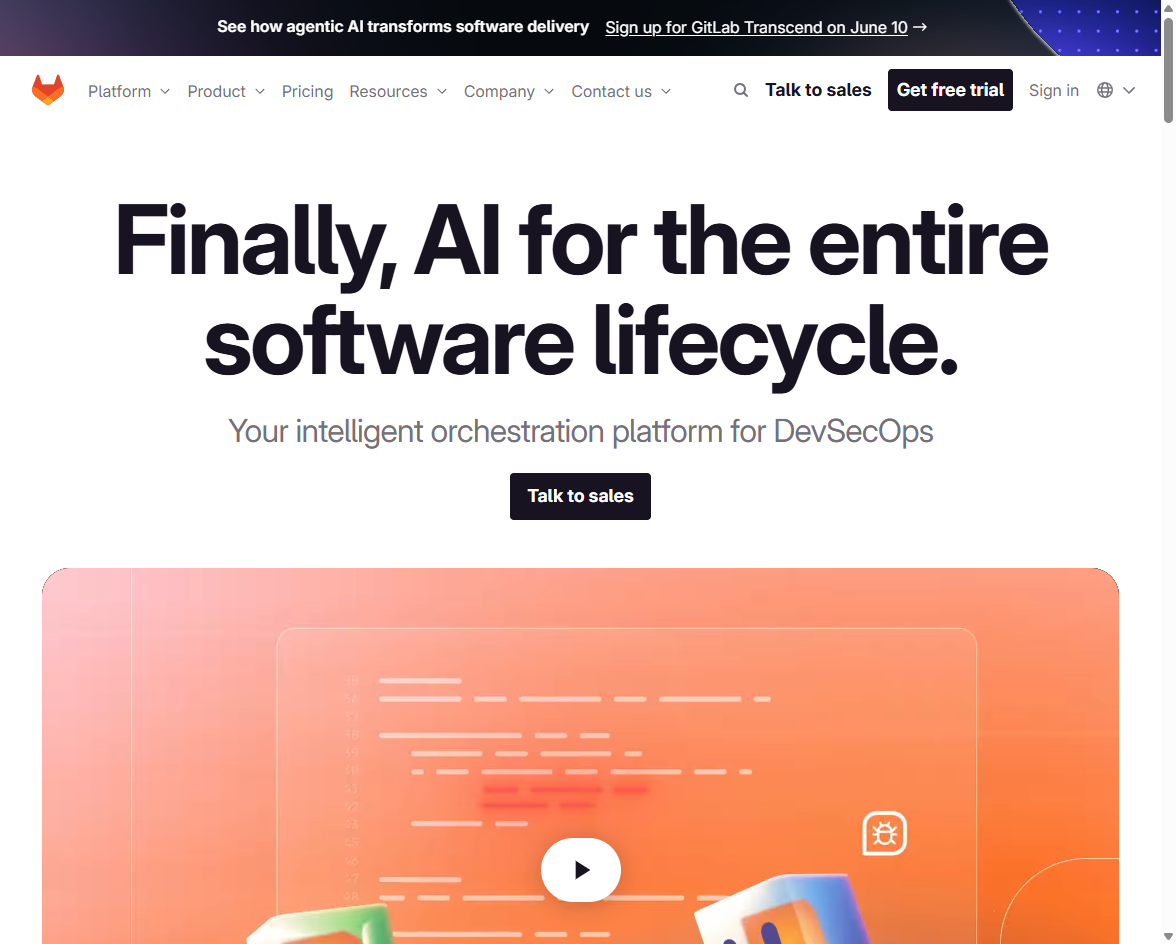
GitLab competes with source-code hosting sites, but its pitch is broader than storing repositories. It brings planning boards, package registries, test automation, deployments, vulnerability scanning, compliance features, and observability-related workflows into the same product surface.
CI/CD at the center
GitLab CI/CD is one of the platform's defining features. Teams describe jobs in configuration files, then GitLab runners execute tests, builds, security scans, deployments, and other automation whenever code changes or a pipeline is triggered.
Cloud and self-managed use
Some organizations use GitLab's hosted service, while others install GitLab on their own infrastructure for control, compliance, network, or data-residency reasons. That flexibility is important for companies with strict security and operations requirements.
Open core model
GitLab is often described as open core: a significant part of the product is open source, while paid editions add enterprise features and commercial support. This model lets community contributors inspect and improve parts of the software while giving the company a subscription business.
AI and DevSecOps
Like other developer platforms, GitLab has been adding AI-assisted features for code, security, planning, and workflow automation. The bigger idea is not only faster code generation, but also reducing friction between writing software, reviewing it, securing it, and shipping it.
Why it matters
GitLab helped popularize the idea that software delivery can be managed in one integrated lifecycle rather than stitched together from many separate tools. For teams, the choice between GitLab, GitHub, Atlassian tools, and other systems affects how code moves from an idea to production.