Stack Overflow
Stack Overflow is a question-and-answer website where developers ask programming questions, answer technical problems, vote on useful explanations, and build a searchable archive of software knowledge. Founded in 2008 by Jeff Atwood and Joel Spolsky and later acquired by Prosus, it became one of the webโ€s most important reference points for coding help, community moderation, reusable examples, and developer knowledge sharing.
What Stack Overflow is
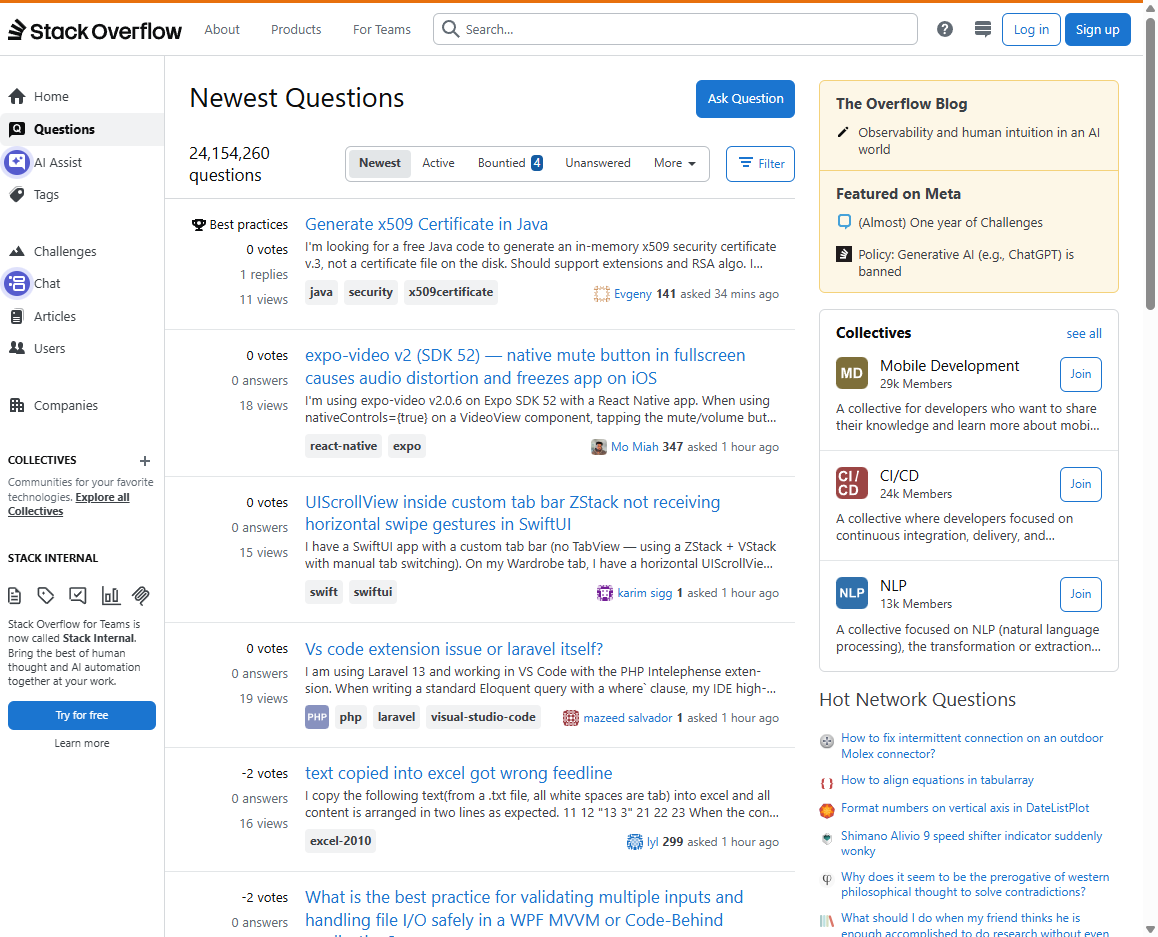
Stack Overflow is a public Q&A site for programming and software development. On StackOverflow.com, a typical page starts with a specific technical question, then collects answers, comments, votes, edits, tags, and often an accepted solution that future visitors can find through search.
Why the format worked
Earlier forums often buried useful answers inside long threads. Stack Overflow changed the rhythm by making questions narrow, answers rankable, edits visible, duplicate closure normal, and tags central to navigation. The result was a database that behaved less like a chat room and more like a structured reference shelf.
Reputation and moderation
The siteโ€s reputation system rewards users when other people find their questions or answers useful. Reputation unlocks moderation abilities, so experienced contributors can help edit posts, close duplicates, review queues, and keep the archive cleaner. That community layer is powerful, but it can also feel strict to newcomers who arrive with unclear questions.
A search engine companion
For many developers, Stack Overflow became part of the normal debugging loop: search an error message, open a result, compare code, adapt an answer, and move on. This made the site unusually influential because its pages often appeared at the exact moment someone was stuck inside a real project.
Licensing and reuse
Public contributions on Stack Overflow are shared under Creative Commons terms, which matters because code snippets and explanations are often copied, adapted, cited, or indexed elsewhere. Reuse is one reason the archive is valuable, but it also raises questions about attribution, outdated examples, and whether copied code still fits a projectโ€s needs.
Stack Exchange network
Stack Overflow became the flagship of the broader Stack Exchange network, whose communities use similar Q&A mechanics for many subjects. The programming site remains the best-known example because software problems are easy to search, easy to tag, and often have answerable details that benefit from public correction.
Business products
The public site is only one part of the company. Stack Overflow also sells private knowledge and collaboration products for organizations, including tools that help teams capture internal technical answers, integrate knowledge into workplace software, and make trusted company information easier to find.
Rise and pressure
Stack Overflow rose because it solved a real developer pain point at web scale. Its pressure now comes from several directions: aging answers, changing frameworks, moderation disputes, AI coding assistants, licensing debates, and the challenge of keeping expert contributors motivated when search and generative tools can summarize answers without always sending people back.
Why it matters
Stack Overflow matters because it turned everyday programming trouble into a public knowledge archive. It shaped how developers learn, debug, document edge cases, evaluate answers, and share practical knowledge across companies, countries, languages, and generations of software tools.
WHOIS domain data
Data pulled: May 24, 2026View current WHOIS record
- Domain
- stackoverflow.com
- IP address
- 198.252.206.1
- Registrar
- CSC Corporate Domains, Inc.
- WHOIS server
- whois.corporatedomains.com
- Referral URL
- http://cscdbs.com
- Created
- December 26, 2003
- Updated
- January 29, 2026
- Expires
- February 2, 2027
- Nameservers
- damian.ns.cloudflare.com (162.159.44.50); sureena.ns.cloudflare.com (172.64.34.126)
- Domain status
- clientTransferProhibited