Wikipedia
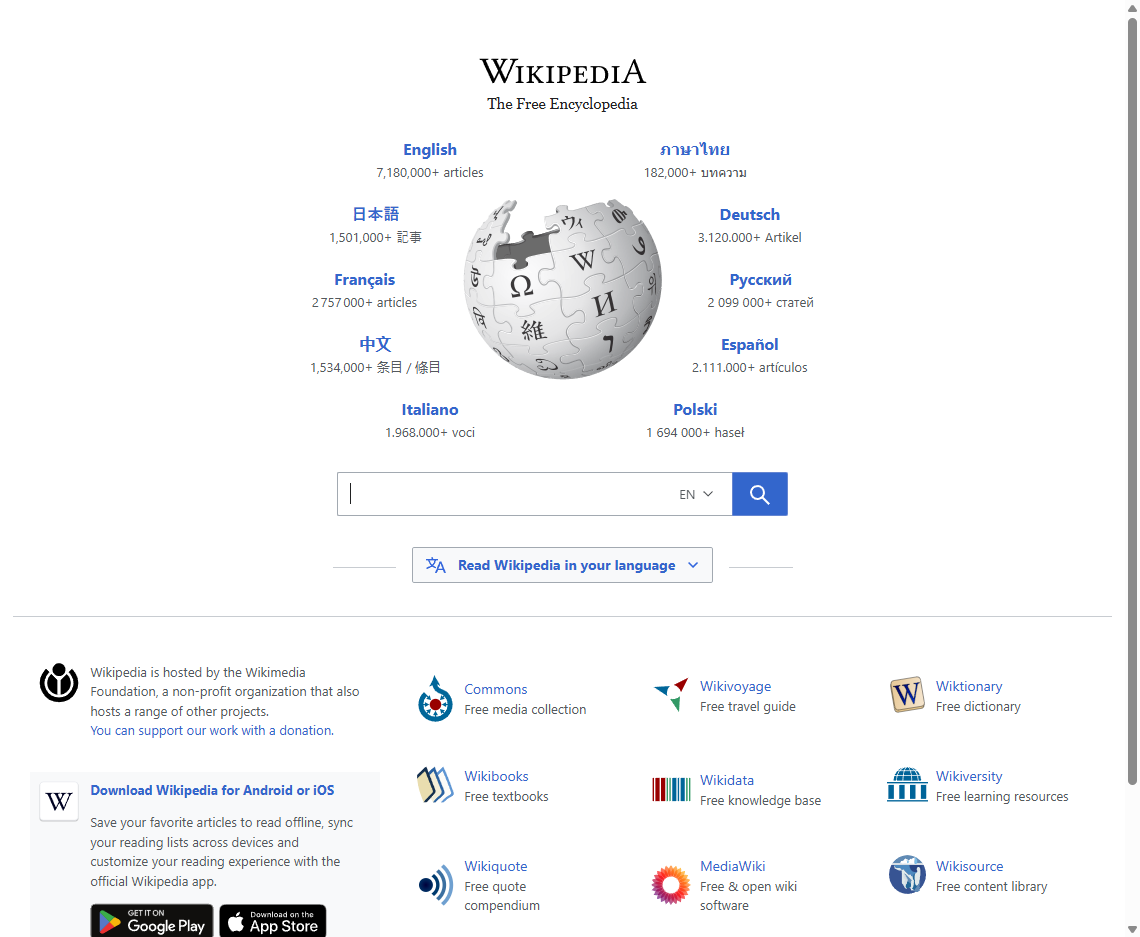
Wikipedia is a free online encyclopedia written and maintained by volunteers. Launched in 2001 and hosted by the nonprofit Wikimedia Foundation since 2003, it became one of the web's central reference sites and a major source layer for search engines, AI systems, students, journalists, and everyday readers.
What Wikipedia is
Wikipedia is a free, web-based encyclopedia at Wikipedia.org that anyone can read and, in many cases, edit. It is not a traditional encyclopedia with a closed editorial staff. Its articles are created, revised, argued over, sourced, translated, and maintained by volunteer communities using wiki software and public edit histories.
From Nupedia to wiki
Wikipedia grew out of Nupedia, an earlier free encyclopedia project that used expert review and moved slowly. The wiki model changed the pace. Instead of waiting for a perfect article, contributors could publish, correct, expand, and debate pages continuously. That speed helped Wikipedia grow far beyond the scale of older reference projects.
Nonprofit structure
Wikipedia is hosted by the Wikimedia Foundation, a nonprofit organization founded in 2003. This makes Wikipedia unusual among the world's most visited websites. It does not sell ads on article pages, and it is funded largely through donations and grants. The nonprofit model shapes both its public trust and its recurring fundraising debates.
How articles improve
Wikipedia's quality comes from a mix of policies, sources, editing norms, software tools, and community review. Editors add citations, revert vandalism, discuss disputes, tag weak claims, and apply standards such as neutral point of view and verifiability. The process is messy, but the mess is visible in page histories and talk pages.
Neutrality and reliability
Wikipedia aims for a neutral point of view, which means summarizing significant reliable sources rather than presenting an article as one person's argument. That standard does not make every article equally reliable. Pages on breaking news, politics, health, biographies, and contested history can change quickly and should be checked against cited sources.
Rise and scrutiny
Wikipedia rose because it made reference knowledge searchable, editable, multilingual, and free at the exact moment web search became a daily habit. Its success also brought scrutiny: worries about vandalism, bias, edit wars, uneven coverage, paid editing, harassment, and the influence of a relatively small active editor community on global knowledge.
Wikipedia and AI
Wikipedia is now part of the information infrastructure behind search, voice assistants, knowledge panels, and AI systems. Its open, structured, constantly updated articles are valuable training and grounding material. That creates a new tension: AI tools depend on volunteer-built knowledge, while the volunteers and institutions that maintain it still need readers, citations, and support.
Why it matters
Wikipedia matters because it proved that large-scale public knowledge can be built collaboratively outside a normal corporate media model. It changed homework, journalism, search, fact-checking, translation, and everyday curiosity. It also reminds readers that free knowledge is not automatic; it depends on policies, sources, volunteers, infrastructure, and trust.