Grindr
Grindr is a popular dating and social networking app for gay, bi, trans, and queer adults, built around nearby profiles, chat, community connection, and mobile-first discovery.
What Grindr is
Grindr is a dating and social networking service at Grindr.com and through its mobile apps. It is designed for gay, bi, trans, and queer adults who want to see nearby profiles, chat, meet, date, socialize, or build community. Grindr describes its mission as connecting queer people with one another and the world.
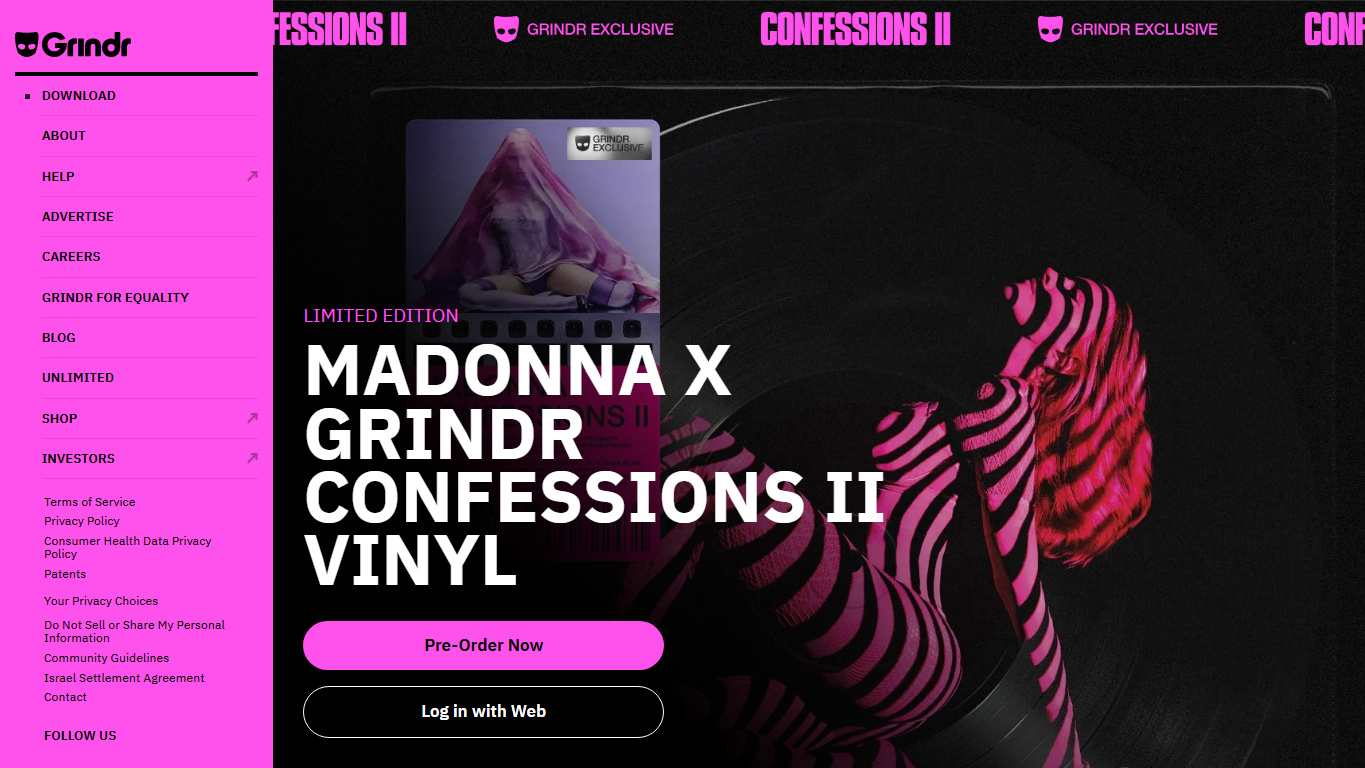
Location-based discovery
Grindr became known for mobile discovery shaped by proximity. Instead of starting from a long compatibility questionnaire, the app presents nearby profiles and lets users decide who to message, favorite, block, or report. That location-aware model made Grindr influential in both dating apps and queer digital spaces.
Profiles and chat
A Grindr profile can include photos, display information, identity signals, interests, and what someone is looking for. Chat is the central interaction layer: users can start conversations, share more context, and decide whether a connection should stay online or move toward a meeting.
Web and mobile access
Grindr is primarily known as a mobile app, but the company also promotes Grindr Web for using the service from a browser. The public website points people toward the app, web access, safety information, company news, and help resources.
Safety and privacy
Grindr handles sensitive identity, location, and relationship information, so privacy and safety matter more than they would on a casual entertainment site. Users should review visibility settings, avoid sharing unnecessary personal details, use blocking and reporting tools, and be cautious about scams, harassment, pressure, or unsafe offline meetings.
Community and culture
Grindr is not just a technical matching product; it is also part of queer social life in many places. People may use it for dating, hookups, friendship, travel tips, community awareness, or simply finding nearby LGBTQ people. That cultural role makes moderation, inclusion, and user safety especially visible topics.
Why it matters
Grindr matters because it helped define location-based dating for smartphones and created a large digital gathering place for LGBTQ adults. Its design shows how mobile software can reshape social discovery, identity expression, dating norms, privacy expectations, and community access.
Limits and cautions
A Grindr profile or chat is an introduction, not proof of identity, trust, compatibility, consent, or intent. Users should treat location and personal information carefully, move at their own pace, verify details before meeting, and use platform safety tools when a profile or conversation feels suspicious.
WHOIS domain data
Data pulled: May 20, 2026View current WHOIS record
- Domain
- grindr.com
- IP address
- 18.160.10.93
- Registrar
- GoDaddy.com, LLC
- WHOIS server
- whois.godaddy.com
- Referral URL
- http://www.godaddy.com
- Created
- June 13, 2006
- Updated
- June 14, 2025
- Expires
- June 13, 2026
- Nameservers
- ns-623.awsdns-13.net (205.251.194.111); ns-418.awsdns-52.com (205.251.193.162); ns-1871.awsdns-41.co.uk (205.251.199.79); ns-1245.awsdns-27.org (205.251.196.221)
- Domain status
- clientDeleteProhibited; clientRenewProhibited; clientTransferProhibited; clientUpdateProhibited
- Contact privacy
- Registrant and technical contact details use Domains By Proxy, LLC privacy service.