Bumble
Bumble is a dating and connection app that helps adults meet for romance, friendship, and social connection. It became known for redesigning dating app norms around women making the first move.
What Bumble is
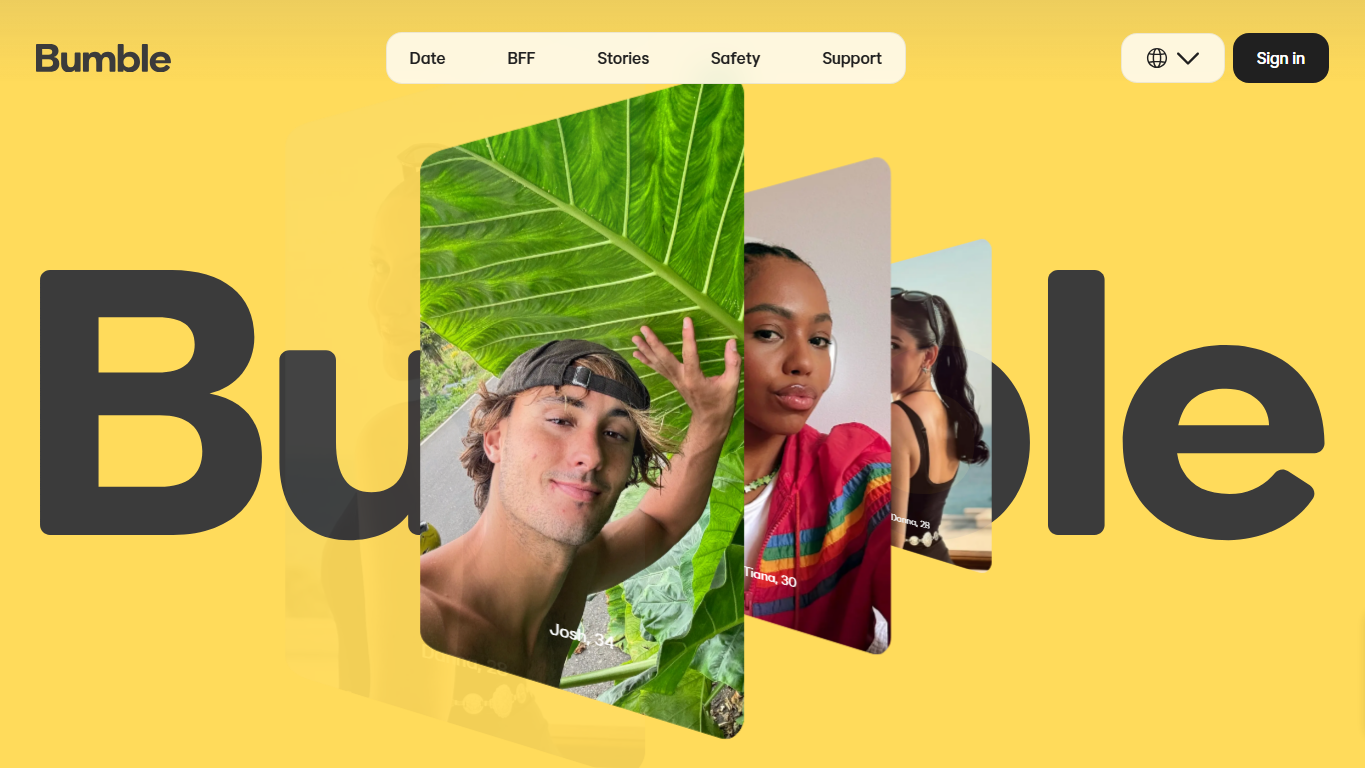
Bumble is a connection app and website at Bumble.com for meeting people through dating, friendship, and related social features. Users create profiles, set preferences, browse suggested people, match when interest is mutual, and use in-app messaging to start a conversation.
Women making the first move
Bumble's best-known design choice was giving women the first move in many dating matches. That rule was meant to challenge older dating expectations, reduce some unwanted messages, and make the first conversation feel more intentional. The exact product rules can vary by market, mode, and feature, but the first-move idea remains central to Bumble's identity.
Beyond dating
Bumble has presented itself as more than a dating app. Bumble BFF focuses on friendship, and the company has described its wider goal as helping people connect in love, life, and work. That broader positioning lets Bumble compete not only as a dating service but also as a social discovery brand.
Profiles, matching, and chat
A Bumble profile can include photos, personal details, interests, prompts, preferences, and verification signals. Matching depends on mutual interest, while chat creates the first private interaction after a match. Like other dating apps, the experience is shaped by profile quality, location, preferences, timing, ranking systems, and user behavior.
Safety and moderation
Safety is a major part of Bumble's pitch because dating apps move between digital profiles and real-world interaction. Bumble uses policies, reporting, blocking, profile controls, moderation, verification, and safety guidance. These tools help, but they cannot remove every risk around scams, harassment, identity, privacy, pressure, or meeting people offline.
Business model
Bumble can be used as a free app, while paid subscriptions and premium features can change visibility, matching tools, filters, rematches, travel-style discovery, or other parts of the experience. This makes Bumble both a social product and a subscription-driven consumer technology business.
Why it matters
Bumble matters because it showed that dating apps could compete through social rules, not only through profile feeds and location matching. Its women-first messaging gave the product a recognizable point of view and helped push wider conversations about safety, respect, consent, and power in online dating.
Limits and cautions
A Bumble profile is not a complete picture of a person, and a match is not proof of trust, compatibility, or intent. Users should protect personal information, watch for money requests or pressure to leave the app quickly, use reporting and blocking tools when needed, and make careful choices before meeting someone in person.
WHOIS domain data
Data pulled: May 20, 2026View current WHOIS record
- Domain
- bumble.com
- IP address
- 31.222.75.113
- Registrar
- MarkMonitor Inc.
- WHOIS server
- whois.markmonitor.com
- Referral URL
- http://www.markmonitor.com
- Created
- July 27, 1997
- Updated
- June 24, 2025
- Expires
- July 26, 2027
- Nameservers
- ns4.bumble.com (159.253.177.253); ns1.bumble.com (31.222.73.253); ns2.bumble.com (31.222.75.253); ns3.bumble.com (31.222.77.253); ns5.bumble.com (31.222.67.253); ns6.bumble.com (31.222.69.253)
- Domain status
- clientDeleteProhibited; clientTransferProhibited; clientUpdateProhibited
- Registrant organization
- Badoo Media Limited
- Registrant country
- CY