Snapchat
Snapchat is a camera-centered social app from Snap Inc. Launched in 2011, it popularized disappearing photo and video messages, Stories, AR Lenses, Bitmoji, Snap Map, Spotlight, and private visual communication, shaping how younger users share moments and how rivals copied social formats.
What Snapchat is
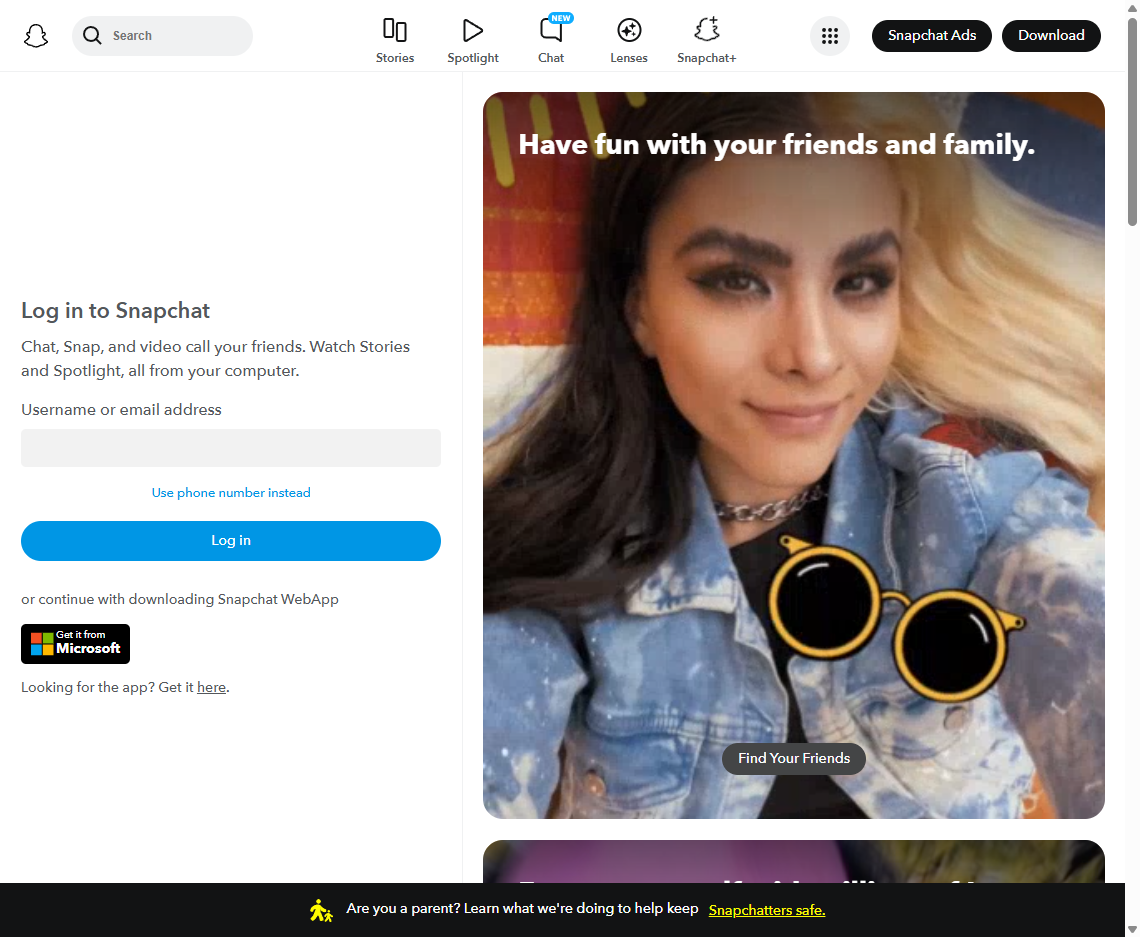
Snapchat is a camera-centered social app for sending photos, videos, chats, Stories, Spotlight videos, map updates, and augmented reality Lenses. On Snapchat.com, the design treats the camera as the starting point, making quick visual communication feel more natural than posting polished updates.
Disappearing messages
Snapchatโ€s early breakthrough was the idea that everyday photos did not need to become permanent social artifacts. Temporary Snaps made communication feel lighter, closer to conversation, and less like maintaining a public profile.
Stories and social copying
Stories turned a series of casual posts into a 24-hour narrative. The format became one of Snapchatโ€s most influential inventions, later copied and adapted across Instagram, Facebook, WhatsApp, YouTube, and other platforms.
The camera company idea
Snap describes itself as a camera company, not only a social network. That framing explains its focus on visual communication, camera effects, Spectacles hardware experiments, Snap Map, visual search ideas, and augmented reality tools that place digital objects into the real world.
Augmented reality Lenses
Lenses are interactive effects that can change faces, backgrounds, products, games, and environments through the camera. They made AR playful for mainstream users before the phrase became common, and they gave brands and creators a way to build experiences rather than only display ads.
Discover, Spotlight, and creators
Snapchat added publisher content through Discover and short-form entertainment through Spotlight. These areas moved the app beyond private messaging into media, creator discovery, news, entertainment, and algorithmic video, while still keeping friend communication central.
Rise, pressure, and reinvention
Snapchat rose by creating a mobile social language that felt intimate, fast, and visual. It then faced heavy pressure from Instagram Stories, redesign backlash, Android performance issues, public-market scrutiny, and advertising competition. Its reinvention has leaned on AR, subscriptions, Spotlight, maps, and a younger global audience.
Safety and youth culture
Because Snapchat is popular with younger users and private messaging, safety questions are persistent. The platform has to manage location sharing, unwanted contact, scams, bullying, sextortion, age-appropriate design, content moderation, and parental controls while preserving spontaneity.
Why it matters
Snapchat matters because it changed what social media could feel like. It made temporary visual communication mainstream, pushed Stories across the industry, helped normalize AR effects, and showed that a social app could be built around friends and cameras instead of only feeds and profiles.