WhatsApp is a global messaging app owned by Meta. Founded in 2009 and acquired by Facebook in 2014, it is used for private chats, groups, voice notes, calls, video calls, channels, communities, business messaging, and phone-number-based communication across countries and families.
What WhatsApp is
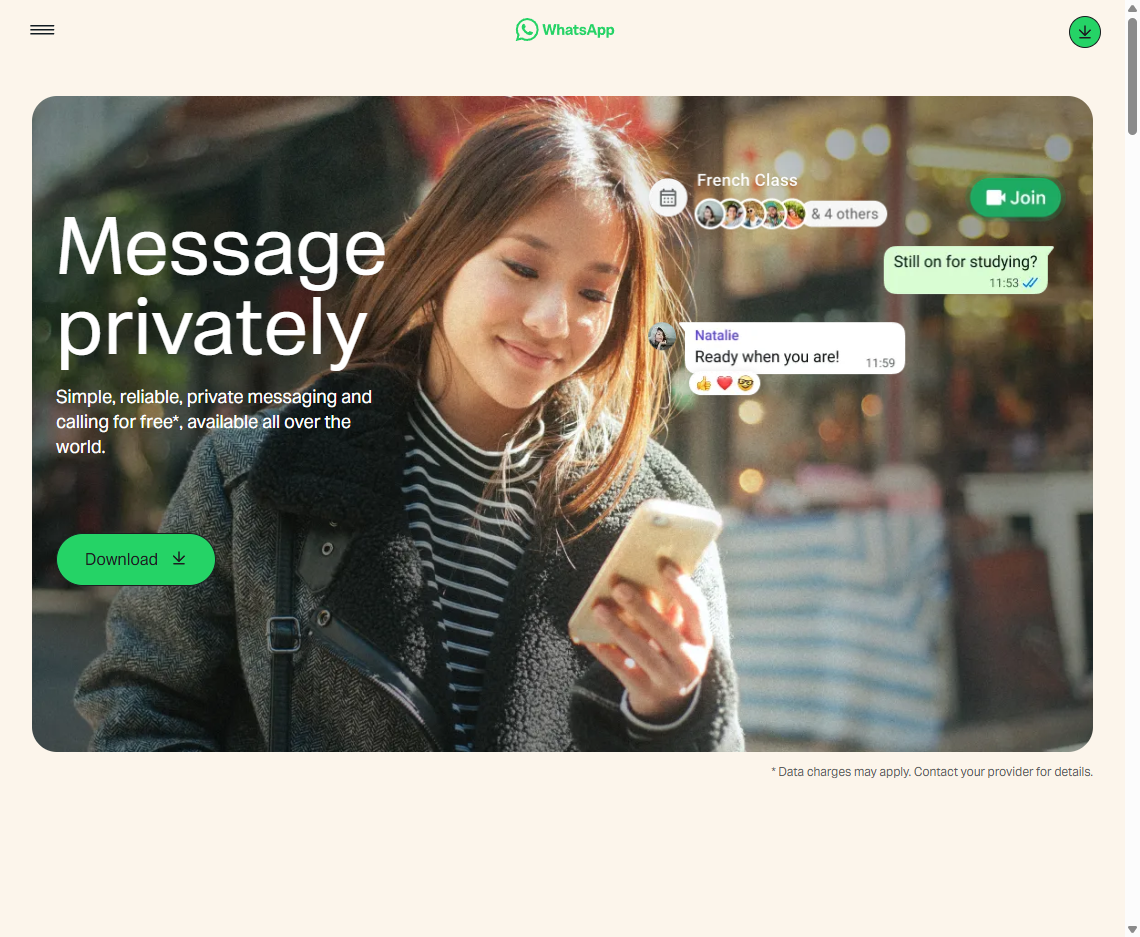
WhatsApp is a messaging service for texts, voice notes, calls, video calls, photos, documents, groups, communities, channels, and business conversations. On WhatsApp.com, the service is tied mainly to phone numbers, which helped it spread across countries where mobile contacts mattered more than usernames or public profiles.
Mobile-first origins
WhatsApp began in 2009 as smartphones and mobile data plans were changing everyday communication. Its early appeal was simple: send messages across borders without depending on SMS fees, carrier bundles, or a desktop-first social network.
Private messaging at scale
WhatsApp became central to families, friend groups, workplaces, schools, local businesses, and diaspora communities because it felt direct and familiar. Contacts came from a phone address book, conversations were organized as chats, and groups made coordination easy without requiring a public feed.
Encryption and trust
Meta says WhatsApp personal messages are protected with end-to-end encryption by default, meaning message content is designed so only participants can read or listen to it. That privacy promise is a major part of the brand, though questions remain around metadata, backups, abuse reporting, and how private messaging should be governed.
Facebook and Meta ownership
Facebook announced in February 2014 that it had reached an agreement to acquire WhatsApp, describing the deal as part of a broader mission to connect people. The ownership later became part of Metaโ€s family of apps, alongside Facebook, Instagram, and Messenger.
Groups, communities, and channels
WhatsApp expanded beyond one-to-one messaging into group chats, larger communities, broadcast-style channels, status updates, and richer media sharing. These features let it behave like private communication, local coordination, and lightweight publishing at the same time.
Business messaging
WhatsApp Business gives companies tools for profiles, catalogs, automated replies, customer support, order updates, and marketing conversations. In many markets, it functions as a practical storefront and support line, especially for small businesses that do not need a full app or website.
Rise and tension
WhatsAppโ€s rise came from being simpler and cheaper than SMS while feeling more personal than a social network. Its tensions come from the same scale: misinformation in forwarded messages, spam, scams, regulatory pressure, monetization debates, and trust concerns around being owned by a large advertising company.
Why it matters
WhatsApp matters because it is infrastructure for everyday relationships. In many countries, it is not just an app people use sometimes; it is how families coordinate, shops answer customers, communities organize, and news travels through private networks.