Discord
Discord is a communication platform built around servers, channels, text chat, voice rooms, video calls, livestreams, bots, roles, and community moderation. Launched in 2015 with strong gaming roots, it now hosts friend groups, creators, fandoms, developers, classrooms, and online communities.
What Discord is
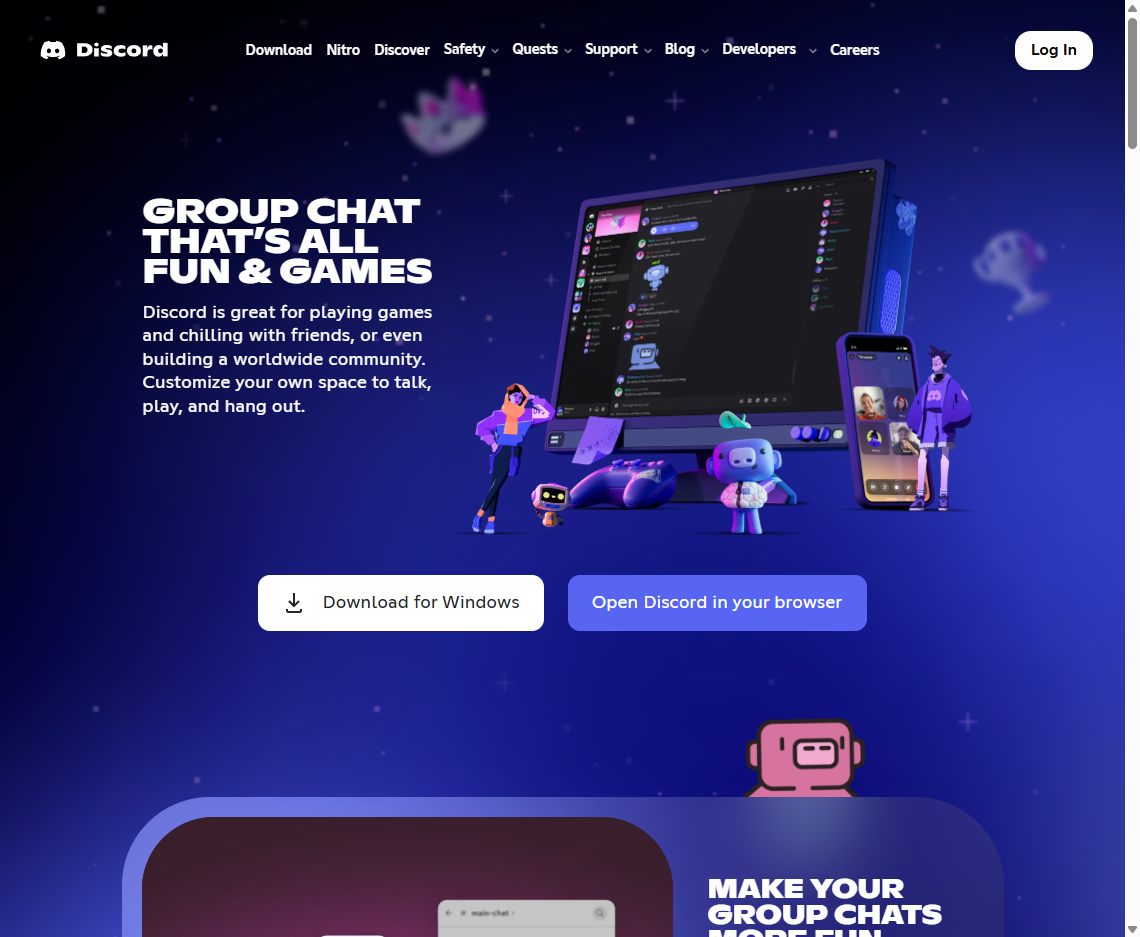
Discord is a communication platform built around servers, channels, voice rooms, direct messages, video calls, livestreams, and community tools. On Discord.com, a service that began as a better way for gamers to talk while playing has expanded into a broader home for fan groups, classrooms, developer communities, creators, friends, and small teams.
Gaming roots
Discord launched in 2015 after its founders saw that gamers were stitching together separate tools for voice chat, group messages, and community coordination. Its early advantage was practical: low-friction voice rooms, persistent text channels, and a free service that worked across desktop and mobile.
Servers and channels
A Discord server is a shared space with its own members, rules, roles, and channels. Text channels organize ongoing discussion, voice channels make drop-in conversation feel lightweight, and permissions let communities create private areas, moderator powers, announcements, and member tiers.
From chat app to community layer
Over time, Discord became more than voice chat. Communities use it for support desks, event planning, game updates, watch parties, creator memberships, developer coordination, study groups, and fandom. The platformโ€s appeal comes from feeling more private and room-based than a public social feed.
Bots, apps, and moderation
Bots and app integrations are central to Discord culture. They can welcome members, assign roles, run polls, play games, moderate spam, connect external services, and automate server workflows. That flexibility also makes safety and moderation important, especially in large public servers.
Business model
Discord is free to use, with revenue from Nitro subscriptions, server boosts, shop items, game-focused advertising experiments, commerce features, and developer tools. This model tries to preserve the basic communication experience while charging for customization, higher-quality sharing, and premium perks.
Rise and refocus
Discordโ€s rise came from serving gamers better than older voice tools, then from becoming a general-purpose community platform during a period when more social life moved online. In the mid-2020s, the company emphasized gaming again, positioning itself as social infrastructure for players, developers, and publishers.
Safety tensions
Discordโ€s semi-private design is part of its strength and part of its challenge. Servers can feel intimate and controllable, but harmful communities, scams, harassment, illegal content, and youth safety concerns require a mix of platform rules, automated detection, reporting systems, and human moderation.
Why it matters
Discord matters because it helped move online communities away from only public feeds and toward persistent, small-group spaces. It changed how many people coordinate games, follow creators, organize communities, and maintain friendships in a web shaped by both privacy expectations and real-time media.