Facebook is a social networking website and app owned by Meta. Launched in 2004 from Harvard, it grew from a college directory into one of the defining platforms of social media, shaping online identity, friend networks, news distribution, advertising, groups, communities, and privacy debates.
What Facebook is
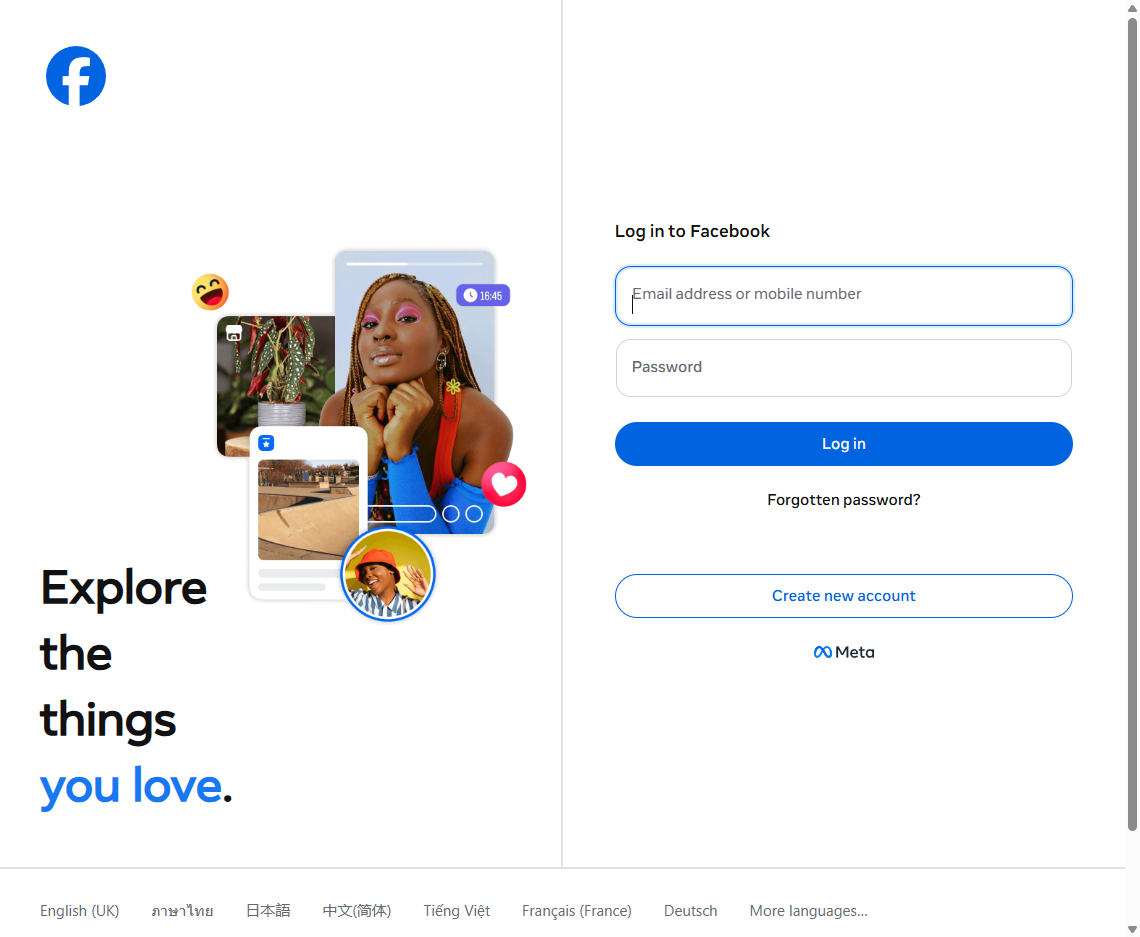
Facebook is a social networking platform where people create profiles on Facebook.com, connect with friends, join groups, follow pages, post photos and videos, message each other, watch clips, buy and sell in Marketplace, and interact with events, news, communities, and ads. The official Facebook app is available on the App Store and Google Play. Facebook is both a personal network and a large advertising-supported media system.
.svg)

Harvard origins
Facebook began as TheFacebook, a Harvard-focused site launched in 2004. It spread from Harvard to other universities, then high schools, workplaces, and eventually the wider public. Its early appeal was simple but powerful: a searchable online directory tied to real names, social ties, photos, and campus identity.
News Feed and the social graph
Facebook's major product shift was the News Feed, a stream of updates from friends, pages, groups, and later recommendations. The feed turned the social graph into a daily habit: instead of visiting individual profiles, users watched a constantly updating view of their network. That design shaped later social platforms and changed how online attention worked.
Advertising business
Facebook is free for most users because its business model is advertising. The platform sells targeted ad placements based on user activity, interests, demographics, and advertiser goals. That model made Meta enormously profitable, but it also created lasting debates about privacy, tracking, manipulation, political advertising, and what kinds of engagement the system rewards.
Groups, Pages, and Marketplace
Beyond friend updates, Facebook became infrastructure for communities and organizations. Groups support neighborhood forums, hobby communities, support networks, political organizing, school groups, and private communities. Pages give businesses, public figures, publishers, and institutions a public presence. Marketplace turned the site into a local classifieds and commerce layer.
Rise and reinvention
Facebook rose by making real-name online social networking mainstream. Its reinvention has been constant: mobile apps, the Like button, News Feed ranking, Messenger, video, Groups, Marketplace, Reels, and integration with Meta's larger app family. The parent company even changed its name from Facebook to Meta in 2021 as it tried to define a broader future beyond the original app.
Criticism and trust
Facebook has faced intense criticism over privacy, data sharing, the Cambridge Analytica scandal, misinformation, hate speech, political influence, youth safety, moderation, algorithmic amplification, and the power of targeted advertising. Many of these debates are not side issues; they are tied to the basic design of a platform that connects billions of people and sells attention.
Why it matters
Facebook matters because it helped define the social web. It normalized profiles, feeds, likes, sharing buttons, social login, real-name identity, targeted social ads, and online groups at global scale. Its history also shows the bargain behind many popular websites: convenience and connection can come with concentration of power, data collection, and hard governance problems.
WHOIS domain data
Data pulled: May 24, 2026View current WHOIS record
- Domain
- facebook.com
- IP address
- 57.144.74.1
- Registrar
- RegistrarSafe, LLC
- WHOIS server
- whois.registrarsafe.com
- Referral URL
- http://www.registrarsafe.com
- Created
- March 29, 1997
- Updated
- April 23, 2025
- Expires
- March 30, 2034
- Nameservers
- a.ns.facebook.com (129.134.30.12); b.ns.facebook.com (129.134.31.12); c.ns.facebook.com (185.89.218.12); d.ns.facebook.com (185.89.219.12)
- Domain status
- clientDeleteProhibited; clientTransferProhibited; clientUpdateProhibited; serverDeleteProhibited; serverTransferProhibited; serverUpdateProhibited
- Registrant contact
- Domain Admin, Meta Platforms, Inc., Menlo Park, CA, US
- Registrant phone
- +1.6505434800
- Registrant email
- domain@fb.com
- DNSSEC
- unsigned