Heroku
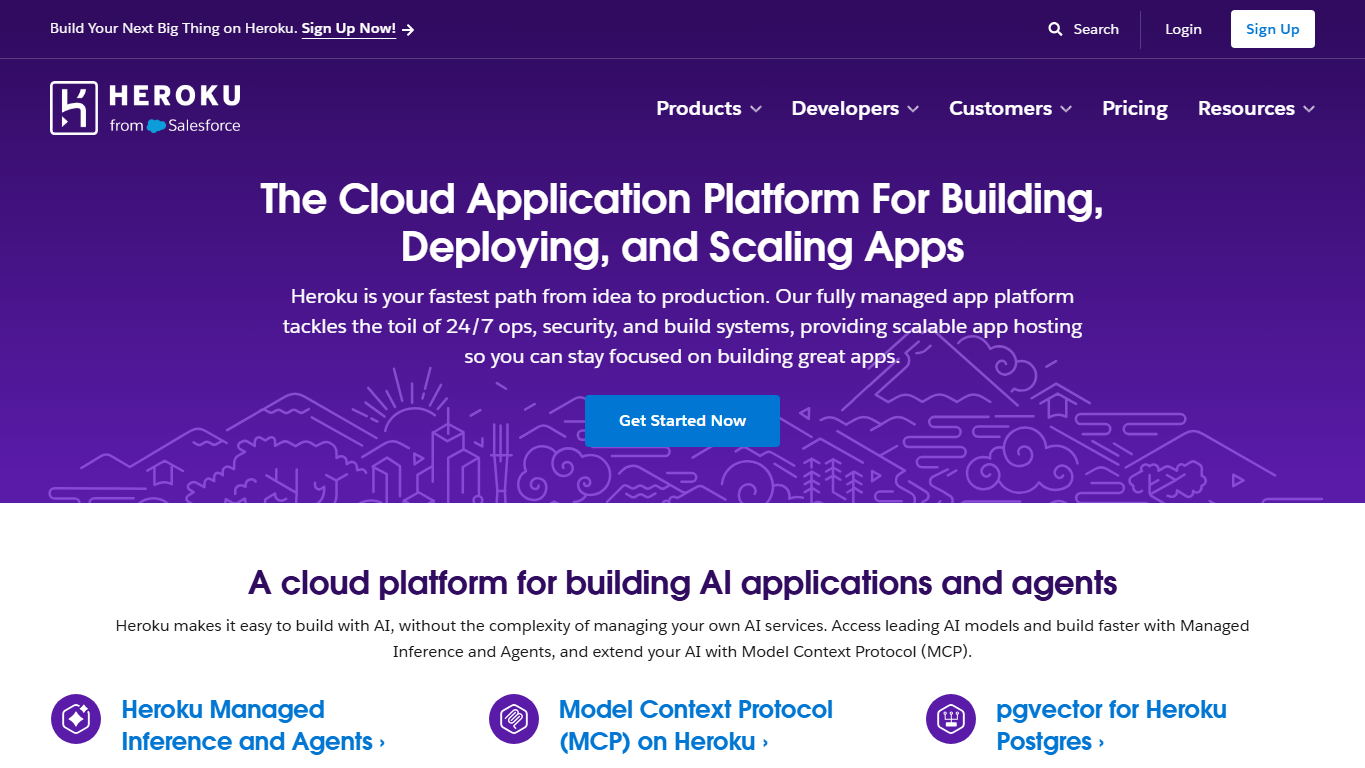
Heroku is a popular cloud application platform website for building, deploying, managing, and scaling apps with managed hosting, data services, add-ons, and developer documentation.
What Heroku is
Heroku is a cloud application platform at heroku.com for building, deploying, managing, and scaling apps. It is often described as platform as a service because developers can push application code and let the platform handle much of the hosting, runtime, routing, and operations work.
Platform as a service
The main idea behind Heroku is to reduce the amount of infrastructure work a developer must do before an application can run online. Instead of configuring servers directly, a team chooses a runtime, deploys code, attaches services, and manages the app through platform tools.
Deployment and scaling
Heroku deployments usually center on application processes, configuration variables, logs, releases, and scaling choices. Developers can run web processes, workers, scheduled jobs, or other app components, then adjust capacity as traffic or background work changes.
Data and add-ons
Heroku offers managed data services such as Heroku Postgres and an add-on ecosystem for related services. Add-ons can connect an app to databases, monitoring, email, caching, logging, search, and other pieces that many production applications need.
Developer workflow
The Heroku Dev Center is a major part of the product experience because developers use it to learn deployment steps, runtime behavior, database workflows, add-ons, configuration, troubleshooting, and operational limits. Good documentation matters when a platform hides some infrastructure details but still expects responsible app management.
Pricing and operations
Heroku pricing depends on choices such as app resources, dyno types, data services, add-ons, team features, and support needs. Operational decisions still matter: apps need monitoring, backups, security review, cost review, scaling plans, and deployment discipline.
Who uses Heroku
Heroku is used by software developers, startups, agencies, product teams, students, internal tool builders, enterprise teams, and organizations that want a managed way to deploy web apps and services. It is especially useful when a team values fast deployment and less direct server administration.
Strengths and cautions
Heroku's strength is making app deployment and managed services approachable. The caution is that platform convenience can hide tradeoffs. Teams still need to understand application architecture, data durability, scaling behavior, vendor limits, security settings, and cost growth.
Why it matters
Heroku matters because deploying software is not only writing code. Teams also need runtime environments, logs, scaling, databases, secrets, deployment history, and recovery paths. A managed platform can shorten the path from code to production when used with clear operational habits.
WHOIS domain data
Data pulled: May 20, 2026View current WHOIS record
- Domain
- heroku.com
- IP address
- 192.0.66.110
- Registrar
- MarkMonitor Inc.
- WHOIS server
- whois.markmonitor.com
- Referral URL
- http://www.markmonitor.com
- Created
- June 15, 2007
- Updated
- March 30, 2026
- Expires
- June 15, 2027
- Nameservers
- dns1.p01.nsone.net (198.51.44.1); dns2.p01.nsone.net (198.51.45.1); dns3.p01.nsone.net (198.51.44.65); dns4.p01.nsone.net (198.51.45.65); ns01.herokudns.net (45.54.92.1); ns02.herokudns.net (45.54.92.65); ns03.herokudns.net (45.54.92.129); ns04.herokudns.net (45.54.92.193)
- Domain status
- clientDeleteProhibited; clientTransferProhibited; clientUpdateProhibited; serverDeleteProhibited; serverTransferProhibited; serverUpdateProhibited
- DNSSEC
- unsigned
- Registrant organization
- Salesforce, Inc.
- Registrant country
- US