Vercel
Vercel is a developer platform and frontend cloud for building, previewing, deploying, and scaling modern web applications.
What Vercel is
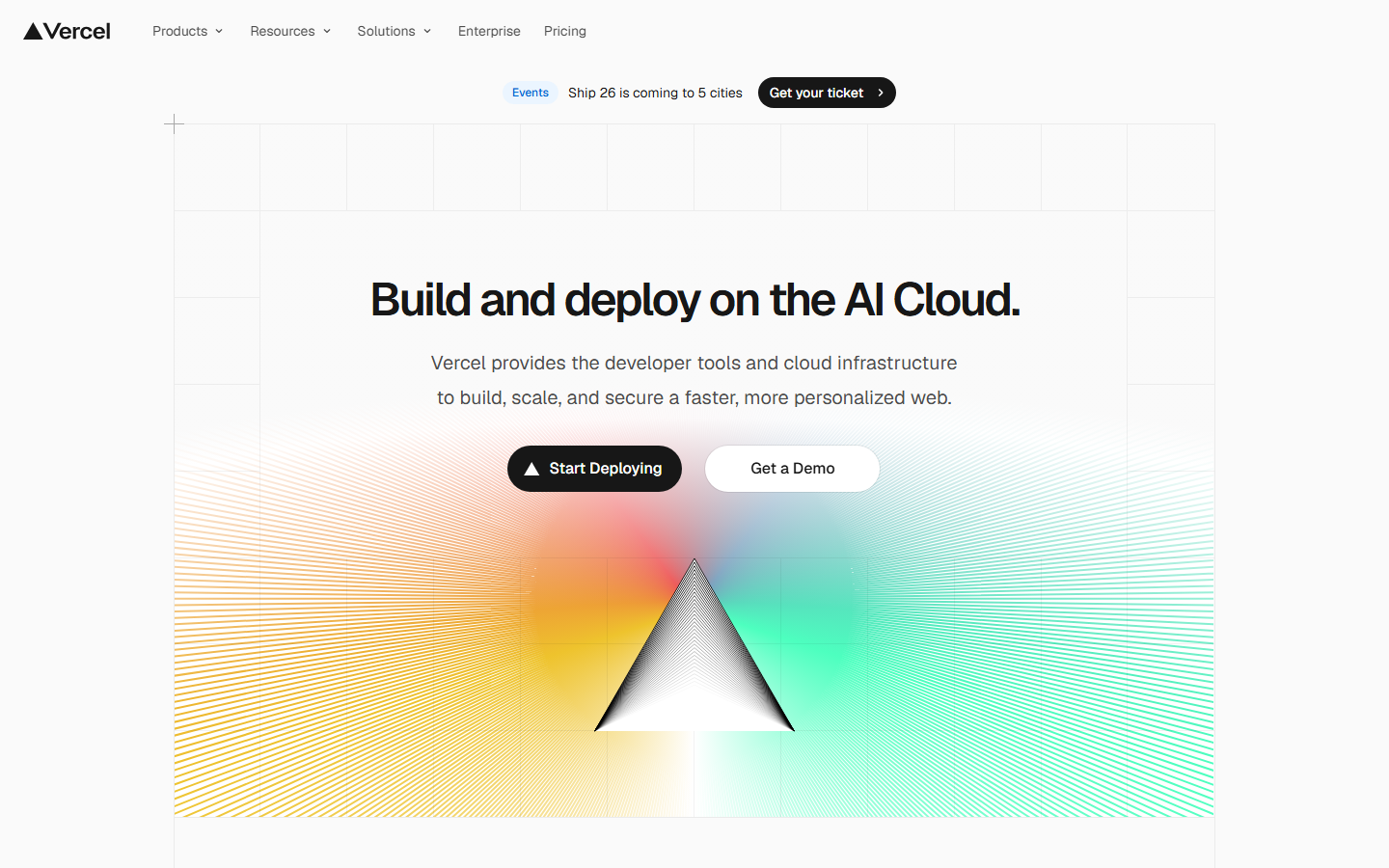
Vercel is a cloud platform for modern frontend development, deployment, and hosting. Visit Vercel.com to see how the company presents its platform as an AI Cloud for building, scaling, and securing web applications. Developers commonly use it to connect a Git repository, generate preview deployments, and publish production sites or apps.
Deployments and previews
A central Vercel workflow is deployment from source control. When a project changes, Vercel can build it, host it, and create URLs for review. Preview deployments are especially important for teams because designers, developers, product managers, and clients can inspect a real running version before changes go live.
Frameworks and Next.js
Vercel supports multiple web frameworks, but it is most strongly associated with Next.js. That relationship shaped how many developers think about React applications, server rendering, routing, image optimization, and full-stack frontend work. Vercel's platform is often evaluated not only as hosting, but as infrastructure built around framework-aware deployment.
Functions and edge network
Modern frontend apps often need server-side behavior: API routes, authentication callbacks, form handling, personalization, data fetching, and background logic. Vercel provides functions and an edge network so parts of an application can run close to users or scale without a developer managing traditional servers directly.
Domains, observability, and teams
A production web app needs more than a successful build. Vercel also covers domains, redirects, environment variables, logs, analytics, speed insights, project access, and team workflows. Those pieces matter because deployment is only one step in keeping a public web experience fast, understandable, and reliable.
Strengths and limits
Vercel is strongest for frontend-heavy web applications, marketing sites, documentation, ecommerce frontends, dashboards, and products that benefit from frequent previews. It is not the right fit for every backend-heavy system, long-running compute job, unusual networking requirement, or organization that needs full control over infrastructure details.
Why it matters
Vercel matters because it helped turn deployment into a routine part of frontend collaboration. Instead of treating hosting as a separate operations phase, teams can make a pull request, share a preview, test the actual page, and ship quickly. That workflow changed expectations for how fast web teams can move.