LinkedIn is a professional networking website and app owned by Microsoft. Launched in 2003, it grew from an online resume and contacts service into a major platform for job search, recruiting, workplace content, B2B marketing, creator posts, company pages, and career identity.
What LinkedIn is
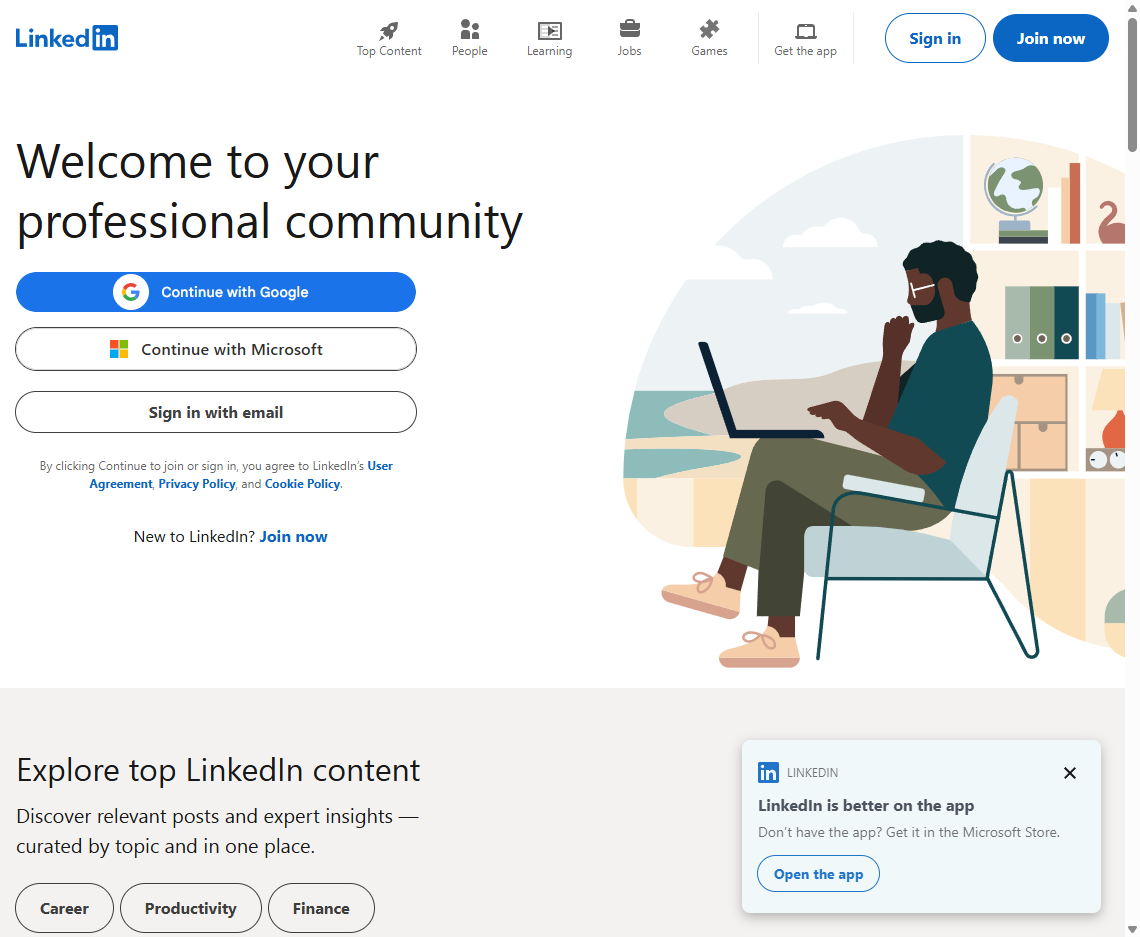
LinkedIn is a social network built around work rather than friendship or entertainment. On LinkedIn.com, people present professional profiles, follow companies, find jobs, recruit candidates, publish career updates, and build business relationships that are searchable over time. The official LinkedIn app is available on the App Store and Google Play.
.svg)

Professional network origins
The service launched in 2003, during the early social-web boom, with a narrower purpose than general social networks: make professional connections visible online. That focus helped it become a durable career identity layer even as many early web communities faded.
Profiles, connections, and identity
A LinkedIn profile works like a public resume, contact card, and reputation page in one place. Connections create a graph of colleagues, classmates, clients, recruiters, and industry peers, while endorsements, recommendations, posts, and job history add context around a personโ€s work.
Jobs and recruiting
Recruiting is one of LinkedInโ€s strongest businesses. Employers list jobs and search for candidates, while job seekers can apply, signal interest, research companies, and compare roles. The same identity graph that helps people network also gives recruiters a way to filter by skills, experience, location, and relationships.
Feed, creators, and B2B media
LinkedIn also became a workplace media platform. Its feed carries company announcements, hiring updates, industry commentary, newsletters, short videos, and professional advice. That makes it especially valuable for business-to-business marketing, where audiences are organized by job title, employer, seniority, and industry.
Microsoft ownership
Microsoft announced a deal to acquire LinkedIn in June 2016 and completed the acquisition in December 2016. The pairing connected LinkedInโ€s professional graph with Microsoftโ€s productivity, cloud, advertising, and enterprise software businesses while allowing LinkedIn to keep its own brand.
AI and work data
Because LinkedIn contains profiles, job posts, hiring signals, learning content, and company pages, it has become important in the AI era. Features can help match people to jobs, summarize candidate fit, suggest profile improvements, and surface sales or recruiting leads, but those uses also raise questions about bias, privacy, and how much career judgment should be automated.
Rise and reinvention
LinkedInโ€s rise came from solving a boring but persistent problem: professionals needed a stable online identity that could survive job changes. Its reinvention has been turning that identity database into a jobs marketplace, advertising channel, creator network, and enterprise data asset without losing the trust that makes professional profiles useful.
Why it matters
LinkedIn matters because it helps shape how modern careers are found, displayed, and evaluated. It influences hiring pipelines, workplace reputation, professional content, and business discovery, making it less flashy than many social platforms but deeply embedded in everyday work.
WHOIS domain data
Data pulled: May 24, 2026View current WHOIS record
- Domain
- linkedin.com
- IP address
- 150.171.22.12
- Registrar
- MarkMonitor Inc.
- WHOIS server
- whois.markmonitor.com
- Referral URL
- http://www.markmonitor.com
- Created
- November 2, 2002
- Updated
- October 1, 2025
- Expires
- November 2, 2026
- Nameservers
- dns1.p09.nsone.net (198.51.44.9); dns2.p09.nsone.net (198.51.45.9); dns3.p09.nsone.net (198.51.44.73); dns4.p09.nsone.net (198.51.45.73); ns1-42.azure-dns.com (150.171.10.42); ns2-42.azure-dns.net (150.171.16.42); ns3-42.azure-dns.org (13.107.222.42); ns4-42.azure-dns.info (13.107.206.42)
- Domain status
- clientDeleteProhibited; clientTransferProhibited; clientUpdateProhibited; serverDeleteProhibited; serverTransferProhibited; serverUpdateProhibited
- Registrant contact
- Domain Administrator, LinkedIn Corporation, Sunnyvale, CA, US
- Registrant phone
- +1.6506873600
- Registrant fax
- +1.6506870505
- Registrant email
- hostmaster@linkedin.com
- DNSSEC
- unsigned