OpenSea
OpenSea is a popular marketplace website for discovering, trading, and creating NFTs and other onchain digital assets.
What OpenSea is
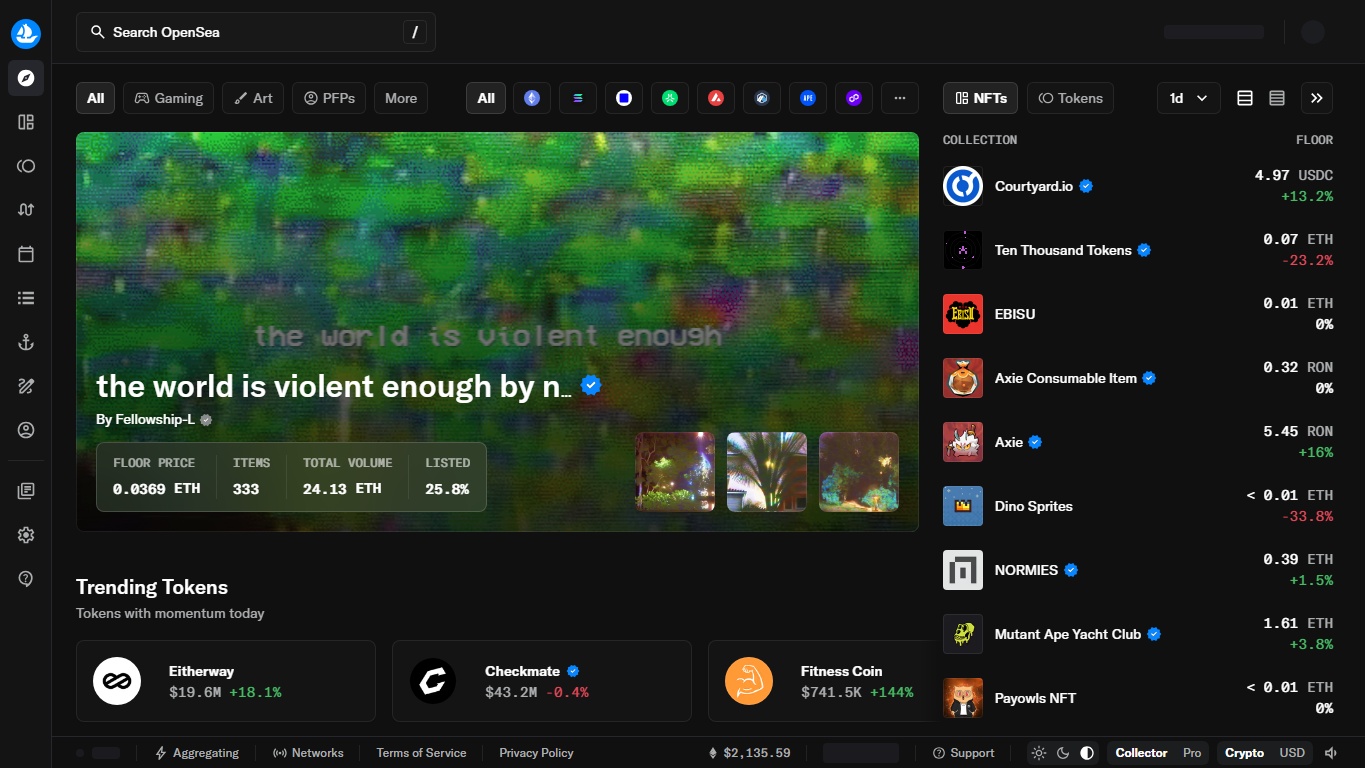
opensea.io is the official website for OpenSea, a marketplace for discovering, trading, and creating onchain digital assets. The homepage presents collections, tokens, drops, activity, wallet connection, and marketplace categories, while the Learn Center explains NFTs, Web3, wallets, minting, and blockchain concepts for newer users.
Marketplace discovery
OpenSea organizes NFTs and tokens through collection pages, rankings, featured drops, search, categories, and activity feeds. A visitor can browse art, gaming, profile-picture collections, memberships, music, photography, and other digital assets. Prices and activity are often shown in crypto units, so the marketplace experience depends on wallets, chains, fees, listings, offers, and collection metadata.
Wallets, tokens, and risk
Using OpenSea usually involves a crypto wallet and onchain transactions. That means users need to understand wallet security, transaction approvals, gas fees, token volatility, fake collections, phishing attempts, and irreversible transfers. The site can make discovery feel familiar, but the underlying mechanics are closer to blockchain transactions than ordinary ecommerce checkout.
Learning and support resources
OpenSea publishes education pages through its Learn Center and routes support questions through its Help Center. These resources explain beginner topics such as NFTs, minting, wallets, and gas fees, while support pages help users find account, buying, selling, safety, and platform guidance. For a marketplace with technical and financial risk, education is part of the product surface.
Who uses OpenSea
OpenSea is used by NFT collectors, digital artists, token traders, Web3 creators, gaming communities, marketplace analysts, wallet users, blockchain developers, support teams, and people researching onchain culture. Some users browse collections without buying, while others mint, list, make offers, trade tokens, or build tools around marketplace data.
Developer platform
OpenSea's developer documentation describes APIs, SDKs, event streams, and tools for building with marketplace data. Developers can work with NFT metadata, orders, collections, drops, analytics, and marketplace actions. This side of the website matters because OpenSea is not only a consumer marketplace; it is also infrastructure for apps, dashboards, trading tools, and creator workflows.
Strengths and cautions
OpenSea's strengths are brand recognition, broad collection discovery, wallet-based trading, creator visibility, and developer access. The cautions are equally important: NFT prices can be volatile, scams can imitate real projects, blockchain transactions can be difficult to reverse, and marketplace data can change quickly. Users should verify collections, links, wallet prompts, fees, and asset details before acting.
Why it matters
OpenSea matters because it helped make NFTs and Web3 marketplaces visible to mainstream internet users. Its website shows how digital ownership, creator tools, marketplaces, crypto wallets, APIs, and online communities can converge in one product. Understanding OpenSea helps explain both the appeal of open digital markets and the risks that come with onchain trading.
WHOIS domain data
Data pulled: May 20, 2026View current WHOIS record
- Domain
- opensea.io
- IP address
- 104.18.33.97
- Registrar
- Gandi SAS
- WHOIS server
- whois.gandi.net
- Referral URL
- https://www.gandi.net
- Created
- December 27, 2017
- Updated
- August 1, 2025
- Expires
- December 27, 2026
- Nameservers
- arch.ns.cloudflare.com (172.64.33.68); nicole.ns.cloudflare.com (173.245.58.211)
- Domain status
- clientTransferProhibited
- Registrant organization
- Opensea
- Registrant country
- US
- Source
- https://who.is/whois/opensea.io