Segment
Segment is a popular customer data platform website for collecting, unifying, governing, and activating customer data across apps, websites, warehouses, and business tools.
What Segment is
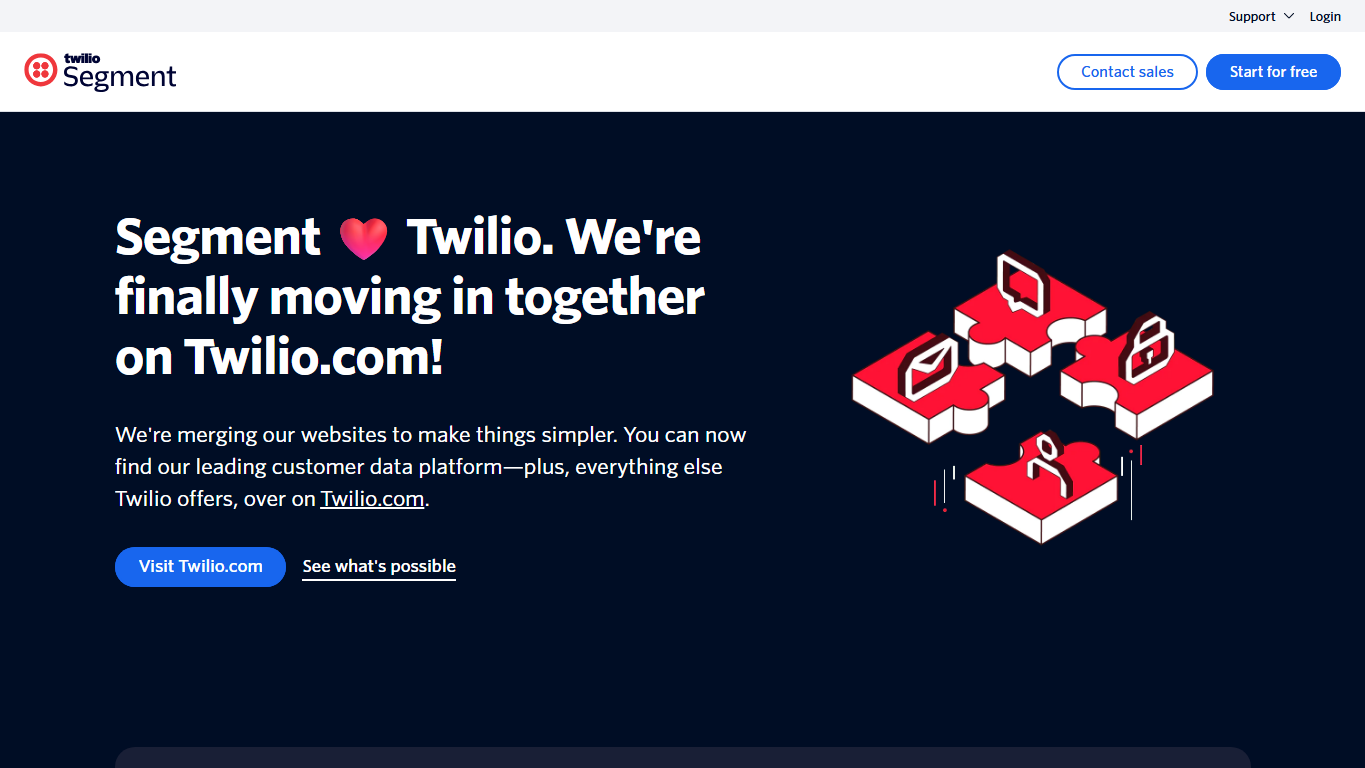
segment.com is the official website for Segment, now presented on Twilio as Twilio Segment, a customer data platform for collecting, unifying, and activating customer data. Teams use Segment when they need one data collection layer for websites, mobile apps, servers, warehouses, analytics tools, marketing systems, and customer engagement products.
Customer data platform
A customer data platform, often shortened to CDP, helps organize customer events and traits into a usable data foundation. Segment is commonly used to track actions such as signups, purchases, page views, feature use, form submissions, and subscription changes. That data can then flow to destinations such as analytics platforms, advertising systems, email tools, data warehouses, and personalization services.
Sources and destinations
Segment is built around the idea that data enters from sources and leaves through destinations. A source might be a website, mobile app, backend service, cloud function, or warehouse. A destination might be a product analytics tool, marketing automation platform, experimentation service, support system, or business intelligence workflow. The value is reducing one-off tracking integrations that drift apart over time.
Profiles and activation
Customer data becomes more useful when individual events can be tied to profiles, audiences, and lifecycle moments. Segment can support use cases such as audience creation, campaign personalization, product messaging, suppression lists, and journey triggers. These workflows work best when teams agree on identity rules, consent requirements, and which data is reliable enough to activate.
Governance and data quality
A tracking plan is the difference between useful customer data and a pile of inconsistent events. Segment implementations usually need clear event names, property definitions, required fields, access controls, privacy review, and ownership for schema changes. Without governance, every downstream dashboard and campaign can inherit the same measurement mistakes.
Who uses Segment
Segment is used by data engineers, product managers, growth teams, marketers, analytics teams, lifecycle teams, customer success groups, ecommerce teams, SaaS companies, and enterprises that need consistent customer data across many tools. A startup may use it to avoid rebuilding analytics integrations. A larger company may use it to standardize data across products, regions, and business units.
Pricing and setup choices
Twilio publishes customer data platform pricing information for Segment, but the practical cost depends on product scope, data volume, destinations, governance needs, and support requirements. The larger setup decision is architectural: teams need to decide which systems create events, which tool owns identity, which warehouse is authoritative, and which downstream teams can activate data.
Strengths and cautions
Segment can make customer data more portable and consistent, especially when many teams rely on the same events. The caution is that a CDP does not automatically create a clean data model. Poorly named events, duplicate identities, missing consent logic, and unreviewed destinations can spread confusion faster because the platform distributes data so efficiently.
Why it matters
Segment matters because modern digital businesses rarely use one system for customer data. Product analytics, marketing, support, sales, warehouses, and experimentation tools all need overlapping signals. A shared customer data layer can reduce integration work and make teams more confident that they are acting on the same version of customer behavior.
WHOIS domain data
Data pulled: May 20, 2026View current WHOIS record
- Domain
- segment.com
- IP address
- 52.40.5.43
- Registrar
- MarkMonitor Inc.
- WHOIS server
- whois.markmonitor.com
- Referral URL
- http://www.markmonitor.com
- Created
- July 6, 1998
- Updated
- February 20, 2024
- Expires
- July 5, 2026
- Nameservers
- ns-677.awsdns-20.net (205.251.194.165); ns-1681.awsdns-18.co.uk (205.251.198.145); ns-1205.awsdns-22.org (205.251.196.181); ns-386.awsdns-48.com (205.251.193.130)
- Domain status
- clientDeleteProhibited; clientTransferProhibited; clientUpdateProhibited
- DNSSEC
- unsigned
- Registrant organization
- Twilio Inc.
- Registrant country
- US
- Registrant and tech contact email
- Select Request Email Form at https://domains [dot] markmonitor [dot] com/whois/segment [dot] com