Slack
Slack is a workplace messaging and collaboration platform built around channels, direct messages, huddles, file sharing, search, apps, automations, and integrations. Launched from a failed game project and acquired by Salesforce in 2021, it reshaped how many teams coordinate work.
What Slack is
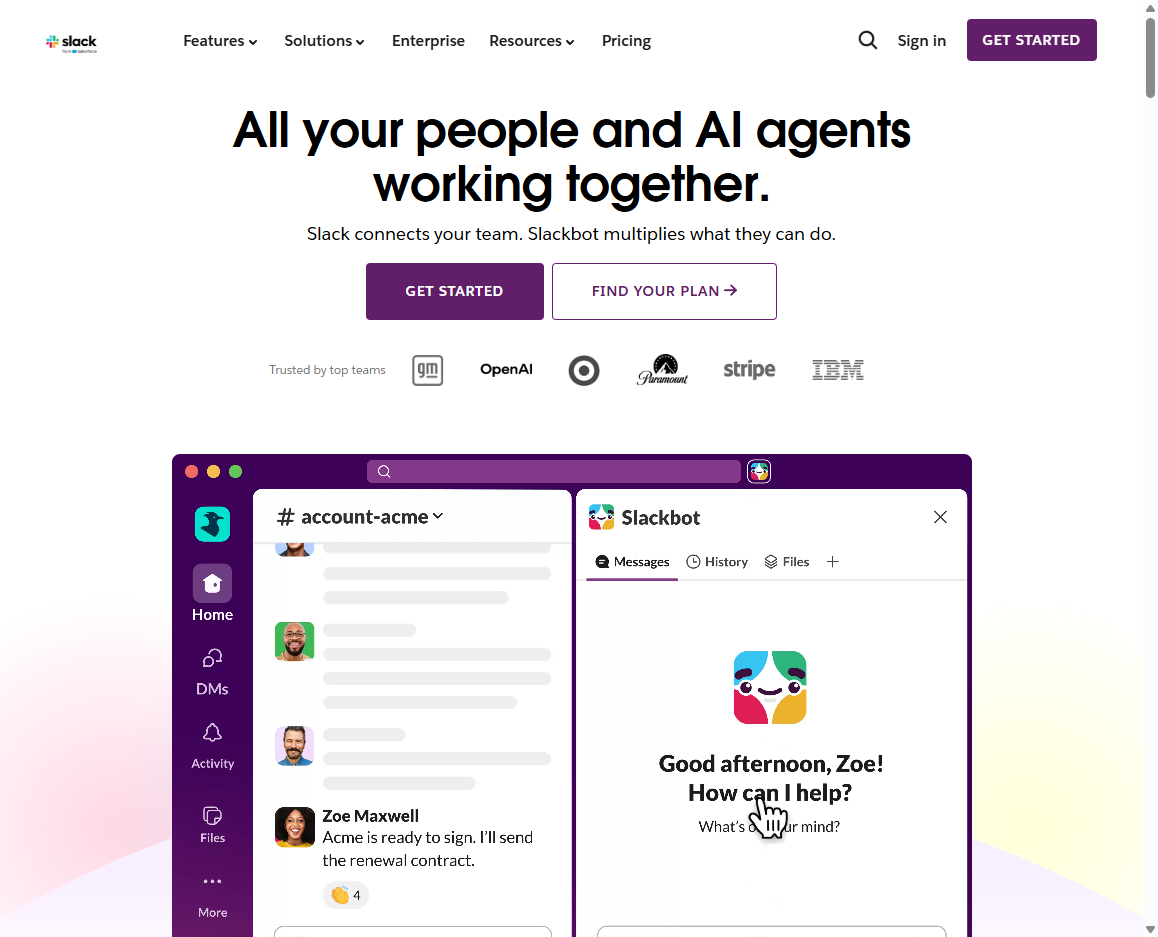
Slack is a team communication platform for workplace chat, channels, direct messages, huddles, clips, file sharing, search, apps, workflow automation, and integrations. On Slack.com, work conversations move out of scattered email threads and into searchable shared spaces organized by teams, projects, or topics.
From game tool to work hub
Slack grew out of internal communication software built by Tiny Speck while the company was developing the online game Glitch. When the game failed to become a business, the team turned its internal chat system into a standalone product for teams that needed faster, more transparent communication.
Channels as structure
Channels are Slackโ€s defining idea. Instead of every conversation living in private inboxes, teams can create public or private spaces for launches, incidents, departments, customers, social groups, and cross-functional projects. That structure makes context easier to find and easier to leave behind when work changes.
Searchable work memory
Slackโ€s name is often associated with the phrase โ€Searchable Log of All Conversation and Knowledge.โ€ The productโ€s archive of messages, files, decisions, links, and app notifications can become a kind of workplace memory, though it also creates overload when teams do not manage channels and notifications carefully.
Apps, bots, and workflows
Slack became a platform by letting other tools post into channels and respond to commands. GitHub alerts, calendar reminders, support tickets, incident tools, sales systems, HR workflows, and custom bots can all appear inside Slack, turning it into a control surface for work rather than only a chat app.
Salesforce ownership
Salesforce completed its acquisition of Slack in July 2021, after announcing a deal valued at about $27.7 billion. The acquisition positioned Slack as a collaboration layer for Salesforce customers and as a broader enterprise communication product competing with Microsoft Teams and other workplace suites.
Rise and pressure
Slack rose by making workplace chat feel modern, searchable, integrated, and even a little playful. Its pressure comes from Microsoft Teams bundling, notification fatigue, fragmented channels, security requirements, AI expectations, and the challenge of proving that faster communication actually improves work rather than just creating more messages.
Why it matters
Slack matters because it changed office communication norms. It made channels, emoji reactions, app integrations, incident rooms, async updates, and real-time team chat part of everyday work, influencing how companies coordinate across offices, time zones, and remote teams.