StubHub
StubHub is a popular ticket resale website where fans buy and sell tickets for concerts, sports, theater, comedy, festivals, and other live events.
What StubHub is
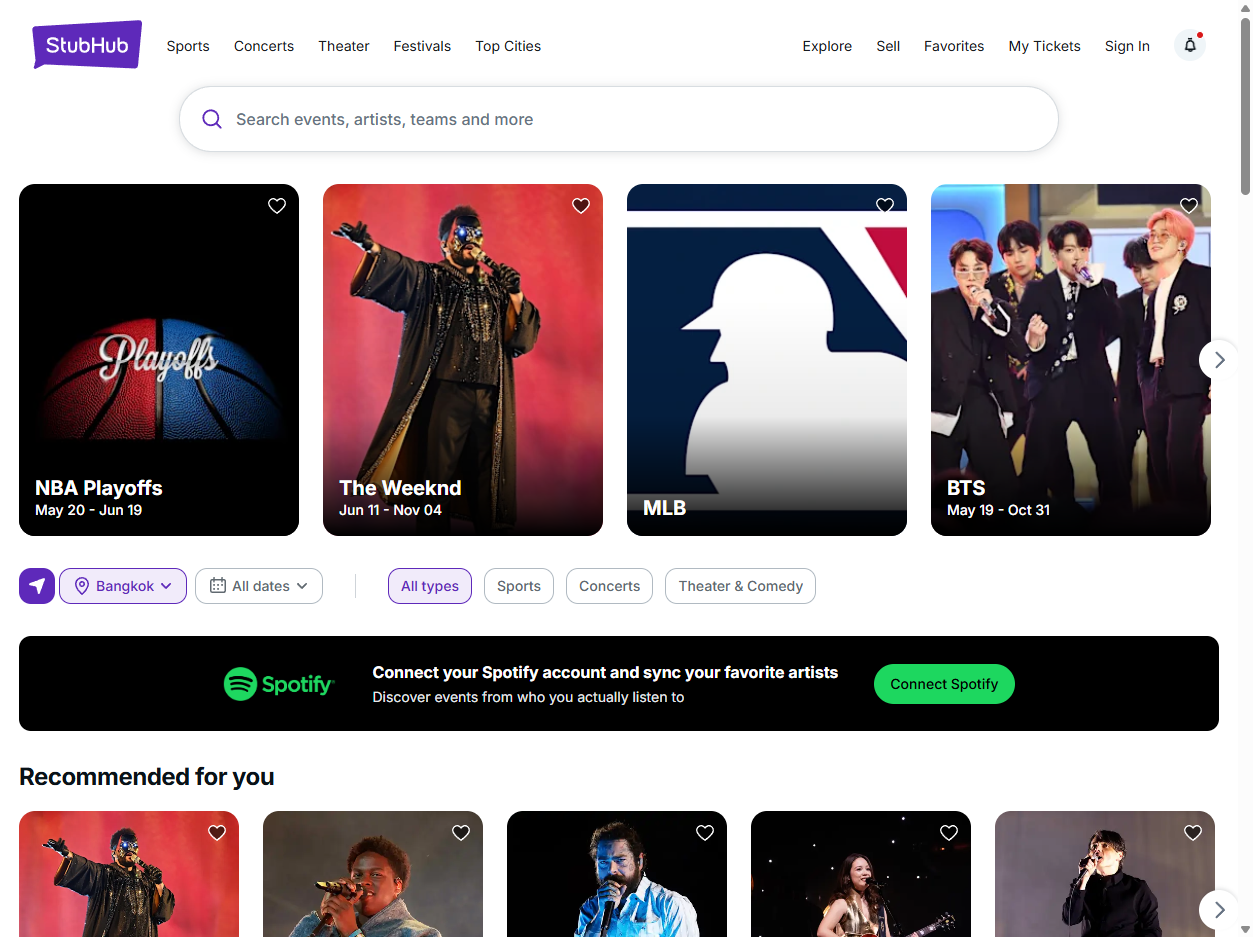
StubHub is a live-event ticket marketplace focused on resale. On StubHub.com, fans can search for concerts, sports, theater, comedy, festivals, and other events, compare available listings, buy tickets from sellers, or list eligible tickets they no longer plan to use. The official StubHub app is available on the App Store and Google Play.
.svg)

Secondary ticketing
StubHub is best understood as a secondary marketplace. Instead of being the first box office for most events, it connects buyers with sellers who are reselling tickets. That can help fans find seats after a primary onsale, but it also means prices may be above or below the original face value depending on demand, timing, seat location, fees, and seller choices.
How buying works
A buyer searches for an event, filters by date or location, reviews available sections and prices, and checks out through StubHub. Delivery depends on the ticket type: some tickets are transferred through a primary ticketing account, some are mobile tickets, and some may use other event-approved delivery methods. Buyers still need to read listing notes and delivery timing carefully.
How selling works
Sellers list tickets, set a price, and follow the delivery instructions if the tickets sell. The seller side is sensitive because a marketplace has to discourage duplicate, invalid, late, or misrepresented tickets. StubHub's help and newsroom materials emphasize policies, order handling, and support processes meant to keep buyers and sellers accountable.
Guarantees and limits
StubHub promotes guarantees and support processes, but a guarantee is not the same as a promise that every listing is cheap, official, or risk-free. Buyers should check event details, venue rules, transfer restrictions, refund policies, and local laws. Resale marketplaces can solve access problems while also creating confusion around fees, timing, and who actually controls the ticket.
StubHub and Ticketmaster
StubHub and Ticketmaster often appear in the same fan journey, but they play different roles. Ticketmaster is often a primary ticketing provider for the original sale, while StubHub is known mainly for resale listings. Some Ticketmaster tickets can later be listed on resale marketplaces, but transfer rules vary by event, organizer, and jurisdiction.
Why it matters
StubHub matters because live-event demand rarely lines up neatly with original ticket supply. A resale marketplace can make unused tickets easier to sell and sold-out events easier to attend, while also raising hard questions about price transparency, speculative listings, transfer limits, fraud prevention, and whether fans understand what kind of ticket they are buying.
WHOIS domain data
Data pulled: May 24, 2026View current WHOIS record
- Domain
- stubhub.com
- IP address
- 18.165.98.54
- Registrar
- MarkMonitor Inc.
- WHOIS server
- whois.markmonitor.com
- Referral URL
- http://www.markmonitor.com
- Created
- June 23, 2000
- Updated
- September 15, 2025
- Expires
- June 23, 2026
- Nameservers
- ns-1712.awsdns-22.co.uk (205.251.198.176); ns-472.awsdns-59.com (205.251.193.216); ns-1225.awsdns-25.org (205.251.196.201); ns-570.awsdns-07.net (205.251.194.58)
- Domain status
- clientDeleteProhibited; clientTransferProhibited; clientUpdateProhibited; serverDeleteProhibited; serverTransferProhibited; serverUpdateProhibited
- DNSSEC
- unsigned
- Registrant organization
- Stubhub, Inc.
- Registrant country
- US
- Contact email method
- request form at https://domains.markmonitor.com/whois/stubhub.com