Tripadvisor
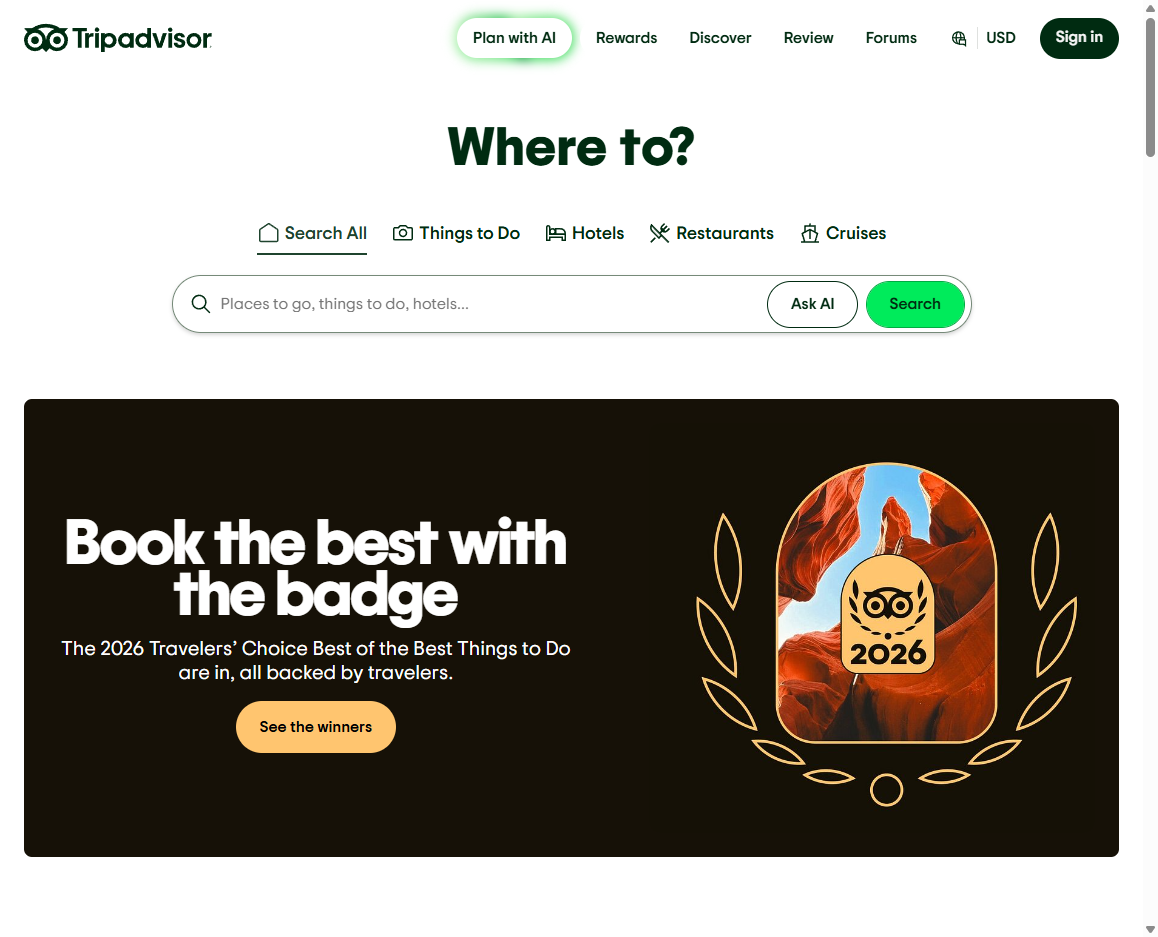
Tripadvisor is a travel guidance platform where people read and write reviews, compare hotels, discover restaurants, browse attractions, book experiences, and plan trips using traveler-generated content. Founded in 2000, it helped move travel research from printed guidebooks and agency advice toward searchable reviews, ratings, photos, rankings, maps, and marketplace links for hotels, restaurants, and things to do.
What Tripadvisor is
Tripadvisor is a travel website and app built around guidance from other travelers. On Tripadvisor.com, hotels, restaurants, attractions, tours, destinations, and travel forums are organized so people can compare options before they spend money or time on a trip. The official Tripadvisor app is available on the App Store and Google Play.
.svg)

Reviews as travel infrastructure
Before sites like Tripadvisor became common, many travelers relied on guidebooks, travel agents, brochures, or word of mouth. Tripadvisor made reviews searchable at scale. A hotel, museum, restaurant, or tour could be judged not only by its official description, but by hundreds or thousands of traveler experiences.
Ratings, rankings, and visibility
The platform turns messy personal experiences into scores, lists, badges, filters, and rankings. That can help visitors narrow choices quickly, but it also gives Tripadvisor real influence over which businesses are seen first. A ranking shift can matter to a small restaurant, hotel, tour operator, or local attraction.
From research to booking
Tripadvisor began as a planning and review site, but its business expanded toward booking links, advertising, restaurants, and experiences. The group includes brands such as Viator and TheFork, reflecting a broader move from reading about travel to reserving activities, tables, tours, and other trip components.
Trust and moderation
Review platforms depend on trust. Tripadvisor has to screen for fraud, conflicts of interest, abusive posts, duplicate content, manipulated rankings, and outdated information while still letting travelers describe real positive and negative experiences. That balance is difficult because travel decisions are emotional, expensive, and sometimes urgent.
Business impact
A Tripadvisor page can become a public reputation file for a business. Good reviews can bring bookings, while repeated complaints may discourage visitors. This gives travelers a louder voice, but it also means businesses care deeply about review policies, response tools, ranking logic, and whether feedback is fair.
Rise and pressure
Tripadvisor rose by making traveler opinion searchable before social media and mobile maps dominated local discovery. Its pressure now comes from Google results, Booking.com and Airbnb reviews, TikTok and Instagram travel inspiration, AI trip planners, and skepticism about fake or unrepresentative reviews.
Why it matters
Tripadvisor matters because travel is full of uncertainty. A review archive can change where people sleep, eat, walk, spend, and explore. It also shows how user-generated content can reshape industries that once depended on expert gatekeepers, printed recommendations, and direct supplier marketing.
WHOIS domain data
Data pulled: May 24, 2026View current WHOIS record
- Domain
- tripadvisor.com
- IP address
- 18.165.83.45
- Registrar
- CSC Corporate Domains, Inc.
- WHOIS server
- whois.corporatedomains.com
- Referral URL
- http://cscdbs.com
- Created
- March 23, 1999
- Updated
- March 19, 2026
- Expires
- March 23, 2027
- Nameservers
- ns-218.awsdns-27.com (205.251.192.218); ns-1702.awsdns-20.co.uk (205.251.198.166); ns-1455.awsdns-53.org (205.251.197.175); ns-584.awsdns-09.net (205.251.194.72)
- Domain status
- clientTransferProhibited