Waze
Waze is a navigation website and app that uses community reports, live traffic information, map editing, and route calculation to help drivers choose routes and avoid delays.
What Waze is
Waze is a navigation website and app for drivers. On Waze.com, people can use live maps, plan drives, and download the app, while the mobile experience combines turn-by-turn directions with traffic, hazard, closure, crash, and road-condition reports from the driving community. The official Waze app is available on the App Store and Google Play.
.svg)

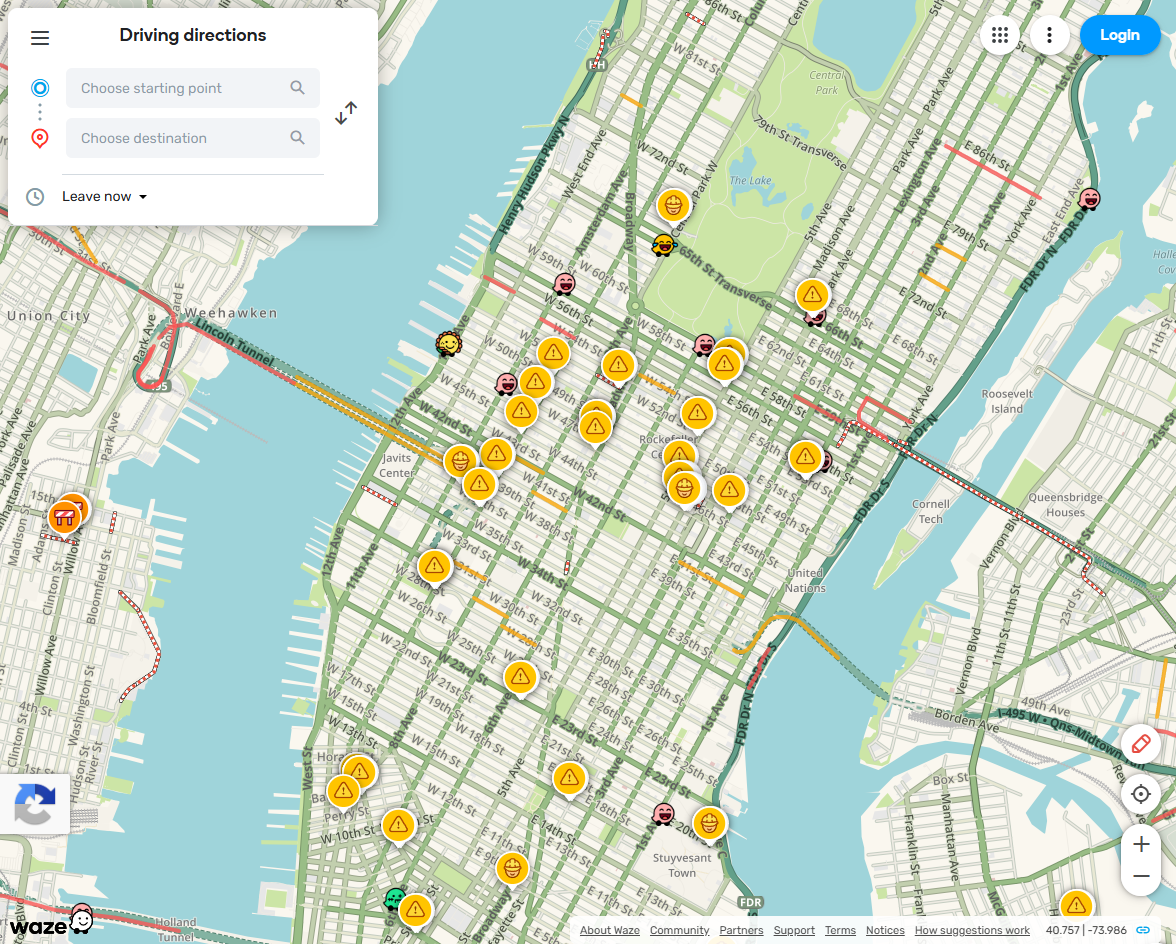
Community traffic
Waze's signature idea is that drivers help other drivers. Users can report slowdowns, crashes, road hazards, police presence, closures, and other conditions, giving the routing system and nearby drivers more timely context than a static map can provide.
Map editing
Behind the app is a volunteer map-editing community that updates streets, turns, closures, points of interest, restrictions, and local road details. Those edits help Waze reflect changing roads, temporary events, and local knowledge that may be missing from general map data.
Routing and alerts
Waze uses road data, live traffic, user reports, and historical patterns to suggest routes. It can reroute drivers when conditions change, but every navigation app has limits: reports can be late, routes can be surprising, and the fastest path for one driver may not feel best for everyone on the road.
Google ownership
Google acquired Waze in 2013 and said the Waze team would remain in Israel and operate separately at first. The acquisition linked Waze's community traffic data with Google's mapping ecosystem while keeping Waze's driver-focused identity distinct from Google Maps.
Cities and partners
Waze also works with cities, transportation authorities, broadcasters, businesses, and first responders. These partnerships can help officials understand disruptions, share traffic events, and communicate road information back to drivers.
Why it matters
Waze shows how a navigation service can be shaped by a live community rather than only by official road databases. It changed driver expectations around real-time alerts, helped normalize crowdsourced traffic reporting, and raised new questions about routing, privacy, road safety, and neighborhood traffic impacts.
WHOIS domain data
Data pulled: May 24, 2026View current WHOIS record
- Domain
- waze.com
- IP address
- 130.211.9.172
- Registrar
- MarkMonitor Inc.
- WHOIS server
- whois.markmonitor.com
- Referral URL
- http://www.markmonitor.com
- Created
- April 1, 2000
- Updated
- February 28, 2026
- Expires
- April 1, 2027
- Nameservers
- ns-cloud-b1.googledomains.com (216.239.32.107); ns-cloud-b2.googledomains.com (216.239.34.107); ns-cloud-b3.googledomains.com (216.239.36.107); ns-cloud-b4.googledomains.com (216.239.38.107)
- Domain status
- clientDeleteProhibited; clientTransferProhibited; clientUpdateProhibited
- DNSSEC
- unsigned
- Registrant contact
- Organization Google LLC; address US
- Registrant email
- Select Request Email Form at https://domains [dot] markmonitor [dot] com/whois/waze [dot] com
- Tech contact email
- Select Request Email Form at https://domains [dot] markmonitor [dot] com/whois/waze [dot] com