WordPress
WordPress is an open-source content management system and publishing platform used to build blogs, business sites, newsrooms, stores, portfolios, and communities. Created in 2003 by Matt Mullenweg and Mike Little, it powers more than 43% of sites across the web, according to WordPress.org.
What WordPress is
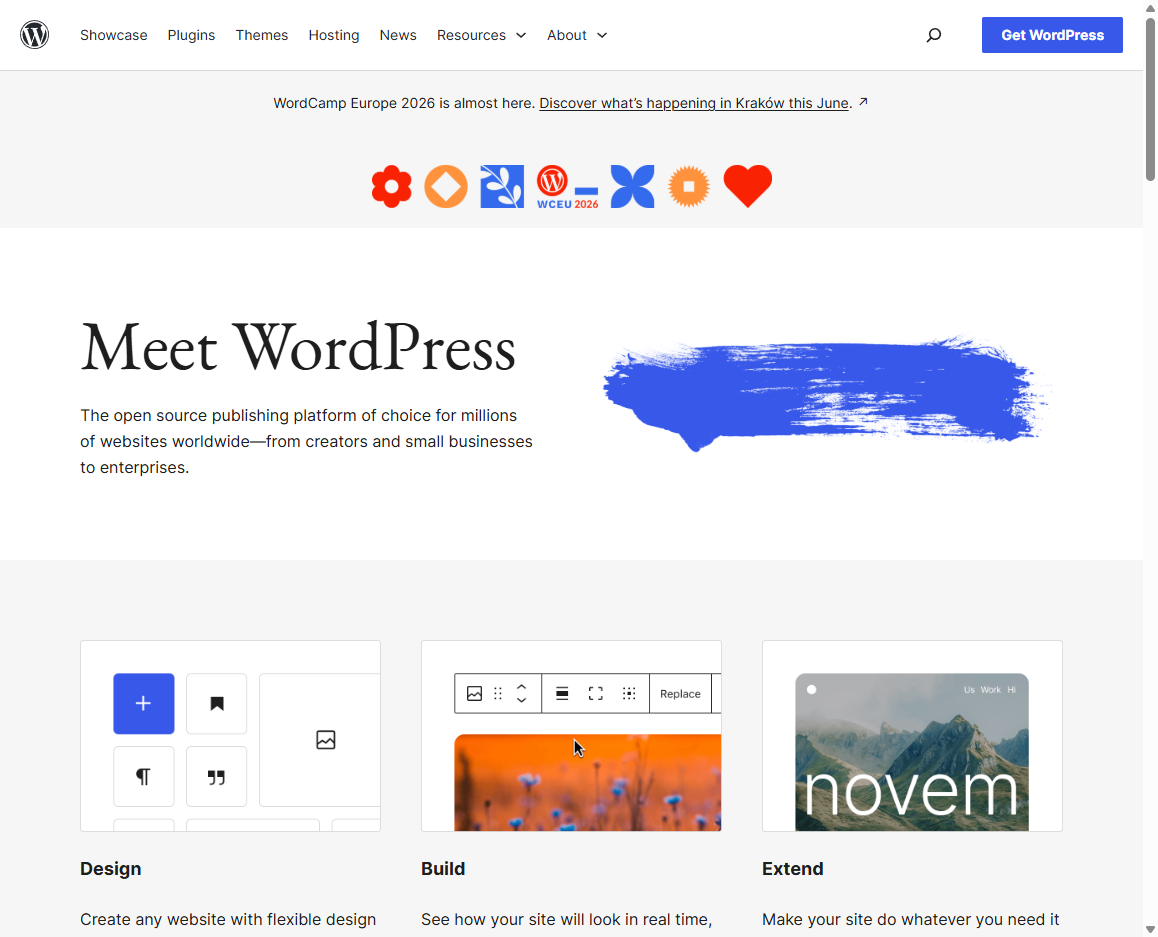
WordPress is open-source web publishing software used to create blogs, company sites, ecommerce stores, portfolios, newsrooms, membership sites, communities, and documentation hubs. It can be self-hosted from WordPress.org or used through hosted services such as WordPress.com. The official WordPress app is available on the App Store and Google Play.
.svg)

From blogging tool to CMS
WordPress began in 2003 when Matt Mullenweg and Mike Little forked the abandoned b2/cafelog blogging software. What started as a personal publishing tool grew into a full content management system, able to manage pages, media, users, menus, taxonomies, comments, and complex site structures.
Open source and GPL freedoms
WordPress is licensed under the GPL, which gives users the freedom to run, study, modify, redistribute, and share modified versions of the software. That legal and cultural foundation helped create a large ecosystem of contributors, agencies, hosting companies, plugin makers, theme designers, educators, and developers.
Themes, plugins, and blocks
Themes control a siteโ€s presentation, plugins add features, and blocks provide reusable pieces of content and layout inside the editor. This modular system lets beginners build sites without writing much code while giving developers many ways to customize and extend the platform.
WordPress.org and WordPress.com
WordPress.org is the home of the open-source project and downloadable software, while WordPress.com is a hosted service run by Automattic. The names are often confused: one is the community project, and the other is a commercial hosting and website-building service based on WordPress.
Commerce and professional web work
WordPress is not only for blogs. WooCommerce and other plugins turn it into an ecommerce platform, while agencies and developers use it for enterprise content, marketing sites, nonprofit campaigns, media publishing, learning platforms, directories, and custom web applications.
Rise and pressure
WordPress rose by making web publishing accessible and extensible at the same time. Its pressure comes from security maintenance, plugin quality, performance, page-builder complexity, competition from hosted site builders, governance debates, and the challenge of modernizing without alienating its huge installed base.
Why it matters
WordPress matters because it shaped the open web. It made publishing, owning a domain, customizing a site, and running an online business possible for millions of people without handing every part of web presence to closed social platforms.
WHOIS domain data
Data pulled: May 24, 2026View current WHOIS record
- Domain
- wordpress.org
- IP address
- 198.143.164.252
- Registrar
- MarkMonitor Inc.
- WHOIS server
- whois.markmonitor.com
- Referral URL
- http://www.markmonitor.com
- Created
- March 28, 2003
- Updated
- July 1, 2025
- Expires
- March 28, 2035
- Nameservers
- ns1.wordpress.org (198.181.116.10); ns2.wordpress.org (198.181.117.10); ns3.wordpress.org (192.0.74.10); ns4.wordpress.org (192.0.75.10)
- Domain status
- clientDeleteProhibited; clientTransferProhibited; clientUpdateProhibited
- Registrant contact
- Organization DNStination, Inc., US
- Registrant email
- Select Request Email Form at https://domains [dot] markmonitor [dot] com/whois/wordpress [dot] org
- Tech contact email
- Select Request Email Form at https://domains [dot] markmonitor [dot] com/whois/wordpress [dot] org