Tumblr
Tumblr is a microblogging and social networking platform known for reblogs, tags, GIFs, fandom, visual remix culture, custom blogs, and niche internet communities. Founded in 2007, it passed through Yahoo and Verizon before Automattic acquired it and tried to revive its creative web identity.
What Tumblr is
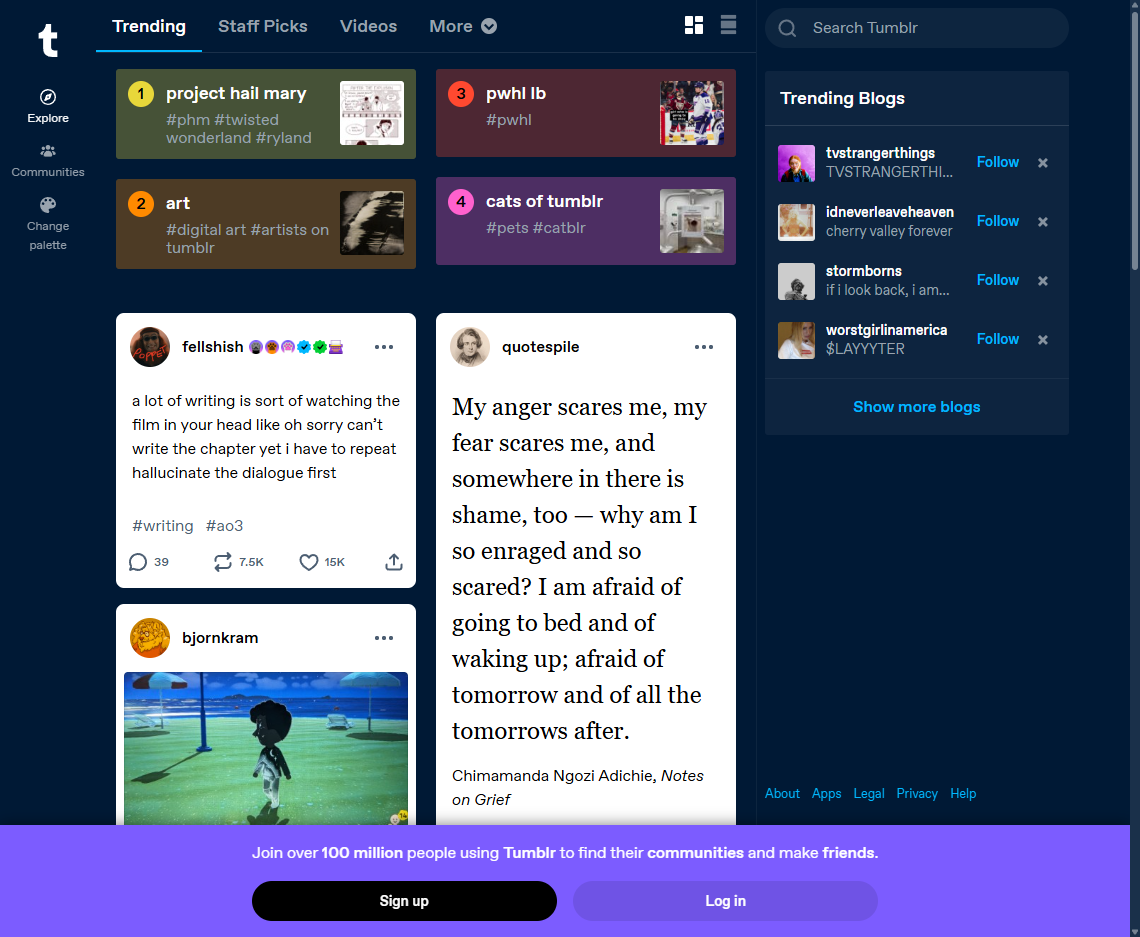
Tumblr is a microblogging and social networking platform built around short posts, images, GIFs, text, quotes, links, audio, video, tags, and reblogs. On Tumblr.com, it sits between a blog host, a social feed, an image-sharing site, and a fandom archive.
Microblogging identity
Tumblr made blogging feel fast and expressive. Instead of asking users to maintain formal websites, it encouraged fragments: a joke, a mood board, a fan edit, a diary entry, a photo set, or a reblog with one sharp sentence added on top.
Reblog culture
The reblog is Tumblrโ€s core mechanic. Posts travel from blog to blog with notes, tags, commentary, and additions, which makes authorship feel layered rather than fixed. This helped create a culture of remixing, inside jokes, fandom chains, and communal discovery.
Fandom and visual language
Tumblr became a major home for fandoms, artists, writers, memes, GIF sets, mood boards, identity communities, and niche subcultures. Its dashboard favored expression and curation more than polished personal branding, giving the site a looser and stranger tone than many mainstream social networks.
Yahoo, Verizon, and Automattic
Yahoo agreed to buy Tumblr in 2013, hoping the platform would strengthen its social and mobile reach. Tumblr later moved under Verizon after Verizon acquired Yahooโ€s internet business. In 2019, Verizon Media announced plans to sell Tumblr to Automattic, the company behind WordPress.com.
Rise, fall, and reinvention
Tumblrโ€s rise came from giving internet culture a flexible creative home. Its fall came from business-model struggles, platform policy controversies, competition from Instagram, Twitter, Reddit, and TikTok, and a sharp loss of momentum after adult-content policy changes. Under Automattic, Tumblr has tried to stabilize around community, subscriptions, creator tools, and its archive-like value.
Moderation and adult content
Tumblrโ€s history is closely tied to debates over adult content, safety, app-store rules, harassment, copyright, and marginalized communities. The platformโ€s 2018 adult-content ban reshaped its culture and became a case study in how moderation policy can alter a siteโ€s identity.
Why it matters
Tumblr matters because it shaped the grammar of modern internet culture: reaction GIFs, fandom edits, aesthetic tagging, social justice discourse, surreal humor, and personal microblogging. Even when its mainstream influence declined, its style kept echoing across other platforms.