Baidu
Baidu is China's leading search engine and a major AI company. Founded in 2000 by Robin Li and Eric Xu, it grew from Chinese-language web search into a broader ecosystem of search, feeds, online marketing, maps, knowledge products, cloud, autonomous driving, and AI services.
What Baidu is
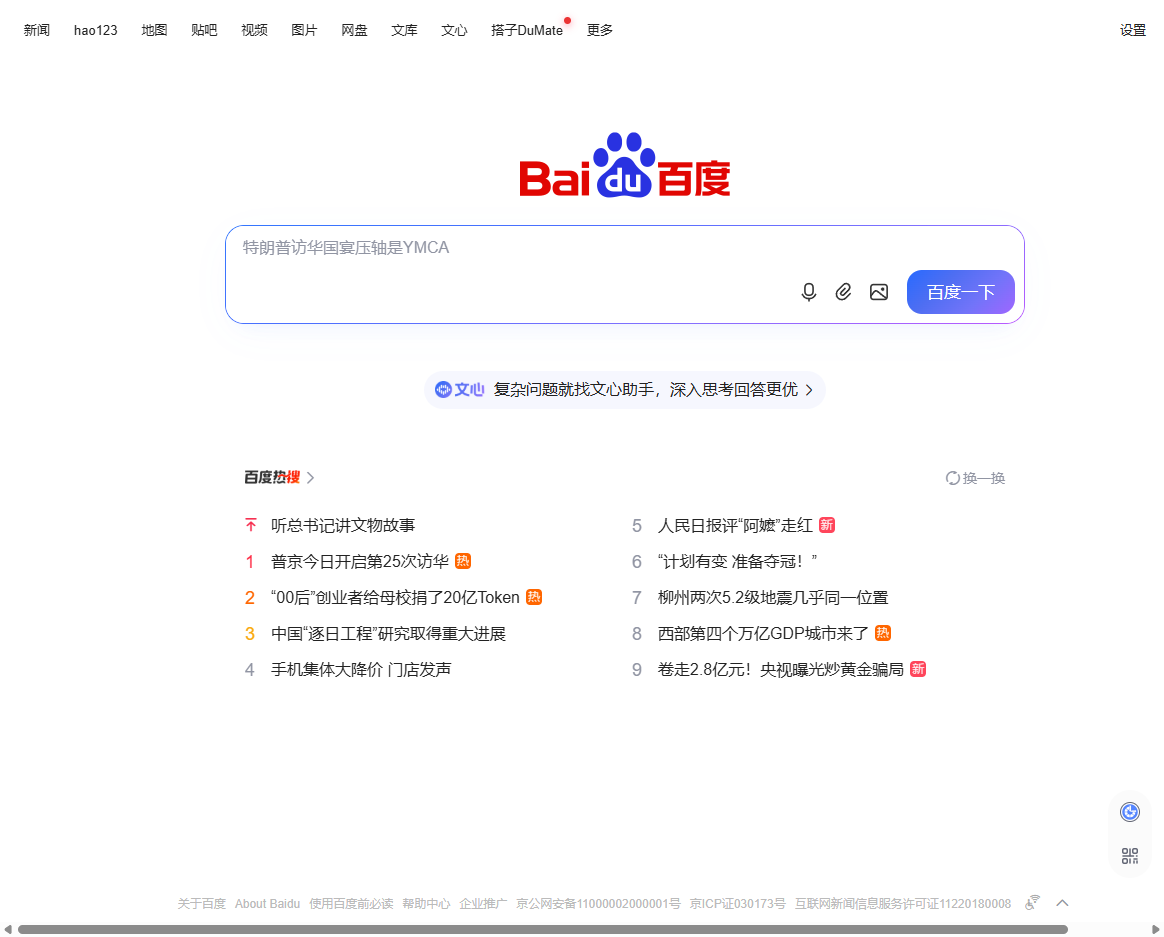
Baidu is a Chinese search engine and technology company. Its search business at Baidu.com helps users find web pages, news, images, video, maps, encyclopedia entries, forums, services, and answers in Chinese-language internet contexts. Like Google, it is also much more than search, but search remains central to its identity.
Search roots
Baidu was founded in 2000 by Robin Li and Eric Xu. Li had worked in search before returning to China, including at Infoseek, and had developed link-analysis ideas that helped rank pages by relationships among links. Baidu entered a fast-growing Chinese internet market where local language, regulation, portals, and mobile habits shaped search differently from the U.S. web.
Chinese-language discovery
Search quality depends on language. Baidu had to handle Chinese word segmentation, synonyms, local names, common queries, local services, censorship rules, and Chinese web ecosystems. Its strength was not only indexing pages; it was becoming a familiar gateway for Chinese users navigating a rapidly expanding domestic internet.
Online marketing engine
Baidu's business has long depended on online marketing. Search ads and related marketing tools connect user intent with merchants, services, and brands. That model can be powerful because search queries reveal what people want at a particular moment, but it also creates pressure over ad quality, paid placement, medical claims, and trust.
Mobile and app ecosystem
As Chinese internet use moved to mobile apps, Baidu pushed search into Baidu App and related services. Search became tied to feeds, mini programs, managed pages, maps, video, knowledge products, and AI features. This made Baidu Search less like a simple browser search box and more like a mobile information platform.
Rise and pressure
Baidu rose by becoming the dominant Chinese search gateway. Its pressure points have included competition from mobile super-apps, short-video platforms, ecommerce search, regulatory scrutiny, advertising trust problems, and the changing habits of users who search inside apps rather than on the open web. Baidu's challenge has been to keep search relevant in a fragmented mobile ecosystem.
AI transformation
Baidu has invested heavily in AI, including ERNIE models, AI cloud, autonomous driving, and AI-generated search features. In 2025, Baidu described the AI transformation of Baidu Search as accelerating rapidly. The strategic idea is that search can move from matching links to understanding tasks, generating answers, and connecting users to services.
Why it matters
Baidu matters because it shows how search engines adapt to national language, regulation, mobile platforms, and local internet ecosystems. It is one of the clearest examples of a major search market where Google is not the central player. Studying Baidu helps explain Chinese web discovery, search advertising, AI search, and the politics of information access.