Coursera
Coursera is an online learning platform that connects learners with courses, guided projects, professional certificates, degree programs, and job-relevant training from universities and companies. Founded in 2012 by Andrew Ng and Daphne Koller, it helped make massive open online courses part of mainstream education and workforce development.
What Coursera is
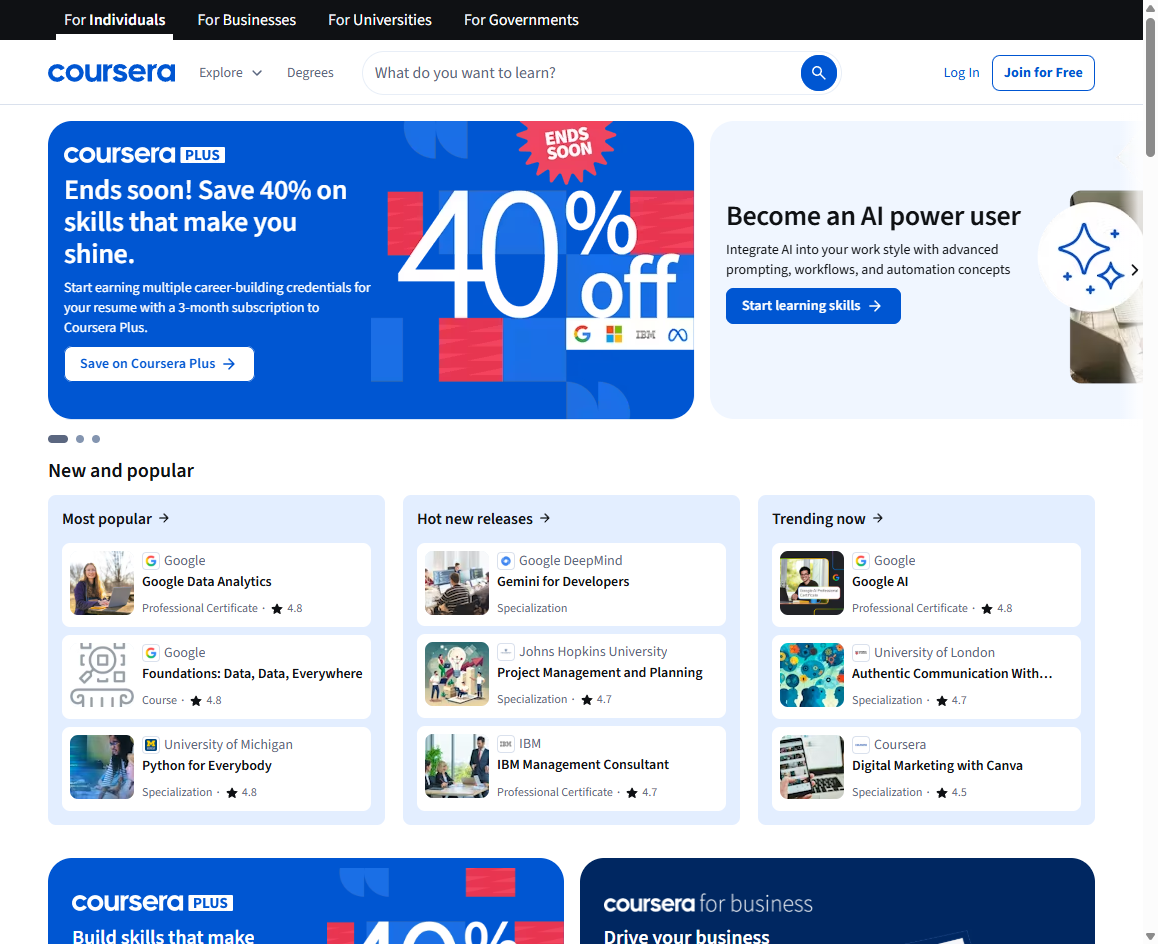
Coursera is an online learning website and education technology company. On Coursera.org, learners can take courses, guided projects, Specializations, Professional Certificates, MasterTrack certificates, and online degrees from university and industry partners. The platform is built for people studying on their own schedule as well as companies, campuses, governments, and teams that need structured skill development.
MOOC roots
Coursera grew out of the early 2010s wave of massive open online courses, often called MOOCs. The core idea was simple but ambitious: make high-quality university-style teaching available online to far more people than a physical classroom could hold. Video lectures, quizzes, peer review, discussion forums, and automated grading helped courses reach global audiences.
Courses and credentials
A Coursera learner might audit a course, pay for a certificate, follow a multi-course Specialization, complete a job-focused Professional Certificate, or apply to an online degree hosted by a partner university. That range matters because Coursera is not only a video library; it is also a credential marketplace where different programs carry different levels of cost, time, assessment, and institutional recognition.
Partner marketplace
Coursera's catalog depends on partnerships with universities and companies. Schools bring academic courses and degrees, while companies often bring job-aligned training in areas such as data, business, technology, cloud computing, project management, and AI. Coursera supplies the platform, discovery, payments, learner tools, analytics, and distribution layer around that content.
Business and institutions
Coursera serves individual learners, but a large part of its strategy is institutional learning. Employers use Coursera for Business to upskill workers, universities use campus products to supplement teaching, and governments use online learning programs for workforce development. This makes Coursera part consumer website, part enterprise software provider, and part education infrastructure.
AI and skills era
As AI changes work, Coursera has leaned into skills-based learning and AI-assisted features. The platform emphasizes role-based training, career-relevant certificates, and tools such as AI guidance and course-building support. The challenge is to keep online learning useful and credible when both job requirements and learning tools are changing quickly.
Why it matters
Coursera matters because it helped normalize the idea that serious learning can happen online at large scale. It also shows the tradeoffs of platform education: access can expand, but learners still need motivation, reliable assessment, employer trust, fair pricing, and clarity about what each certificate or degree actually represents.