DuckDuckGo
DuckDuckGo is a privacy-focused search engine and software company founded by Gabriel Weinberg in 2008. It built its identity around not tracking users, showing contextual ads instead of behavioral ads, and offering search and browsing tools for people who want less personal data collection.
What DuckDuckGo is
DuckDuckGo is a search engine and privacy software company. At DuckDuckGo.com, its best-known product is a search engine that positions itself against tracking-based search. The company has also expanded into browser extensions, mobile and desktop browsers, email protection, app tracking protection, VPN features, and private AI tools.
Privacy-first search
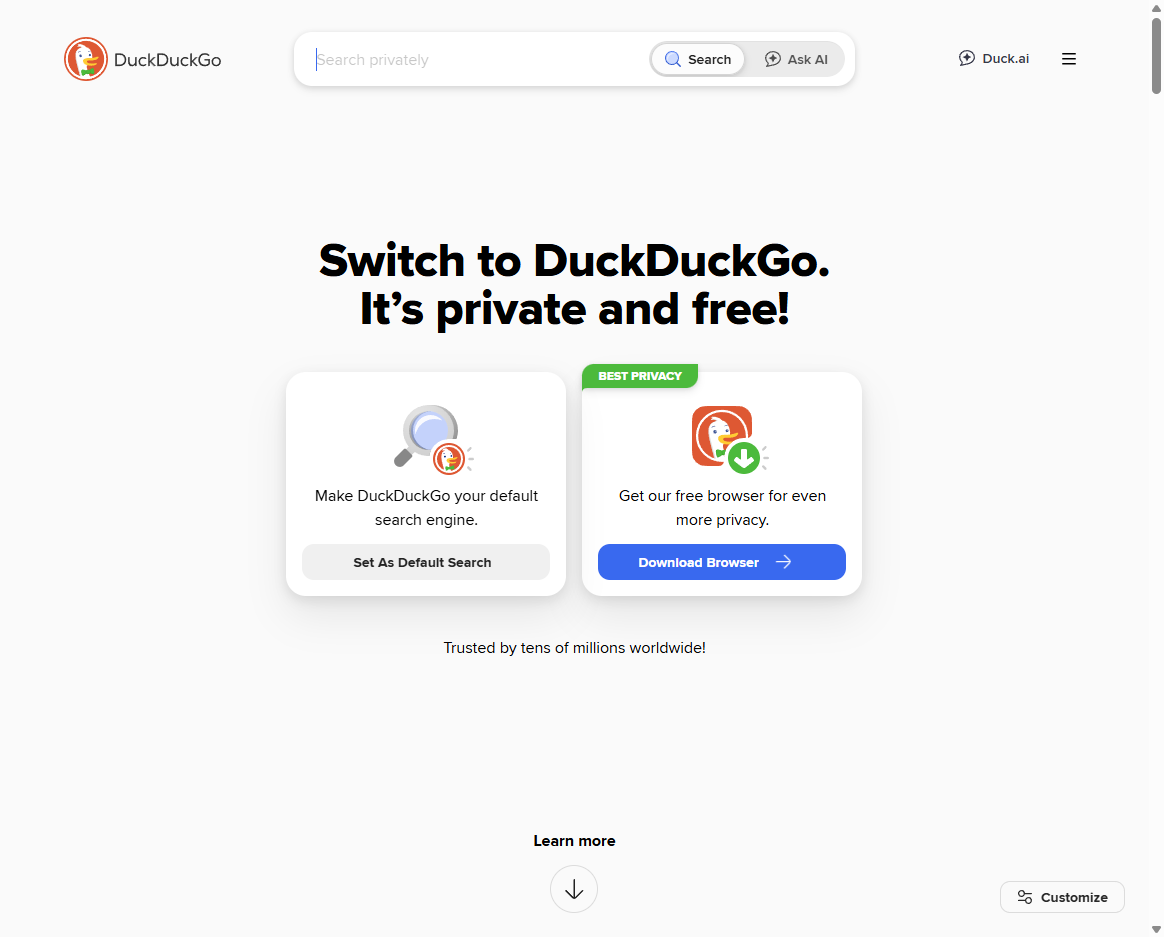
DuckDuckGo's central claim is that it does not track users. In practice, that means it says it does not build personal search histories, create advertising profiles from searches, or follow users across the web in the way many ad-supported services do. This privacy promise is the main reason many people switch to it.
Where results come from
DuckDuckGo combines multiple sources for search results and features. It has long used outside partners for much of its traditional web search coverage, while also adding its own instant answers, indexes, and product features. This makes DuckDuckGo less like a pure crawler-only engine and more like a privacy-focused search interface built from several inputs.
Bangs and shortcuts
One of DuckDuckGo's distinctive features is bangs: shortcuts that send a query directly to another site. Typing a command such as a site-specific bang can jump straight to search results on a target website. Bangs are convenient, but they also change the privacy context because the destination site handles the query after the redirect.
Advertising without profiles
DuckDuckGo still makes money from search ads, but its pitch is that ads can be relevant without personal tracking. If someone searches for running shoes, ads can relate to running shoes because of the query itself, not because the search engine has stored a long-term profile of that person.
Rise and differentiation
DuckDuckGo rose by being different rather than by trying to out-Google Google on scale. It found a clear lane around privacy, especially as public concern grew over tracking, data brokers, targeted advertising, and default search power. Its growth showed that some users value a simpler, less personalized search experience enough to change habits.
AI and private answers
DuckDuckGo has moved into AI carefully because generated answers can create new privacy and sourcing questions. Its Duck.ai and AI-assisted search features are framed around private access to AI tools, with limits on tracking and storage. The broader challenge is familiar: users want fast answers, but they also want trustworthy sources and control over their data.
Why it matters
DuckDuckGo matters because it keeps privacy central in the search conversation. It shows that search competition is not only about having the biggest index or the most advanced AI. It can also be about defaults, trust, data minimization, advertising incentives, and whether people should have a useful search engine without being profiled.