Imgur
Imgur is a popular image hosting and visual community site where people upload, share, discover, vote on, and discuss images, GIFs, memes, albums, and visual stories.
What Imgur is
Imgur is an image hosting and visual community website for uploading, sharing, browsing, and discussing images, GIFs, memes, and visual stories. On Imgur.com, people can post media, browse community submissions, vote, comment, follow profiles, and use links that travel across forums, chats, blogs, and social networks.
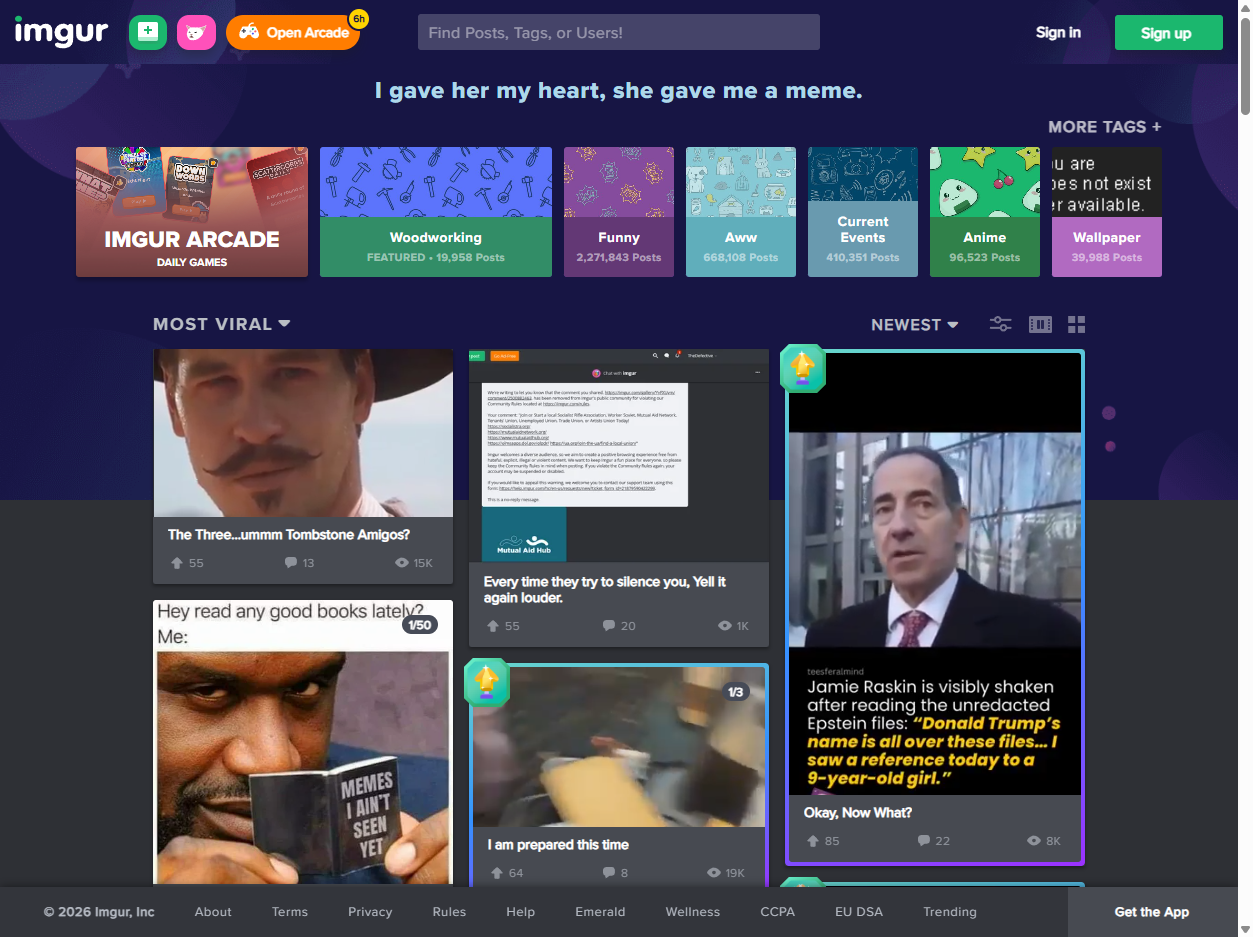
Image hosting and sharing
A big part of Imgur's appeal is that an image can become a link quickly. Users can upload media, organize posts or albums, and share a URL elsewhere. That made Imgur useful for situations where a person needed a stable-looking image link more than a full social profile.
Community and discovery
Imgur is also a browsing destination. Posts can move through community feeds where viewers upvote, downvote, comment, tag, and remix the mood of the site. The result is part image host, part entertainment feed, and part inside-joke engine for internet regulars.
Memes, GIFs, and visual stories
Imgur became known for short visual formats that travel well: reaction images, GIFs, screenshots, comic panels, before-and-after albums, tutorials, pets, fandom jokes, and visual explainers. A post does not need to be polished to work; it needs to be quick, legible, and shareable.
Relationship with Reddit
Imgur grew alongside Reddit because many Reddit users needed an easy place to host images before Reddit's own image tools matured. Even after more platforms added native media uploads, Imgur remained part of the web's habit of sharing image links across communities.
Rules and moderation
Because image hosts can attract spam, harassment, copyright problems, adult material, and illegal content, Imgur depends on content rules, reporting, moderation, account controls, and community norms. The site's value depends on keeping sharing easy without letting the feed become unusable.
APIs and embeds
Imgur also provides an API that developers can use to upload, fetch, and work with Imgur media in apps and tools. That developer layer helped Imgur spread beyond its own website into third-party clients, browser tools, bots, and publishing workflows.
Why it matters
Imgur matters because it helped define a practical piece of the social web: the image link that can move anywhere. It turned hosting, memes, quick galleries, and community voting into a format that influenced how people explain jokes, document problems, and share visual moments online.