Naver
Naver is South Korea's leading search portal and one of the clearest examples of a search engine shaped by local language, community content, shopping, maps, blogs, and AI. Launched in 1999, it became central to how many Koreans search, read, shop, and navigate online.
What Naver is
Naver is a South Korean search engine and portal at Naver.com. It is not simply a Google-style web index with a different logo. Naver combines search with news, blogs, cafes, shopping, maps, dictionary tools, Q&A, webtoons, payments, and other services that reflect Korean internet habits.
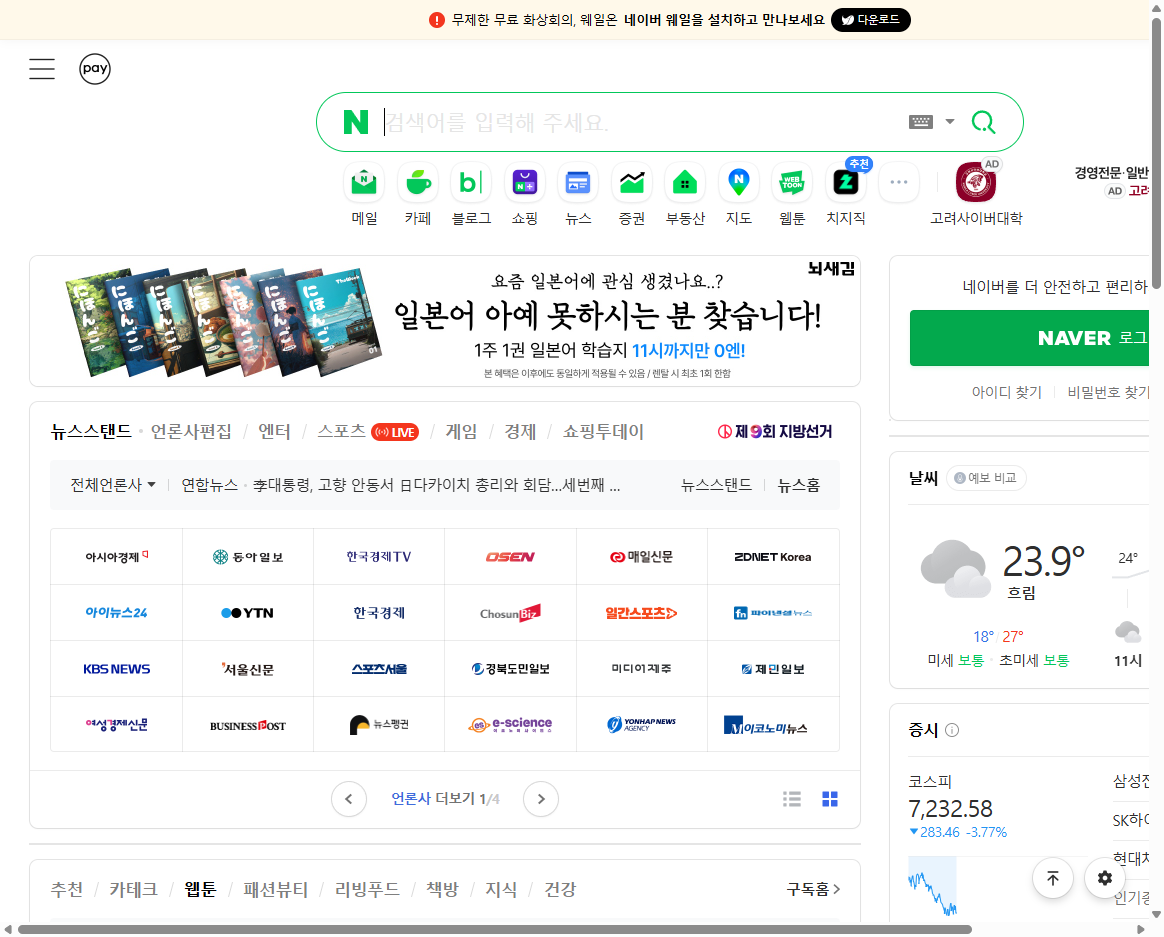
A Korean search portal
Naver launched in 1999, when Korean-language content on the open web was still limited. That mattered. A search engine could not rely only on crawling a large web if enough useful Korean pages did not yet exist. Naver responded by building a portal around search and encouraging users to create searchable content inside Naver services.
Integrated search
Naver became known for integrated search, where a single results page brings together categories such as news, blogs, Knowledge iN answers, shopping, images, maps, dictionary entries, videos, and web links. This design can feel busy, but it matches a portal model where users expect search to surface many types of domestic content at once.
Knowledge iN and user content
Knowledge iN, Naver's question-and-answer service, became important because it created Korean-language answers when the wider web did not always have them. Blogs and cafes also gave Naver a large base of user-generated content. This made Naver Search partly a gateway into Naver's own community and content ecosystem.
Shopping and local intent
Search on Naver often connects directly to shopping, restaurants, places, reviews, reservations, and services. For businesses in South Korea, visibility on Naver can matter as much as or more than visibility on global search engines. Search optimization therefore includes Naver blogs, product listings, maps, ads, and content formats.
Rise and local strength
Naver rose by understanding Korean users earlier and more deeply than global rivals. Its strength came from language, local content, portal habits, community services, and distribution. Google is powerful in South Korea too, but Naver remains a major search gateway because it is woven into domestic content and commerce.
AI and HyperCLOVA
Naver has invested in Korean-language AI through HyperCLOVA and HyperCLOVA X. AI features can summarize, recommend, and answer more directly, but they also raise familiar search questions: which sources are used, how answers are ranked, and whether creators still receive attention when results become more conversational.
Why it matters
Naver matters because it shows that search is not one universal design. In South Korea, search developed as a portal, content platform, shopping guide, local directory, and community gateway. Understanding Naver helps explain why global search engines do not always dominate every market, even when they have strong technology.