Proton Mail
Proton Mail is a privacy-focused email service from Proton that emphasizes encrypted communication, Swiss jurisdiction, and protection from ad-based inbox scanning.
What Proton Mail is
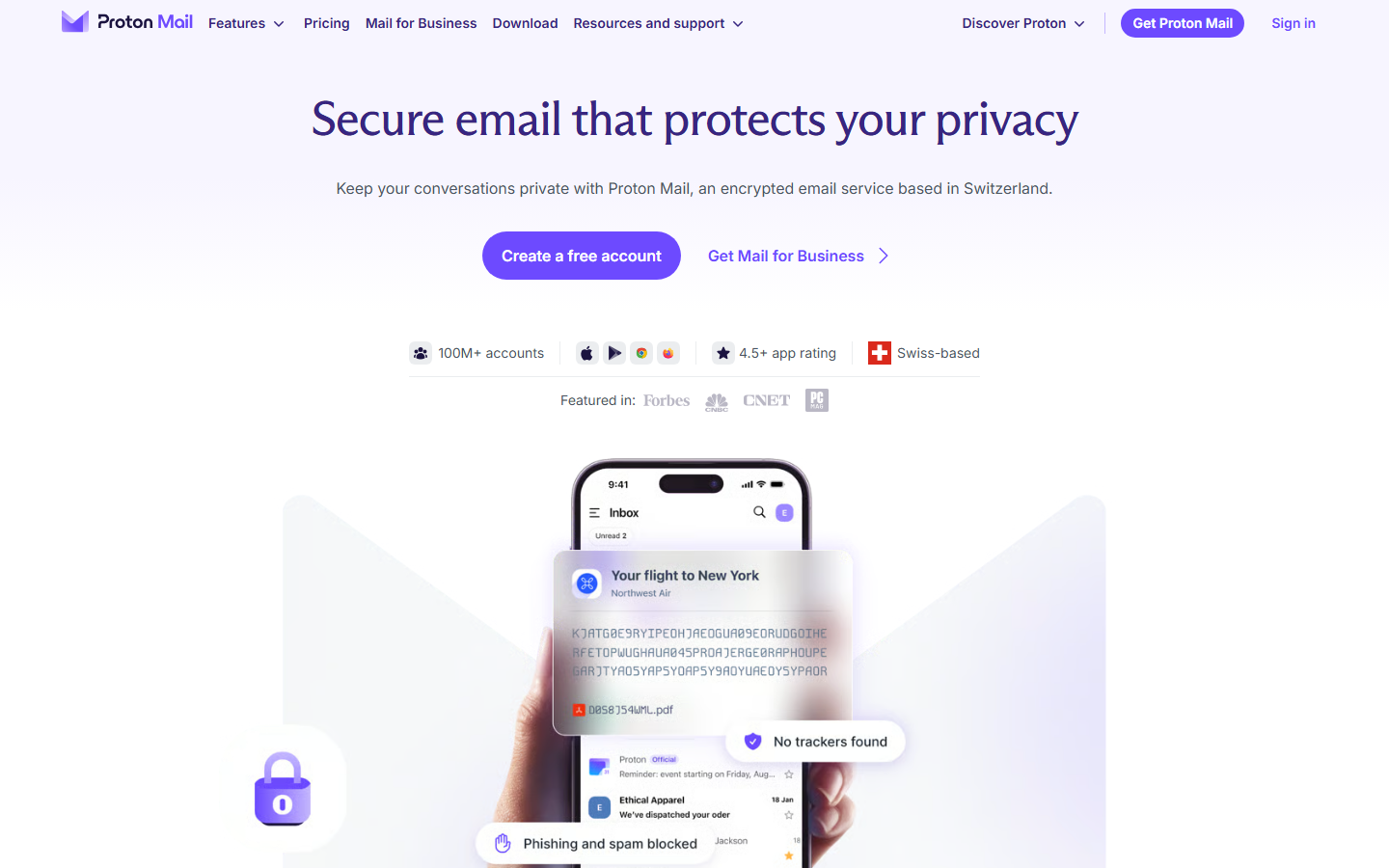
Proton Mail is a webmail and email app service built for people who want a more private inbox. Visit Proton.me/mail to see how Proton presents the product as secure email that protects privacy, with free accounts, paid plans, mobile apps, and business options. Its appeal is not only sending messages, but changing who can read and process the contents of an inbox.
End-to-end and zero-access encryption
Proton describes two important layers. End-to-end encryption protects messages sent between Proton Mail users so the message contents are encrypted before reaching Proton's servers. Zero-access encryption protects stored mailbox data so Proton cannot read encrypted message content at rest. Messages to ordinary external email services may still depend on standard email delivery and the recipient's provider unless extra encryption options are used.
Everyday email, not just secrecy
The service still has the normal jobs of email: composing messages, receiving mail, searching an inbox, attaching files, filtering spam, using folders or labels, and reading messages across devices. Proton Mail's challenge is to make those everyday workflows feel familiar while keeping privacy and encryption visible enough that users understand the tradeoffs.
Aliases, domains, and business use
Beyond a basic inbox, Proton Mail supports features people expect from a serious email service: custom domains, addresses or aliases, organization controls, migration paths, and business plans. These tools matter because email is identity infrastructure. Changing providers is not just changing an app; it affects logins, contacts, invoices, recovery addresses, and long-term records.
Security strengths and limits
Proton Mail is strongest when the important concern is message privacy inside Proton's encryption model. It does not make every email anonymous, does not remove all metadata, and cannot force outside email providers to behave like Proton. Users still need strong passwords, two-factor authentication, careful link habits, account recovery planning, and realistic expectations about what encrypted email can and cannot hide.
Part of a privacy ecosystem
Proton Mail is now part of a broader Proton ecosystem that includes products such as VPN, Drive, Calendar, Pass, and business services. That ecosystem strategy matters because privacy tools are easier to use when they work together. It also means Proton Mail is not only a standalone webmail site; it is one entry point into a wider privacy-centered account.
Why it matters
Proton Mail matters because it made encrypted email feel approachable to mainstream users. Email is one of the web's oldest identity systems, but much of it was not designed for private-by-default communication. Proton Mail helped push the public conversation toward encryption, open-source clients, privacy law, business models without inbox advertising, and user control over personal data.