Telegram
Telegram is a global messaging platform founded by Pavel and Nikolai Durov. Launched in 2013, it combines cloud chats, Secret Chats, large groups, public channels, bots, mini apps, file sharing, usernames, and broadcast-style publishing with a privacy-first brand and ongoing governance debates.
What Telegram is
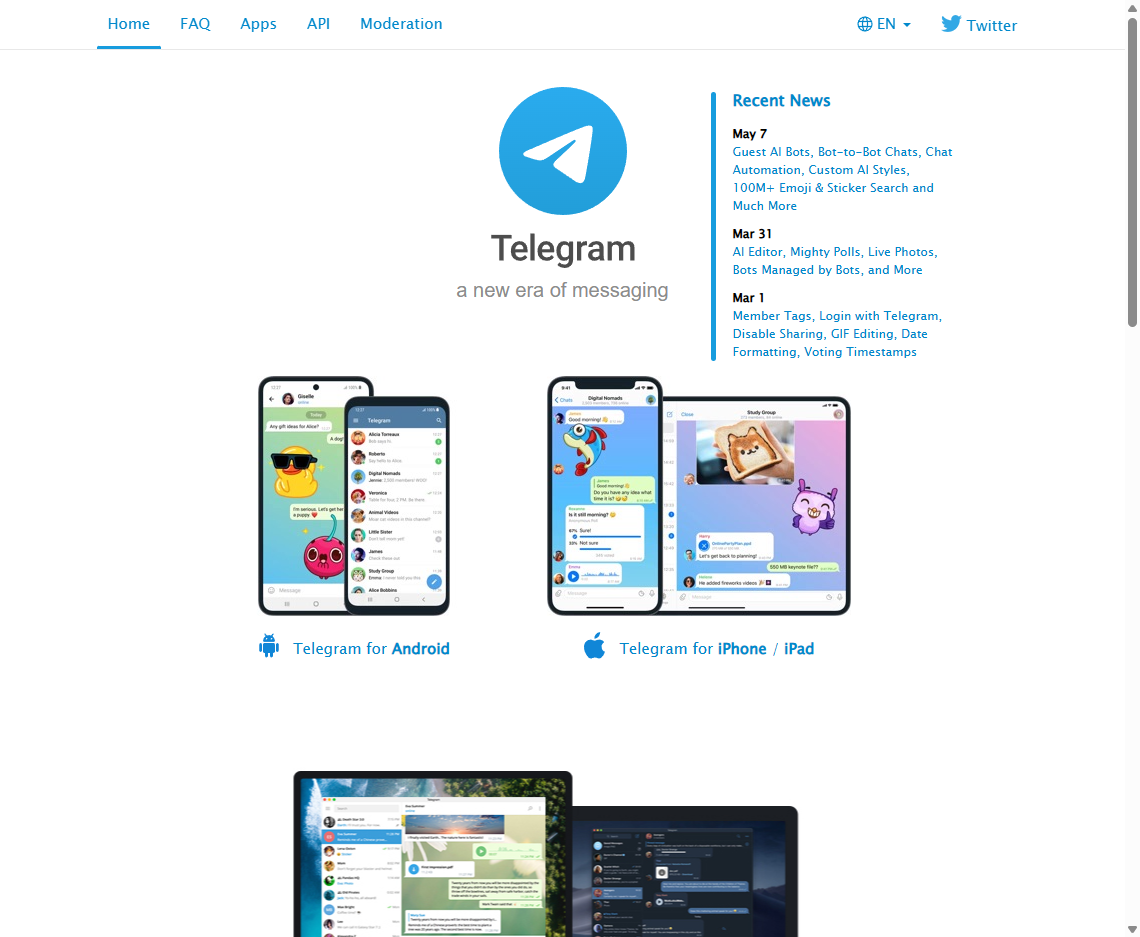
Telegram is a messaging app and communication platform for private chats, groups, public channels, voice and video calls, bots, mini apps, file sharing, and broadcast-style publishing. On Telegram.org, it sits between a messenger, a social platform, a developer platform, and a public information network.
Durov origins
Telegram was launched in 2013 by Pavel Durov and Nikolai Durov, after their earlier work around the Russian social network VK. Pavel became the public face and financial backer, while Nikolai developed the custom MTProto protocol that underpins Telegramโ€s speed, sync, and encryption model.
Cloud chats and secret chats
Telegramโ€s default chats are cloud-based, so messages sync across phones, tablets, desktops, and the web. Secret Chats are different: they use end-to-end encryption, stay tied to the devices where they were created, and support features such as self-destructing messages.
Groups and channels
Telegram groups can support large communities, while channels let administrators broadcast posts to followers. This made Telegram especially important for news, fandoms, crypto communities, political groups, war updates, software projects, creators, and local public information networks.
Bots, mini apps, and usernames
Telegramโ€s open API, Bot API, t.me links, and username system let developers build services inside or around the app. Bots can manage communities, deliver alerts, process payments, run games, automate support, and connect Telegram to outside tools.
Monetization without private-chat ads
Telegram says it does not place ads in private chats or sell user data. Its revenue model includes Sponsored Messages in some public channels and Telegram Premium, a subscription that adds extra limits, customization, and convenience features.
Rise and pressure
Telegramโ€s rise came from combining fast cloud messaging with public channels and a strong anti-censorship image. Its pressure comes from the same openness: authorities, journalists, and users debate how the platform should handle illegal content, propaganda, scams, extremist channels, copyright, and state pressure without becoming a heavily surveilled network.
Not the same privacy model as WhatsApp
Telegram and WhatsApp are often compared, but their designs differ. WhatsApp defaults to end-to-end encrypted personal messaging, while Telegram defaults to cloud chats for sync and convenience, with Secret Chats available when users want device-specific end-to-end encryption.
Why it matters
Telegram matters because it shows how messaging apps can become public infrastructure. It carries private conversations, mass broadcasting, developer tools, commerce, political communication, and media distribution inside one app, making it powerful, useful, and difficult to govern cleanly.