Replit
Replit is a popular browser-based software creation platform that combines an online coding workspace, AI app-building tools, collaboration, hosting, and deployment features.
What Replit is
Replit is a browser-based software creation platform for building, running, and publishing apps. On Replit.com, users can start projects, write code, use AI assistance, preview results, collaborate with others, manage secrets, connect services, and publish apps without first configuring a local machine. The official Replit app is available on the App Store and Google Play.
.svg)

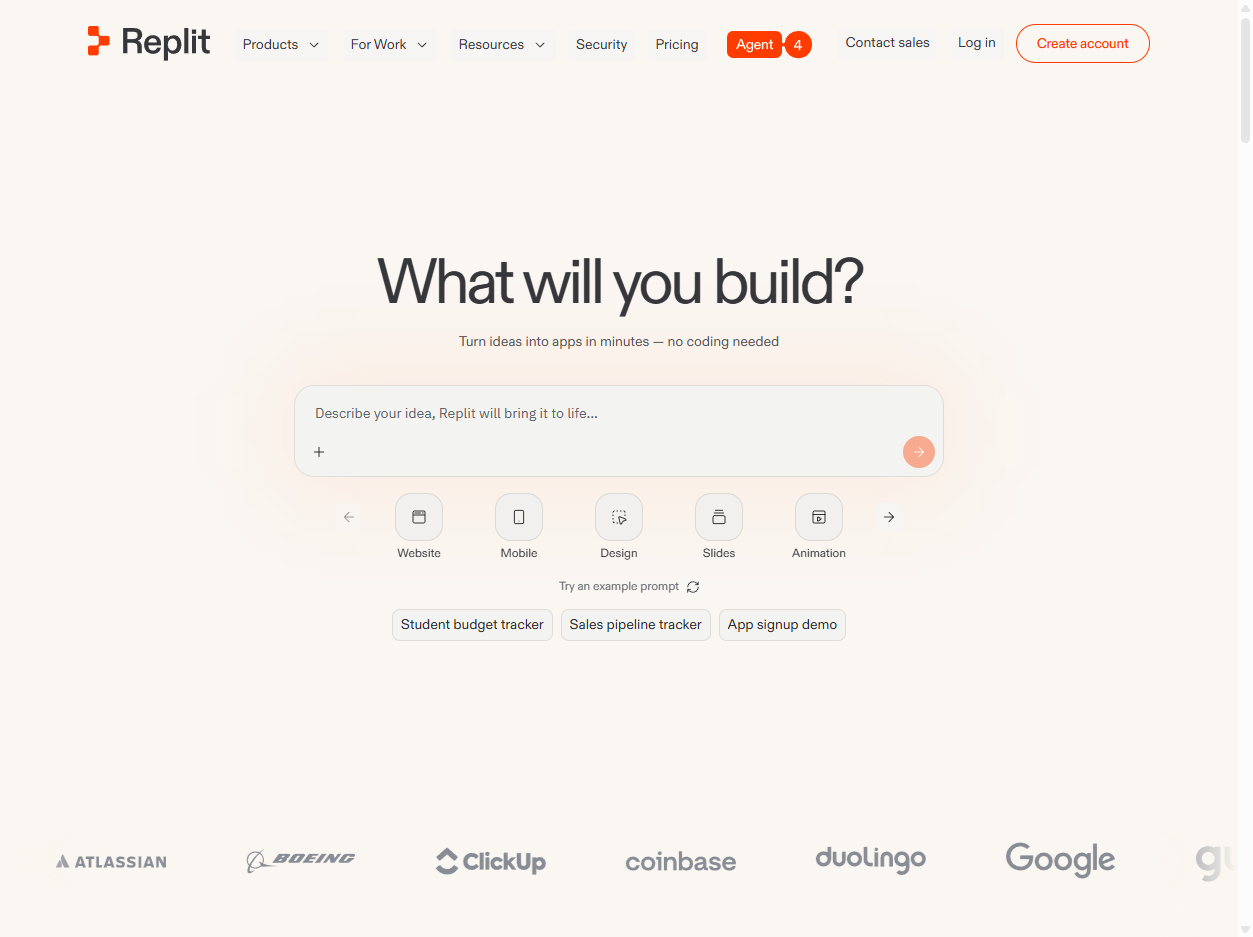
Browser coding workspace
Replit's workspace acts like an online development environment. It brings files, terminal access, package setup, previews, version control, environment variables, and project settings into one web interface, which is especially useful for learners and people switching between devices.
Replit Agent
Replit Agent is the platform's AI development partner. Users describe what they want in natural language, and Agent can plan work, create files, write code, set up databases, test changes, and help move from idea to running app. This changes Replit from a code editor into a guided app-building environment.
Templates and quick starts
Replit supports fast starts through templates, language environments, imported projects, and guided app creation. A beginner can experiment with Python or JavaScript quickly, while a more experienced user can use the same environment to prototype a web app, bot, dashboard, or automation.
Publishing and deployments
A major part of Replit's appeal is that code can run and be published from the same place where it is written. Deployments and scheduled jobs make it possible to host web apps, run periodic tasks, test ideas publicly, and share work without moving immediately to a separate cloud platform.
Collaboration and teams
Replit also supports collaborative workspaces and team features. That makes it useful in classrooms, workshops, small companies, and product teams where people want shared access to projects without everyone installing the same local tools.
Tradeoffs
Replit lowers setup friction, but it is still a managed platform with limits, pricing rules, privacy choices, resource constraints, and deployment assumptions. Serious production work may require stronger security review, architecture planning, backups, observability, and sometimes migration to dedicated infrastructure.
Why it matters
Replit matters because it made programming feel more immediate and portable. By combining a browser IDE, runtime, hosting, collaboration, and AI assistance, it helped collapse the distance between learning to code, trying an idea, and sharing a working app.
WHOIS domain data
Data pulled: May 24, 2026View current WHOIS record
- Domain
- replit.com
- IP address
- 104.18.35.46
- Registrar
- Nom-iq Ltd. dba COM LAUDE
- WHOIS server
- whois.comlaude.com
- Referral URL
- http://www.comlaude.com
- Created
- September 2, 2011
- Updated
- October 8, 2025
- Expires
- September 2, 2029
- Nameservers
- ivy.ns.cloudflare.com (108.162.192.120); cody.ns.cloudflare.com (108.162.193.107)
- Domain status
- clientDeleteProhibited; clientTransferProhibited; clientUpdateProhibited
- DNSSEC
- unsigned
- Registrant organization
- Replit, Inc.
- Registrant location
- California, US
- Contact privacy
- Registrant, admin, and technical contact details are partly redacted and routed through anonymised email addresses.