Twitch
Twitch is a livestreaming platform owned by Amazon. Launched in 2011 from Justin.tv, it became the main home for game streaming, esports, live chat, subscriptions, emotes, raids, creator communities, and real-time entertainment that lets audiences participate while shows are being made.
What Twitch is
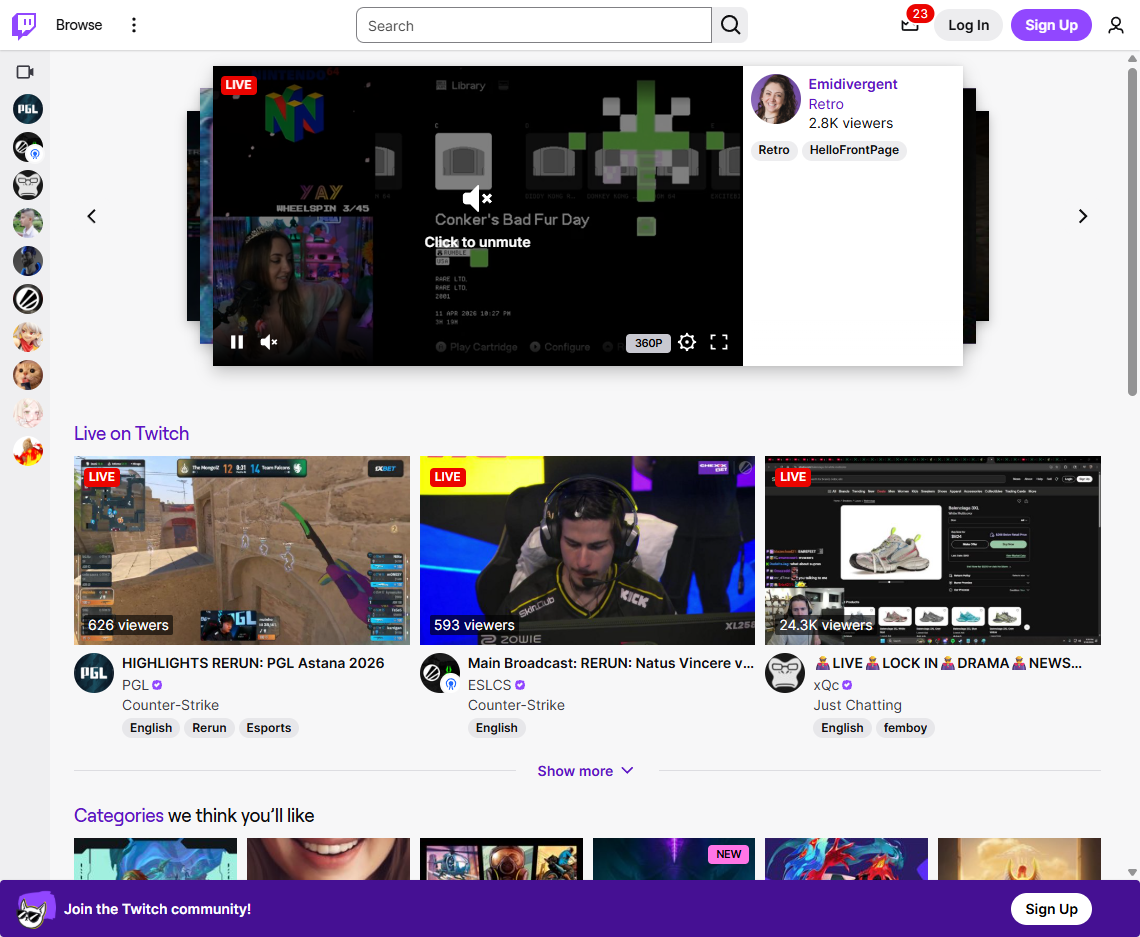
Twitch is a livestreaming platform where creators broadcast live video while audiences talk in real time. On Twitch.tv, video games and esports sit alongside music, talk shows, sports, art, cooking, travel, and the broad category of casual conversation known as Just Chatting.
From Justin.tv to Twitch
Twitch grew out of Justin.tv, an earlier live-video site. Gaming became the breakout use case because viewers wanted to watch skilled players, tournaments, speedruns, personalities, and friends play in real time, so the company built a dedicated gaming service that launched in 2011.
Live chat as the engine
Twitch is not only video. Chat is a major part of the experience, with emotes, inside jokes, moderators, channel rules, raids, polls, predictions, and audience rituals shaping each stream. The result feels closer to a live room than a finished video library.
Creators and monetization
Streamers can earn money through subscriptions, Bits, ads, sponsorships, donations through external tools, merchandise, and community support. Twitchโ€s Affiliate and Partner programs helped formalize livestreaming as a creator career, though income remains highly uneven across channels.
Amazon ownership
Amazon announced in 2014 that it would acquire Twitch for about $970 million in cash, connecting the platform to Amazonโ€s broader interests in cloud infrastructure, advertising, Prime memberships, gaming, and video. Twitch continued to operate as its own recognizable brand.
More than games
Although games remain central to Twitchโ€s identity, the platform widened into music performances, live podcasts, politics, chess, fitness, art, and everyday conversation. This expansion showed that the core Twitch product is not just gameplay footage, but live attention organized around community participation.
Rise and pressure
Twitchโ€s rise came from becoming the default home for game livestreaming and a training ground for creator-led live entertainment. Its pressure points include expensive video infrastructure, competition from YouTube and other platforms, moderation disputes, ad load complaints, streamer revenue splits, and the challenge of serving both small communities and celebrity-scale broadcasts.
Safety and moderation
Live platforms face safety problems at high speed. Twitch has to manage harassment, spam, copyright claims, scams, hate raids, gambling debates, mature content boundaries, and streamer burnout while preserving the spontaneity that makes live chat compelling.
Why it matters
Twitch matters because it helped define livestreaming as a social medium rather than a technical novelty. It influenced creator economies, esports, gaming culture, online fandom, emote language, and the expectation that audiences can participate while entertainment is being made.