Zendesk
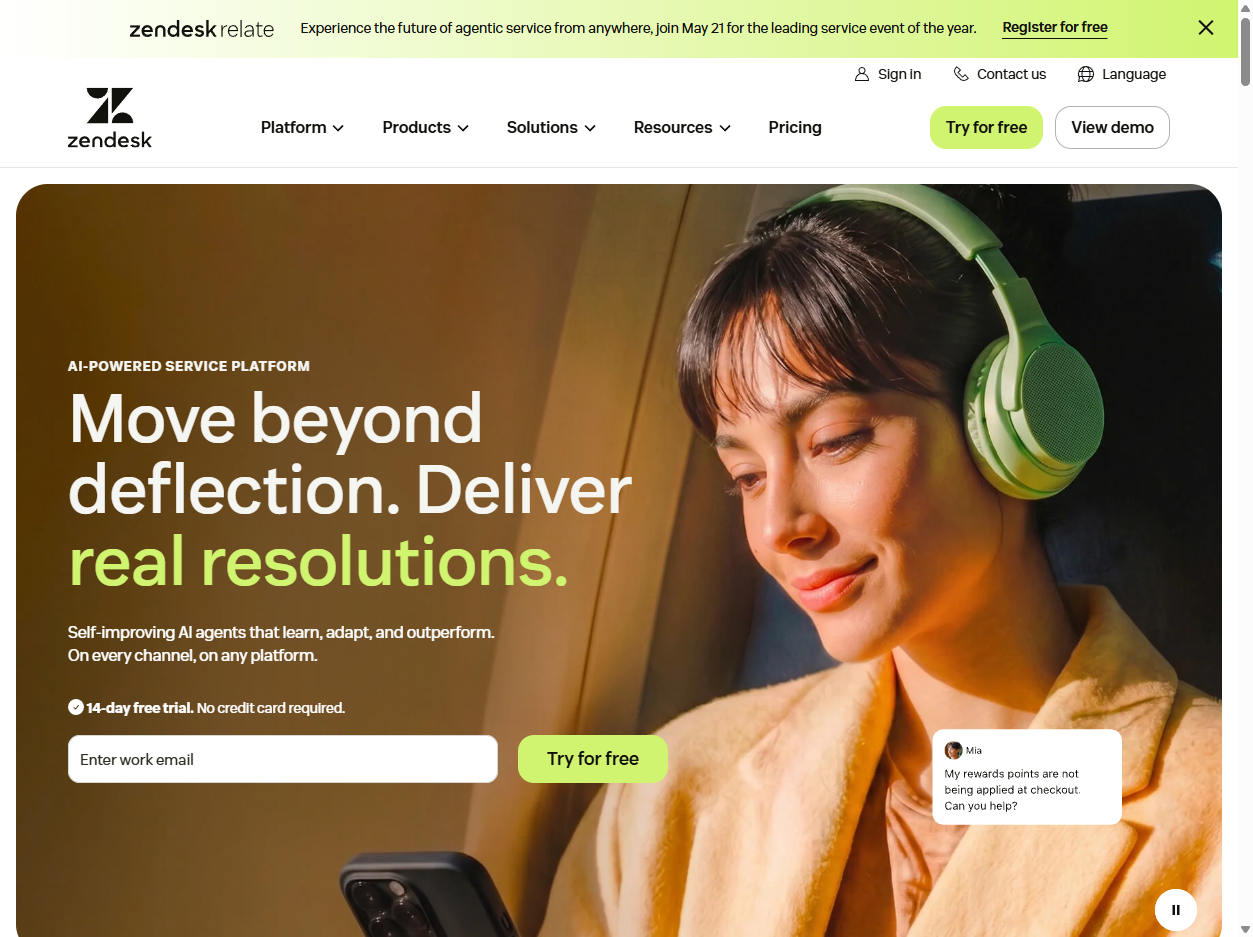
Zendesk is a customer service software website and platform for support teams, combining ticketing, messaging, live chat, help centers, AI agents, voice, analytics, and customer experience workflows.
What Zendesk is
Zendesk is a customer service software website and platform. On Zendesk.com, businesses can set up support ticketing, messaging, live chat, voice support, help centers, AI agents, analytics, and workflows for handling customer conversations across channels. The official Zendesk Support app is available on the App Store and Google Play.
.svg)

From help desk to service platform
Zendesk began with a simpler web-based help desk idea: make it easier for companies to receive, organize, assign, and resolve customer requests. Over time it expanded into a broader service platform for support operations, knowledge management, quality, workforce planning, and customer experience.
Tickets and conversations
A core Zendesk workflow turns customer contacts into tickets or conversation threads. Support teams can route them, add internal notes, apply macros, escalate issues, track status, measure response times, and keep context visible as the issue moves between people or channels.
Self-service and knowledge
Zendesk also supports help centers and knowledge bases so customers can find answers without waiting for an agent. Good self-service depends on accurate articles, search, feedback loops, and maintenance as products, policies, and common issues change.
AI and automation
Zendesk now emphasizes AI agents, automation, and agent-assist features that can answer common questions, suggest replies, summarize conversations, and route work. The practical challenge is balancing speed with accuracy, escalation, empathy, and customer trust.
Strengths and tradeoffs
Zendesk can give support teams a structured place to manage many channels at once, but the setup matters. Poor routing, outdated knowledge articles, too many automations, or weak escalation rules can make customers feel like they are trapped in a system rather than helped by it.
Why it matters
Zendesk helped make cloud-based customer support software a normal part of internet businesses. It reflects a larger shift in customer service: support is no longer only a phone queue, but a mix of chat, email, self-service, AI, analytics, and operational design.
WHOIS domain data
Data pulled: May 24, 2026View current WHOIS record
- Domain
- zendesk.com
- IP address
- 216.198.54.2
- Registrar
- MarkMonitor Inc.
- WHOIS server
- whois.markmonitor.com
- Referral URL
- http://www.markmonitor.com
- Created
- May 16, 2005
- Updated
- April 15, 2024
- Expires
- May 16, 2027
- Nameservers
- ns-1213.awsdns-23.org (205.251.196.189); ns-444.awsdns-55.com (205.251.193.188); ns-754.awsdns-30.net (205.251.194.242); ns-1858.awsdns-40.co.uk (205.251.199.66)
- Domain status
- clientDeleteProhibited; clientTransferProhibited; clientUpdateProhibited; serverDeleteProhibited; serverTransferProhibited; serverUpdateProhibited
- DNSSEC
- unsigned
- Registrant contact
- Organization Zendesk, Inc.; address US.
- Registrant email
- Select Request Email Form at https://domains.markmonitor.com/whois/zendesk.com
- Technical contact email
- Select Request Email Form at https://domains.markmonitor.com/whois/zendesk.com