Archive of Our Own
Archive of Our Own, often called AO3, is a popular nonprofit archive for fanfiction and other fanworks, known for detailed tagging, filtering, kudos, bookmarks, and fandom-driven preservation.
What Archive of Our Own is
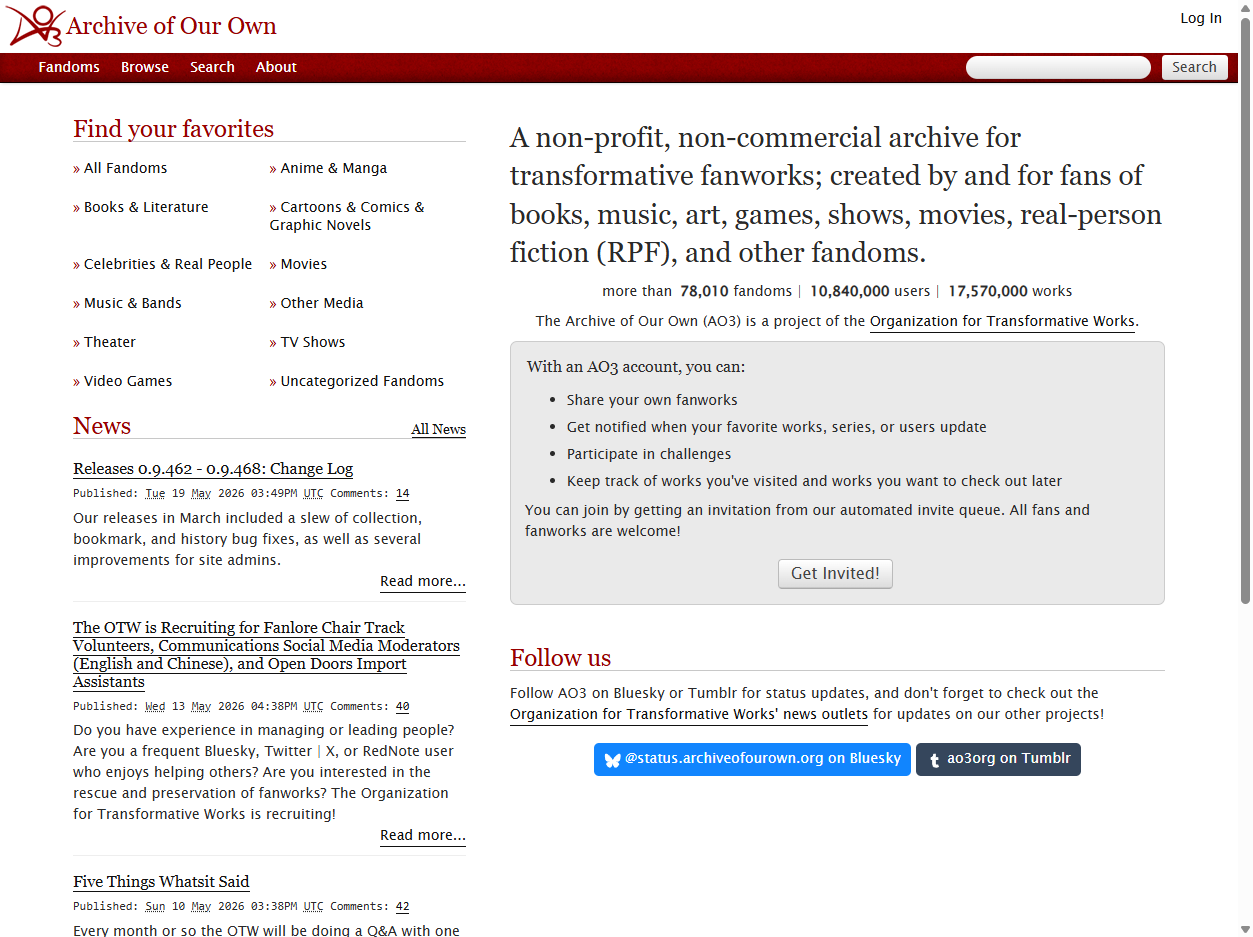
Archive of Our Own, commonly shortened to AO3, is a nonprofit archive for fanfiction and other transformative fanworks. On ArchiveOfOurOwn.org, fans can publish works, browse fandoms, use tags and filters, leave kudos, save bookmarks, subscribe to creators, and read across a large range of fandom communities.
Built by and for fans
AO3 grew from a fan-culture idea: fans should have a durable archive that respects transformative work and is not built primarily around advertising, monetization, or corporate ownership. That mission shapes the site's nonprofit status, volunteer labor, open-source software, and emphasis on user control.
Fanworks, not only fanfiction
Fanfiction is the most visible form on AO3, but the archive's mission is broader. It supports transformative fanworks and can host or embed text, podfic, fan art, fan videos, essays, meta, and other fannish works, depending on format and policy requirements.
Tags and filtering
AO3's tagging system is one of its defining features. Creators can add fandoms, relationships, characters, ratings, archive warnings, categories, and freeform tags, while volunteer tag wranglers connect related tags so readers can search, filter, include, and exclude works more precisely.
Reading and feedback
Readers can use kudos to show appreciation, comment on works, save bookmarks, subscribe to series or creators, and build reading histories. The interaction model is quieter than many social networks, but it gives fandoms durable ways to recommend, revisit, and discuss works.
Policies and boundaries
AO3's openness is paired with rules about ratings, warnings, commercial activity, harassment, plagiarism, and what counts as a fanwork. These policies often make the site different from broader writing platforms, especially because AO3 is not designed for monetized original fiction.
Recognition and criticism
AO3 has been praised for fan preservation, searchability, and community ownership, and it won the Hugo Award for Best Related Work in 2019. It also faces recurring debates over moderation, tagging burdens, content boundaries, accessibility, and the labor required to keep a large fan archive usable.
Why it matters
Archive of Our Own matters because it treats fan culture as something worth preserving on its own terms. It shows how online communities can build infrastructure for their own creative practices, with values that differ from commercial social platforms and traditional publishing systems.