Goodreads
Goodreads is a book-focused social cataloging website where readers track books, rate and review titles, build shelves, follow authors, join groups, set reading goals, and discover recommendations. Launched in 2007 and acquired by Amazon in 2013, it became one of the webโ€s most influential reader communities, shaping how books are found, compared, marketed, discussed, and remembered online.
What Goodreads is
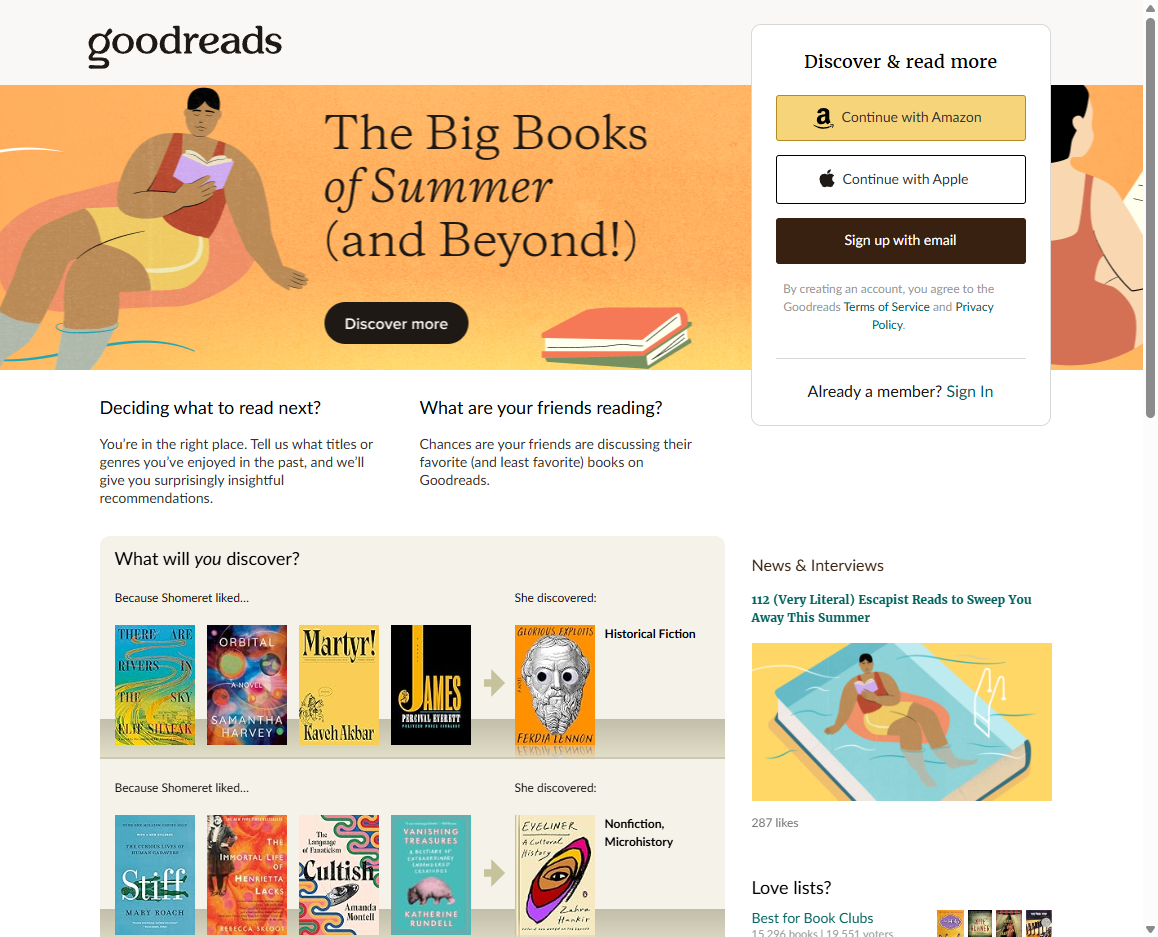
Goodreads is a book tracking, review, and recommendation site for readers. On Goodreads.com, a book page combines ratings, reviews, shelves, editions, author details, lists, quotes, recommendations, and links to buy or preview a title. The official Goodreads app is available on the App Store and Google Play.
.svg)

Ratings and reviews
Goodreads made reader reviews easy to find at scale. Star ratings help summarize broad reactions, while written reviews capture enthusiasm, disappointment, warnings, quotes, and debate. Those signals can help readers decide what to try next, but they can also flatten a complex book into a visible score.
Recommendations and shelves
Goodreads recommendations draw from books a person has rated, shelved, or explored, plus patterns from other readers. Shelves and lists are just as important as algorithms because readers often discover books through friends, genres, tropes, moods, awards, fandoms, and niche communities.
Authors and publishers
Authors use Goodreads pages to maintain profiles, answer questions, run giveaways, announce books, and follow reader response. Publishers and marketers watch the site because early ratings, reviews, and list activity can shape buzz before and after publication, especially for genre fiction and young adult books.
Amazon ownership
Amazonโ€s 2013 acquisition connected Goodreads to the companyโ€s larger book ecosystem, including Kindle, retail discovery, and reader data. That gave Goodreads stronger infrastructure and reach, while also raising concerns from some readers and authors about platform power, data use, and the influence of one company over book discovery.
Rise and pressure
Goodreads rose by becoming the default public notebook for readers online. Its pressure points are familiar to large review communities: review bombing, moderation disputes, stale interface complaints, fake or low-quality reviews, author-reader conflict, recommendation frustration, and competition from newer book-tracking apps.
Why it matters
Goodreads matters because books are slow, personal, and memory-heavy. A shared reading log can affect what people buy, borrow, recommend, avoid, and discuss. The site shows how a database of taste can become cultural infrastructure for publishing, fandom, libraries, and everyday readers.
WHOIS domain data
Data pulled: May 24, 2026View current WHOIS record
- Domain
- goodreads.com
- IP address
- 44.215.128.96
- Registrar
- MarkMonitor Inc.
- WHOIS server
- whois.markmonitor.com
- Referral URL
- http://www.markmonitor.com
- Created
- December 9, 2002
- Updated
- April 13, 2026
- Expires
- December 9, 2026
- Nameservers
- ns-1373.awsdns-43.org (205.251.197.93); ns-778.awsdns-33.net (205.251.195.10); ns-472.awsdns-59.com (205.251.193.216); ns-1560.awsdns-03.co.uk (205.251.198.24)
- Domain status
- clientDeleteProhibited; clientTransferProhibited; clientUpdateProhibited; serverDeleteProhibited; serverTransferProhibited; serverUpdateProhibited
- Registrant contact
- Organization Goodreads LLC; address US
- Registrant email
- Select Request Email Form at https://domains [dot] markmonitor [dot] com/whois/goodreads [dot] com
- Tech contact email
- Select Request Email Form at https://domains [dot] markmonitor [dot] com/whois/goodreads [dot] com
Social cataloging
The platformโ€s core idea is social cataloging: readers build personal shelves such as read, currently reading, and want to read, then make those lists visible to friends or the wider community. A private reading habit becomes a shared map of taste, memory, and discovery.