IMDb
IMDb is an online database for movies, TV shows, streaming titles, cast and crew credits, ratings, reviews, trailers, trivia, release information, and entertainment discovery. Started in 1990 by Col Needham and later acquired by Amazon, it became a major reference layer for film fans and industry professionals.
What IMDb is
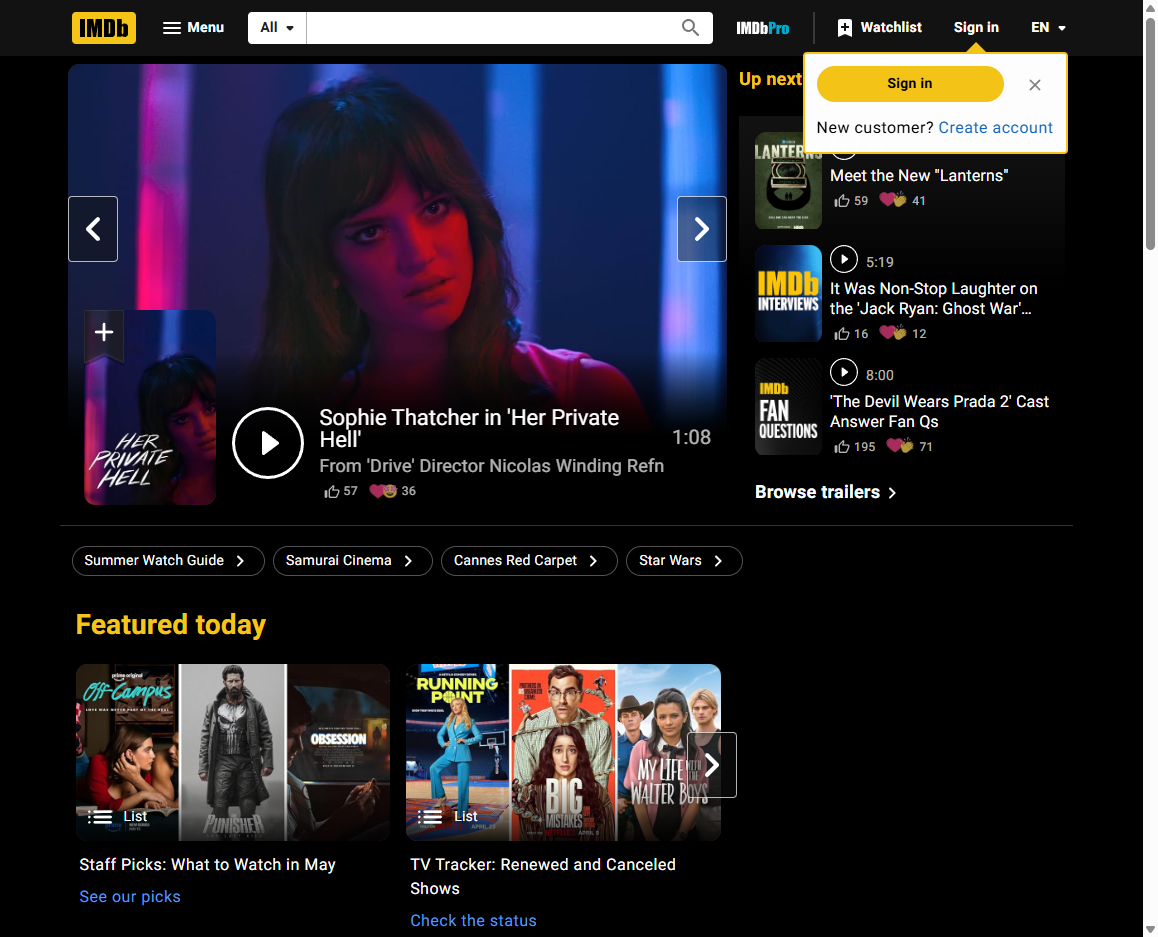
IMDb, short for Internet Movie Database, is a reference site for entertainment information. On IMDb.com, a single title page can gather cast and crew credits, release dates, plot summaries, ratings, reviews, trivia, images, trailers, parental guidance, awards, and links to related people or productions.
Usenet database origins
The project began before the commercial web was the center of internet culture. Col Needham and other movie fans built lists of film and television data in online discussion spaces, then turned those lists into a searchable database. IMDb incorporated in 1996 and became part of Amazon in April 1998.
Credits as infrastructure
IMDb is useful because it treats credits as connected data. Actors, directors, writers, producers, studios, characters, episodes, alternate titles, and release territories are linked across pages, making it easier to follow careers, franchises, production histories, and obscure appearances.
Ratings, reviews, and discovery
User ratings and reviews made IMDb more than a static encyclopedia. The site became a place to compare audience reactions, build watchlists, browse charts, scan recommendations, and discover older or smaller titles that might not be visible on a single streaming service.
Amazon ownership
Amazon bought IMDb during its early expansion beyond books. The acquisition gave Amazon a rich entertainment database, while IMDb gained the backing to keep expanding coverage, tools, and traffic. The relationship also made IMDb part of a larger ecosystem that includes retail, streaming, advertising, and professional media services.
IMDbPro and industry use
IMDbPro turns the database into a paid professional tool. It is used for contact information, representation details, production listings, credit management, talent pages, company pages, rankings, and research by people working in film, television, and streaming.
Data quality and moderation
The site depends on a mix of official data, editorial review, industry submissions, and community contributions. That makes scale possible, but it also creates disputes over missing credits, incorrect names, release details, birth dates, rankings, and how much control public figures should have over their profiles.
Rise and pressure
IMDb rose by becoming the default place to answer entertainment questions quickly. Its pressure points come from the same success: search engines surface its pages heavily, streaming services compete with their own catalogs, and creators, fans, and publicists all care about how work is represented on the site.
Why it matters
IMDb shows how a fan-built database can become public infrastructure for culture. It shapes how people remember movies, verify credits, choose what to watch, research careers, and connect entertainment history across decades of changing media formats.