Internet Archive
The Internet Archive is a nonprofit digital library behind archive.org and the Wayback Machine. Founded in 1996 by Brewster Kahle, it preserves web pages, books, audio, video, software, images, and other cultural artifacts so researchers and the public can study material that might disappear.
What Internet Archive is
The Internet Archive is a nonprofit digital library that runs Archive.org and the Wayback Machine. It collects and provides access to archived websites, digitized books, audio recordings, video, images, software, public-domain materials, live music, government documents, and other cultural records. The official Wayback Machine app is available on the App Store and Google Play.
.svg)

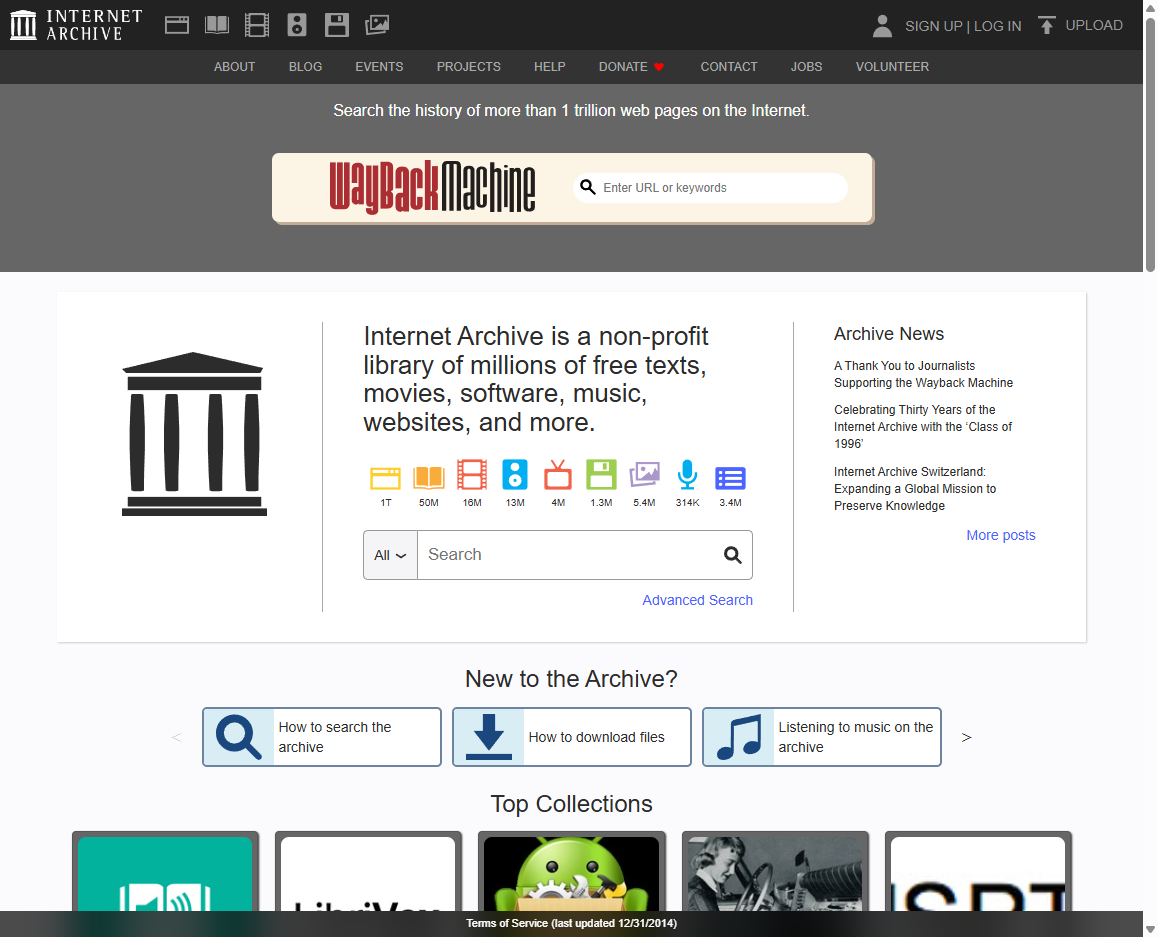
Wayback Machine
The Wayback Machine lets users look up older versions of web pages by URL and date. It is especially useful when pages are deleted, redesigned, paywalled, redirected, hacked, or otherwise changed, giving journalists, researchers, lawyers, historians, and ordinary readers a way to inspect the webโ€s past.
Universal access mission
The organizationโ€s mission is often summarized as universal access to knowledge. That mission treats the web, books, software, audio, and video as part of the public record, not only as current consumer products or search results that can vanish when companies fail, links rot, or platforms change policy.
Books, software, and media
Archive.org is broader than the Wayback Machine. Its collections include scanned books, old computer software, radio and television material, music, movies, live concert recordings, research datasets, public-domain works, and community-uploaded files, making it part library, part museum, and part preservation utility.
Web preservation at scale
Preserving the web is technically difficult because the web changes constantly. Crawlers must capture pages, media, links, scripts, metadata, and timestamps while dealing with robots rules, missing assets, dynamic sites, takedown requests, storage costs, malware risk, and the fact that modern web pages are often assembled from many services.
Copyright and legal pressure
The Internet Archiveโ€s public-interest mission often collides with copyright, licensing, privacy, and platform-control debates. Digitized books, software, music, archived pages, and controlled digital lending have all raised hard questions about what libraries may preserve, lend, display, or remove in a digital environment.
AI-era pressure
The rise of generative AI made web archives more politically sensitive. Publishers and site owners worry about scraping and training data, while archivists warn that blocking preservation can damage public memory. The Internet Archive sits in the middle of that tension because it preserves material that others may want to monetize, hide, or restrict.
Why it matters
The Internet Archive matters because the web is fragile. News stories, government pages, software, personal sites, forums, research links, and cultural artifacts disappear every day. Without archives, online history becomes whatever still loads now, which is a much thinner record than what actually happened.
WHOIS domain data
Data pulled: May 24, 2026View current WHOIS record
- Domain
- archive.org
- IP address
- 207.241.224.2
- Registrar
- easyDNS Technologies Inc.
- WHOIS server
- whois.easydns.com
- Referral URL
- http://www.easydns.com
- Created
- December 14, 1995
- Updated
- July 8, 2025
- Expires
- December 13, 2030
- Nameservers
- ns0036.secondary.cloudflare.com (162.159.32.37); ns-global.kjsl.com (23.128.97.53); ns3.archive.org (207.241.239.244); ns1.archive.org (208.70.31.236); ns2.archive.org (207.241.239.245); ns0208.secondary.cloudflare.com (162.159.33.83)
- Domain status
- clientTransferProhibited; clientUpdateProhibited
- Registrant contact
- Name Archive Domains; organization Archive Domains LLC; address, phone, fax, and email redacted for privacy