Behance
Behance is a creative portfolio and discovery platform where designers, illustrators, photographers, art directors, motion designers, typographers, architects, and studios publish project case studies, browse visual inspiration, follow creatives, and connect with hiring opportunities. Founded by Scott Belsky and Matias Corea and acquired by Adobe in 2012, it became a major showcase layer for the creative industry and Adobe Creative Cloud ecosystem.
What Behance is
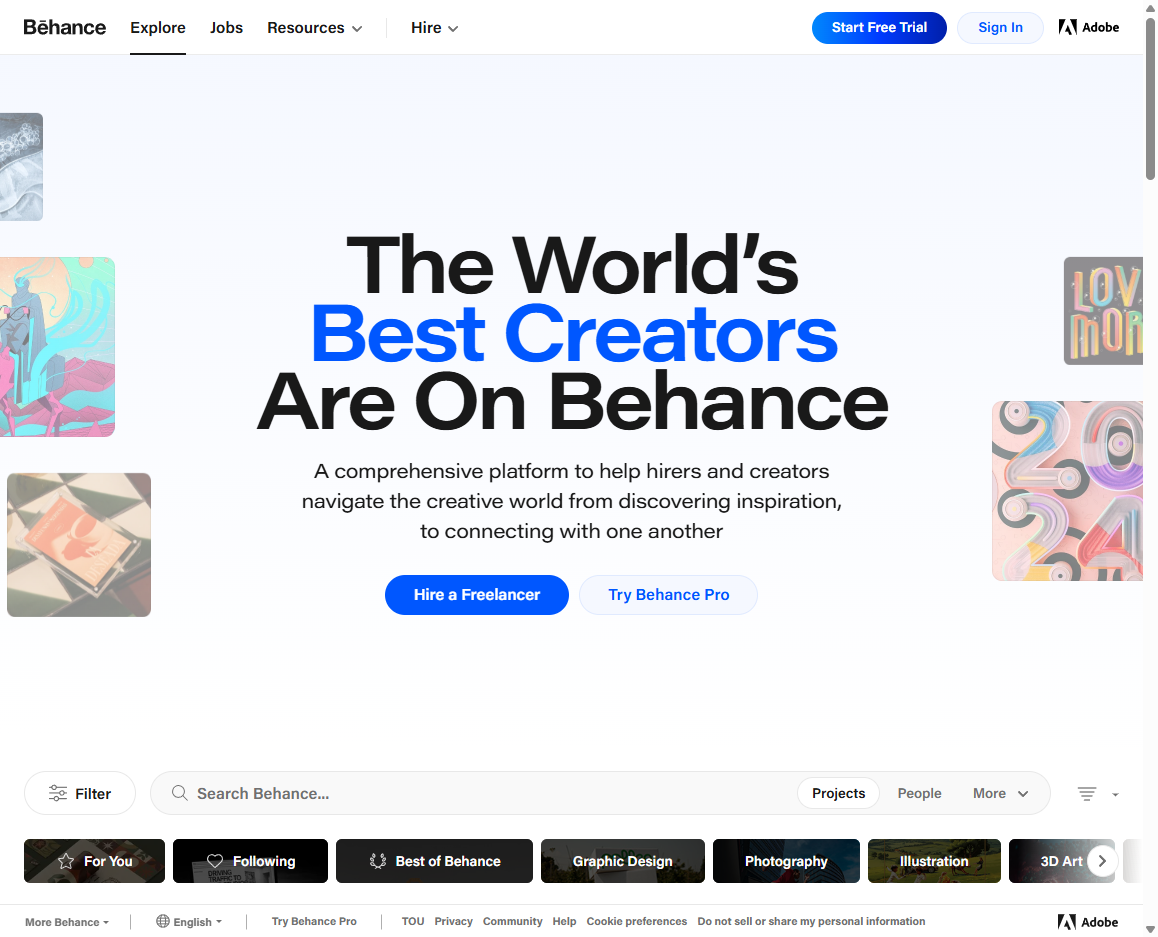
Behance is a portfolio and discovery platform for creative work. On Behance.net, a typical project page can show images, video, process notes, credits, tools, tags, co-owners, appreciations, comments, and links to a creator's profile or external portfolio. The official Behance app is available on the App Store and Google Play.
.svg)

Project-based portfolios
Behance is built around projects rather than single status updates. A designer can explain a brand identity system, a photographer can show a series, an illustrator can group related images, and a studio can credit a team. That project structure makes the site useful for showing process, scope, and professional context.
Creative discovery
The platform organizes work by creative fields such as graphic design, illustration, photography, UI/UX, fashion, architecture, motion, advertising, and typography. Curated galleries, search, moodboards, follows, and recommendations help creative people study trends, find references, and discover other practitioners.
Adobe connection
Adobe acquired Behance to connect creative community features with Creative Cloud. The relationship gives Behance a natural place beside Photoshop, Illustrator, InDesign, Lightroom, After Effects, Adobe Portfolio, and other creative tools, while also making it part of Adobeโ€s larger design and media ecosystem.
Hiring and reputation
Behance pages often function as public proof of creative skill. Recruiters, studios, agencies, and clients can browse portfolios, assess visual direction, see project credits, and contact creators. For freelancers and job seekers, a strong Behance page can support a broader professional identity alongside a personal website and LinkedIn profile.
Moodboards and inspiration
Behance is also used as a research surface. Creatives collect projects into moodboards, study visual systems, compare presentation styles, and save references for future work. That makes the platform valuable even to people who rarely publish, because browsing can influence briefs, pitches, and visual taste.
Rise and pressure
Behance rose as professional design culture moved online and portfolios became searchable, shareable, and social. Its pressure comes from Instagram, Dribbble, personal portfolio builders, Figma community files, AI-generated imagery, and the need to keep high-quality human-made work visible in a flood of visual content.
Why it matters
Behance matters because creative work is hard to judge from a resume alone. A public project archive shows taste, craft, range, collaboration, and process. It also reveals how design careers now depend on platforms that mix community, reputation, hiring, software ecosystems, and visual culture.
WHOIS domain data
Data pulled: May 24, 2026View current WHOIS record
- Domain
- behance.net
- IP address
- 151.101.129.197
- Registrar
- Nom-iq Ltd. dba COM LAUDE
- WHOIS server
- whois.comlaude.com
- Referral URL
- http://www.comlaude.com
- Created
- November 6, 2005
- Updated
- October 11, 2025
- Expires
- November 6, 2026
- Nameservers
- ns-1387.awsdns-45.org (205.251.197.107); ns-1714.awsdns-22.co.uk (205.251.198.178)
- Domain status
- clientDeleteProhibited; clientTransferProhibited; clientUpdateProhibited
- Registrant contact
- Domain Administrator, Adobe Inc., San Jose, California, US
- Registrant phone
- +1.4085366000
- Registrant email
- dns-admin [at] adobe [dot] com
- Admin contact
- Domain Administrator, Adobe Inc., San Jose, California, US; phone +1.4085366000; email dns-admin [at] adobe [dot] com
- Tech contact
- Technical Manager, Adobe Inc, San Jose, California, US; phone +1.4085366000; email dns-admin [at] adobe [dot] com