Dailymotion
Dailymotion is a French video-sharing and streaming platform where people watch news, sports, entertainment, music, creator uploads, publisher clips, and other online video. Founded in 2005, it became one of the early global web-video sites alongside YouTube, then evolved toward curated video, publisher tools, advertising products, and embedded player technology.
What Dailymotion is
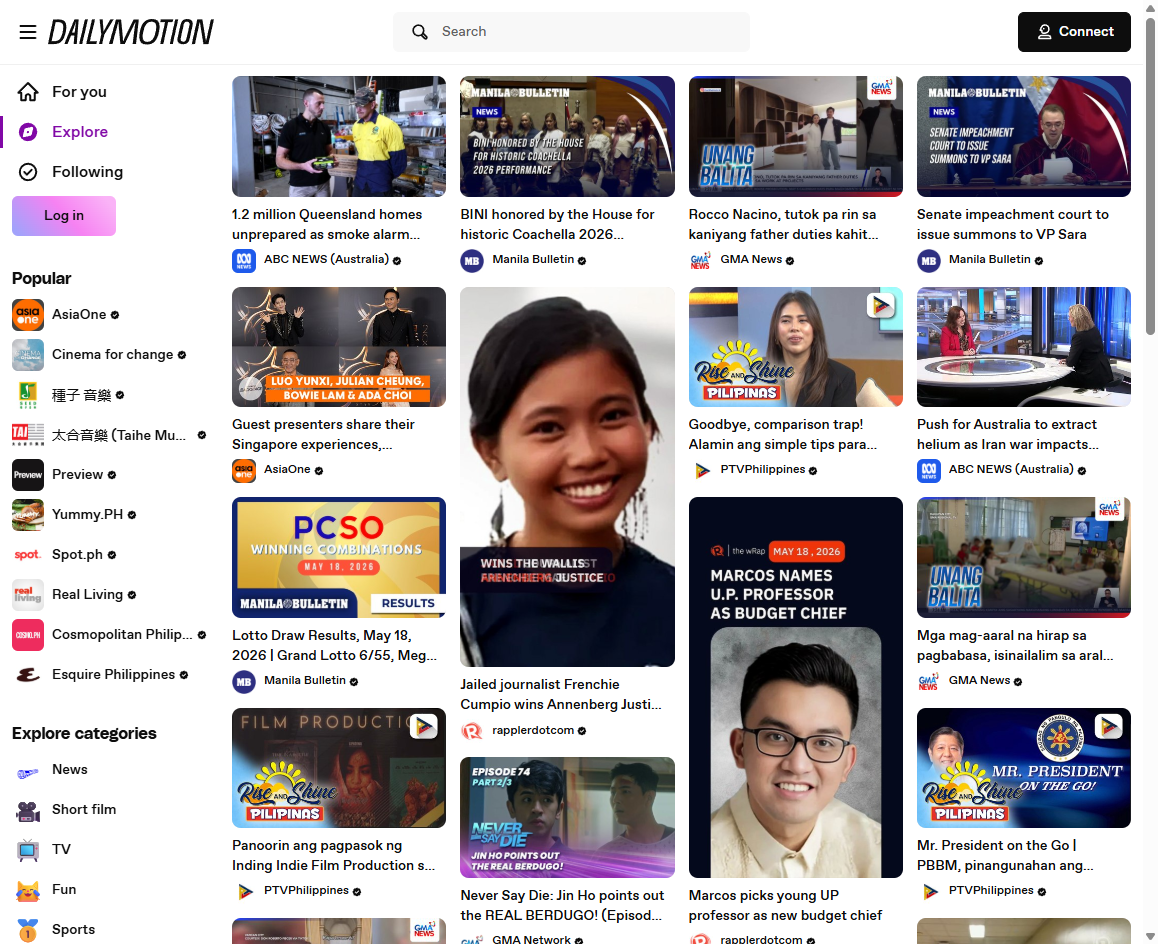
Dailymotion is a video platform for watching, sharing, embedding, and discovering online video. On Dailymotion.com, a video page can include playback, channel information, descriptions, recommendations, captions, sharing tools, and advertising or publisher monetization. The official Dailymotion app is available on the App Store and Google Play.
.svg)

Early web video
The site launched in 2005, when broadband connections, Flash video, blogs, and social sharing were making video feel native to the web. Dailymotion became one of the best-known YouTube-era alternatives, especially with European roots and a mix of user uploads, media partners, music, sports, news, and entertainment clips.
Channels and publishers
Dailymotion gradually leaned more toward professional and publisher video than pure creator culture. Media companies, broadcasters, sports groups, and brands can use channels, video pages, and embedded players to distribute clips, highlights, shows, and other content beyond their own sites.
Player and advertising business
Dailymotion is not only a destination site. Its player, advertising products, developer tools, and professional video services make it part consumer video platform and part infrastructure provider for organizations that need playback, ads, analytics, hosting, and distribution.
Discovery and moderation
Like any video platform, Dailymotion has to manage search, recommendations, copyright claims, age-sensitive material, spam, misinformation, and brand safety. The balance is different from a social network feed, but the trust problem is similar: viewers, uploaders, advertisers, and publishers all need confidence in what appears around video.
Rise, fall, and reinvention
Dailymotion rose as an early global web-video brand, then lost cultural centrality as YouTube consolidated creator video and social platforms absorbed short clips. Its later reinvention focused more on curated video, publisher relationships, advertising, and player technology than on trying to become the largest creator network.
Mobile video pressure
The modern video market is shaped by YouTube, TikTok, Instagram, Twitch, Netflix, and video embedded inside messaging and social apps. Dailymotion's challenge is to give viewers and publishers a reason to use it when discovery often happens through mobile feeds, search snippets, smart-TV interfaces, and recommendation systems.
Why it matters
Dailymotion matters because web video did not have only one path. It represents a European-rooted alternative in a market dominated by larger U.S. and Chinese platforms, and it shows the difference between a video destination, a publisher technology provider, and a social video ecosystem.
WHOIS domain data
Data pulled: May 24, 2026View current WHOIS record
- Domain
- dailymotion.com
- IP address
- 195.8.215.136
- Registrar
- Nameshield SAS
- WHOIS server
- whois.nameshield.net
- Referral URL
- http://www.nameshield.com
- Created
- March 14, 2005
- Updated
- March 7, 2022
- Expires
- March 14, 2026
- Nameservers
- a.dailymotion.com (195.8.214.1); b.dailymotion.com (195.8.214.2)
- Domain status
- clientDeleteProhibited; clientTransferProhibited; clientUpdateProhibited; serverDeleteProhibited; serverTransferProhibited; serverUpdateProhibited
- Registrant contact
- Organization DAILYMOTION; address FR, FR
- Registrant email
- https://secure [dot] nameshield [dot] net/contact/dailymotion [dot] com/owner
- Admin contact
- Organization DAILYMOTION; email https://secure [dot] nameshield [dot] net/contact/dailymotion [dot] com/admin
- Tech contact
- Organization NAMESHIELD; email https://secure [dot] nameshield [dot] net/contact/dailymotion [dot] com/tech