Vimeo
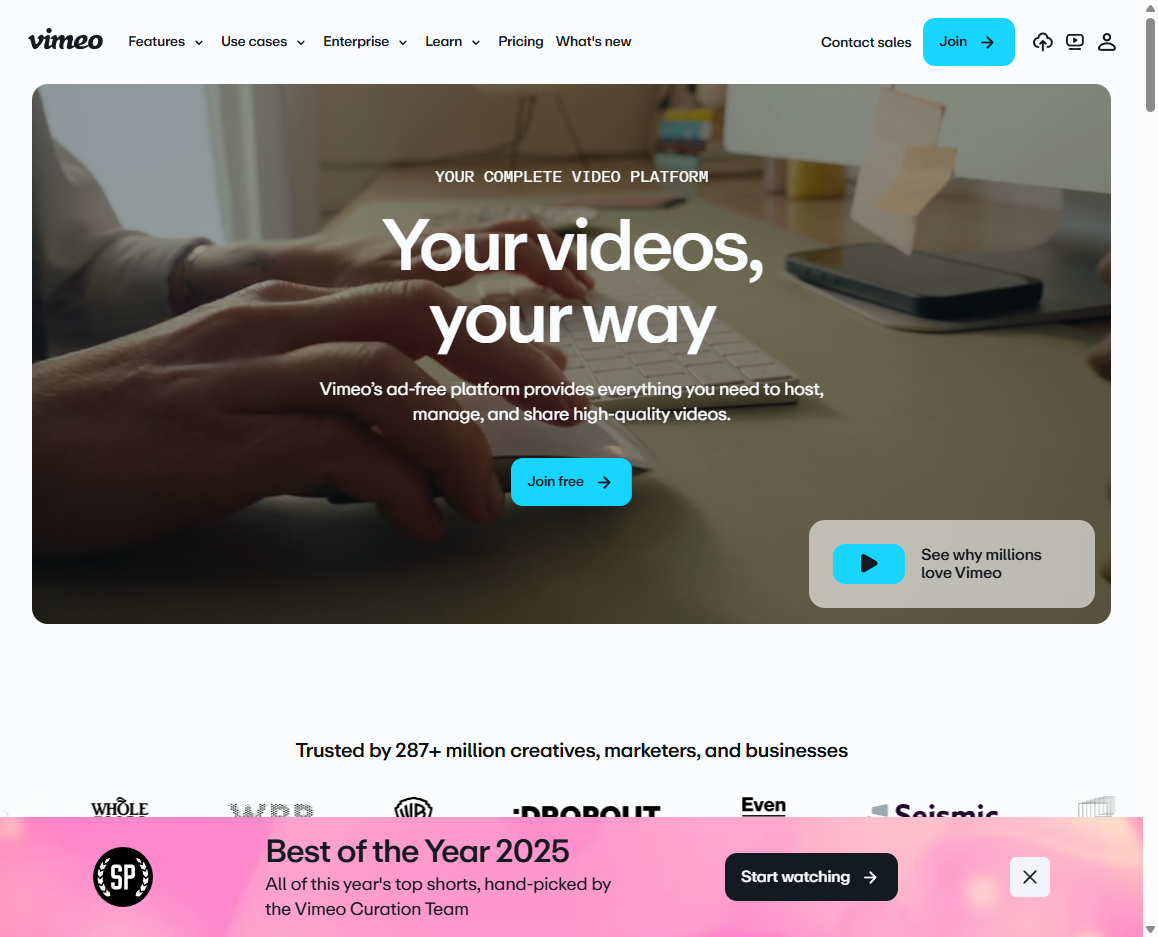
Vimeo is a video platform for creators, companies, educators, publishers, filmmakers, marketers, and teams that need to host, manage, share, embed, stream, analyze, and monetize video. Founded in 2004, it became known as a cleaner creator-focused alternative to mass video sites, then shifted toward subscription software, enterprise video tools, branded players, privacy controls, live streaming, OTT distribution, and AI-assisted production workflows.
What Vimeo is
Vimeo is a video hosting and software platform. On Vimeo.com, people upload videos, control playback settings, embed videos on other sites, share private links, stream live events, organize video libraries, collaborate on edits, track analytics, and publish video experiences without relying only on social feeds.
Creator-first roots
Vimeo emerged in the mid-2000s as online video was becoming easier to upload and watch. It built a reputation among filmmakers, designers, animators, musicians, and creative teams that wanted higher-quality presentation, fewer distractions, and a more portfolio-like environment than many mainstream video-sharing sites offered.
Hosting and embeds
One of Vimeoโ€s durable strengths is controlled embedding. A business or artist can place a video on a website, choose player appearance, set privacy rules, restrict domains, add captions, and avoid the feeling that viewers have been pulled into a separate social platform. That makes Vimeo useful for portfolios, landing pages, courses, events, and client review.
Business video tools
Vimeo moved beyond public video discovery into software for organizations. Its tools cover team libraries, brand controls, review workflows, screen recording, webinars, live streaming, video analytics, lead capture, security settings, and integrations. The customer is often a team that needs video infrastructure, not only an audience-seeking creator.
Monetization and OTT
Vimeo also supports paid and owned video experiences, including subscription or rental-style streaming, branded video sites, and distribution tools for creators or organizations that want more control than a standard social channel provides. This matters for educators, publishers, fitness brands, film distributors, and niche media businesses.
AI and automation
Like many media software companies, Vimeo has been adding AI-assisted workflows for tasks such as editing support, translation, search, captions, summaries, and faster production. The challenge is to make video creation and management easier without weakening authorship, rights management, privacy, or trust in the final media.
Rise and reinvention
Vimeo rose as a respected alternative to the scale and advertising culture of YouTube. Over time, it stopped trying to win the biggest consumer attention contest and leaned into paid tools for creators and businesses. The 2025 acquisition by Bending Spoons marked another reinvention point, taking Vimeo private after years as a public company.
Why it matters
Vimeo matters because not every video belongs in a public feed optimized for ads, recommendations, and virality. Many videos need a reliable player, clean presentation, privacy, collaboration, brand control, accessibility, analytics, and distribution across a creatorโ€s or companyโ€s own spaces.