Grammarly
Grammarly is a popular AI writing assistant website and app that helps people check grammar, spelling, tone, clarity, style, rewrites, citations, and writing quality across many apps and websites.
What Grammarly is
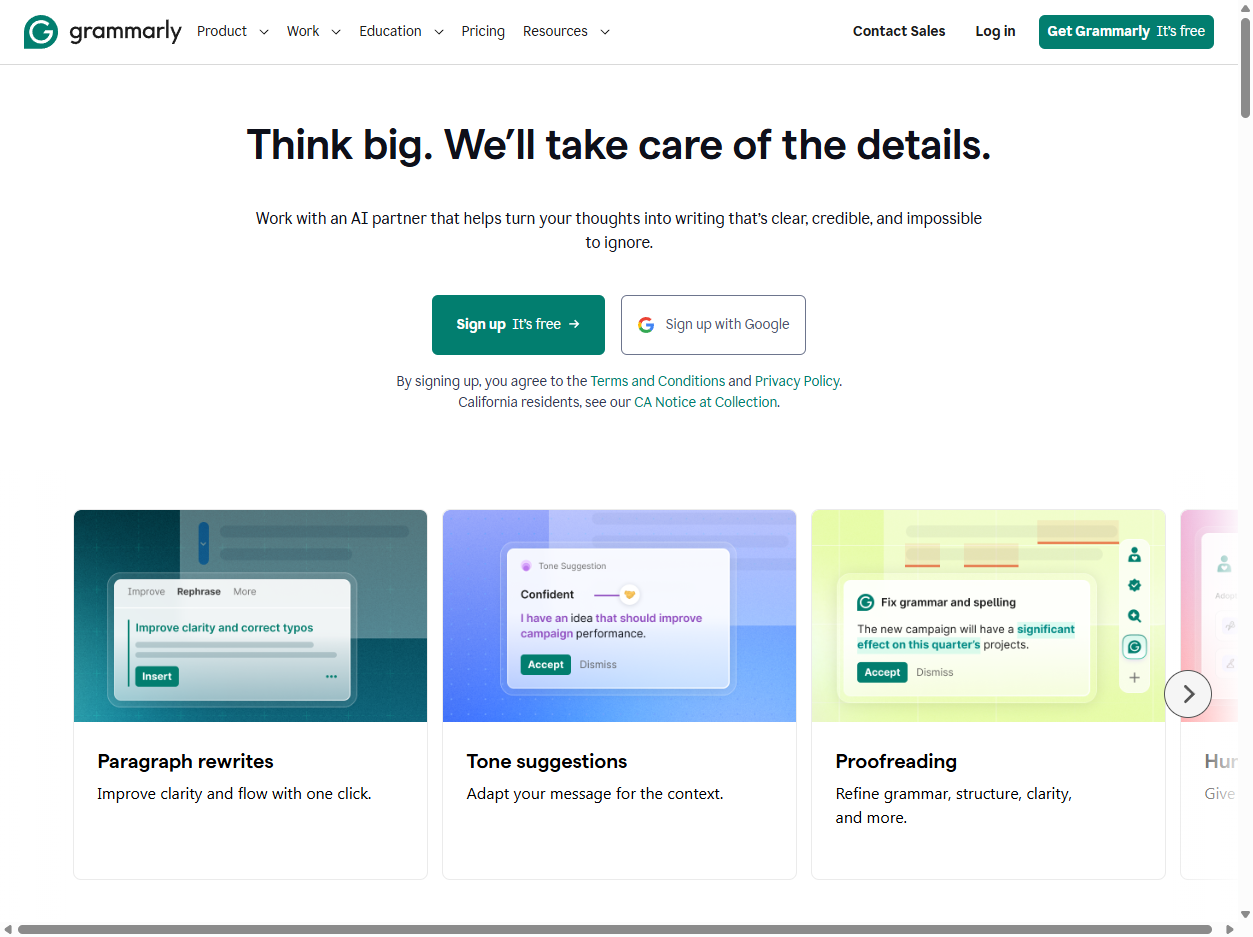
Grammarly is an AI writing assistant for checking and improving written communication. On Grammarly.com, people can use tools for grammar, spelling, tone, clarity, rewriting, generative drafting, plagiarism checks, AI detection, citations, and writing support across documents, browsers, email, and workplace apps. The official Grammarly mobile app is available on the App Store and Google Play.
.svg)

From corrections to assistance
Grammarly became familiar as a tool that caught mistakes while someone typed. Its role has expanded from spelling and punctuation corrections into style suggestions, tone rewrites, audience-aware feedback, brand guidance, and AI-generated drafts. That shift changed it from a proofreader into a broader writing workflow layer.
Where it works
Grammarly emphasizes that it works across many web and desktop apps rather than only inside its own editor. Its AI writing assistant page lists examples such as Google Docs, Microsoft Word, Gmail, Outlook, Slack, Salesforce, PowerPoint, LinkedIn, Teams, Google Sheets, Zendesk, and Jira. The value is partly that feedback appears where the writing already happens.
Writing suggestions
The core experience is a suggestion panel that can flag grammar, spelling, punctuation, clarity, concision, tone, formality, and style issues. Users can accept, ignore, or revise suggestions. That matters because writing assistance is most useful when it helps the writer make a decision, not when it silently rewrites everything.
Generative AI and controls
Grammarly now includes generative AI features for brainstorming, outlines, rewrites, email replies, summaries, and personalized writing help. Its official AI writing page also discusses controls for administrators, including whether generative AI is enabled for teams or learning institutions, and describes data and security practices around AI features.
Superhuman chapter
Grammarly's own support page says Grammarly is now part of Superhuman. The product name Grammarly continues to be used for writing help, while the broader company direction points toward AI productivity agents across apps. That makes Grammarly both a familiar writing assistant and part of a wider platform strategy.
Trust and tradeoffs
Grammarly can improve clarity and catch errors, but it can also over-smooth a writer's voice, make suggestions that do not fit the context, or create confusion in academic settings where AI assistance rules vary. Users still need to review suggestions, understand privacy settings, and follow the policies of their school, workplace, or publication.
Why it matters
Grammarly matters because writing now happens everywhere: email, chat, documents, support tickets, social posts, sales notes, and school assignments. A tool that sits across those surfaces can change not only correctness, but also tone, confidence, speed, accessibility, and the way people think about AI help in everyday communication.
WHOIS domain data
Data pulled: May 24, 2026View current WHOIS record
- Domain
- grammarly.com
- IP address
- 18.154.227.38
- Registrar
- GoDaddy.com, LLC
- WHOIS server
- whois.godaddy.com
- Referral URL
- http://www.godaddy.com
- Created
- July 1, 2009
- Updated
- July 2, 2023
- Expires
- July 1, 2026
- Nameservers
- ns-1221.awsdns-24.org (205.251.196.197); ns-1588.awsdns-06.co.uk (205.251.198.52); ns-835.awsdns-40.net (205.251.195.67); ns-422.awsdns-52.com (205.251.193.166)
- Domain status
- clientDeleteProhibited; clientRenewProhibited; clientTransferProhibited; clientUpdateProhibited
- DNSSEC
- unsigned
- Registrant name
- Registration Private
- Registrant organization
- Domains By Proxy, LLC
- Registrant location
- Tempe, Arizona, US
- Contact privacy
- Registrant and technical contact details are handled through Domains By Proxy, LLC and GoDaddy contact forms.