Kagi
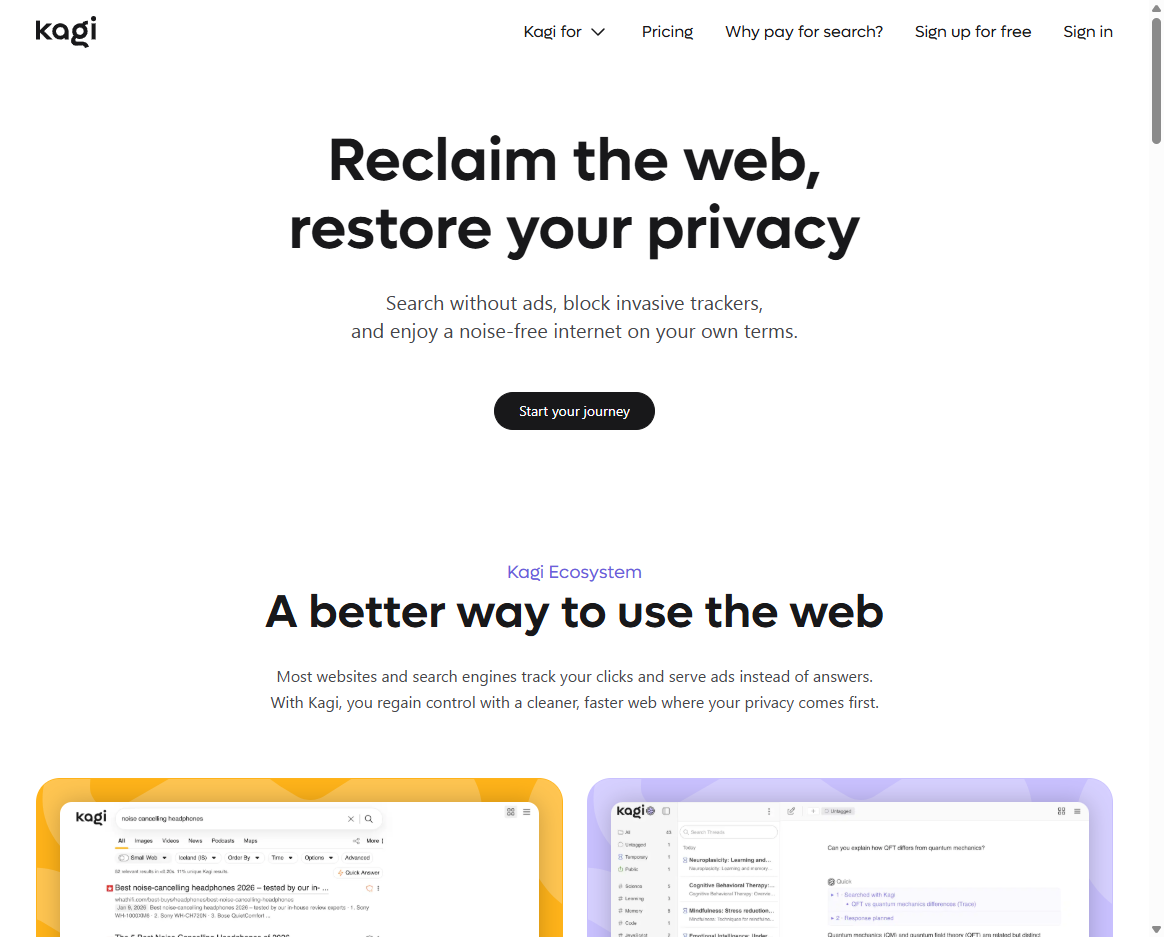
Kagi is a paid, ad-free search engine from Kagi Inc. It is built around a user-funded model that tries to align search quality with subscribers rather than advertisers, while adding privacy tools, ranking controls, AI features, and the Orion browser ecosystem.
What Kagi is
Kagi is a paid search engine and web tools company. Its main product, Kagi Search at Kagi.com, offers web results without ads or sponsored listings. The company also builds Orion Browser, Kagi Assistant, translation, summarization, news, and small-web tools, but search is the center of its identity.
User-funded search
Kagi's most important difference is the business model. Instead of selling attention to advertisers, it asks users to pay directly. That changes the incentives: a search engine funded by subscribers has a clearer reason to reduce clutter, avoid clickbait, and prioritize the user's answer over ad inventory.
No ads, fewer trackers
Kagi presents itself as ad-free and tracker-free. Its docs say Kagi Search downranks sites with many ads and trackers while promoting sites with little or no advertising. This is not only a privacy claim; it is also a ranking philosophy about what kind of web pages deserve more visibility.
Search sources and ranking
Kagi is not simply a single crawler with one fixed index. It combines results and ranking signals from multiple sources, then adds its own ranking layer, interface choices, filters, and customization tools. That hybrid approach lets Kagi focus on product quality and control without needing to match Google or Bing's infrastructure by itself.
Lenses and personalization
Kagi lets users shape results through features such as lenses, site ranking controls, blocks, pins, and shortcuts. This kind of personalization is different from hidden behavioral profiling. The user can intentionally tell the engine what to favor or avoid, which makes ranking feel more like a tool and less like a black box.
Rise and differentiation
Kagi rose as frustration grew around SEO spam, tracking, ads, and generic search results. It did not try to win by being free. It made a sharper bet: enough people would pay for cleaner search if the product saved time and felt trustworthy. That makes Kagi part search engine, part subscription productivity tool, and part protest against the ad-funded web.
AI and the Kagi ecosystem
Kagi also offers AI features such as Assistant, FastGPT, and summarization. The company frames these as opt-in tools under user control rather than replacements for search. Its broader ecosystem, including Orion Browser, gives Kagi more ways to shape the web experience around privacy, speed, and fewer distractions.
Why it matters
Kagi matters because it tests whether search can work as a paid utility instead of an advertising marketplace. If users are willing to pay, search engines can optimize for time, trust, privacy, and result quality in ways that ad-supported engines may struggle to match. Its challenge is scale: paid search must be good enough that people keep choosing it when free alternatives are everywhere.