Kickstarter
Kickstarter is a crowdfunding platform where creators raise money for creative projects by asking backers to pledge support before the work exists or ships. Launched on April 28, 2009, it became a major home for games, design products, films, music, comics, art, publishing, technology, and community-backed ideas, using an all-or-nothing funding model that helps creators test demand while giving supporters a way to help projects come to life.
What Kickstarter is
Kickstarter is a website where creators present projects and ask the public to pledge money toward a funding goal. On Kickstarter.com, a campaign page usually explains the idea, budget, timeline, risks, rewards, creator background, and updates that backers can follow before and after the campaign ends. The official Kickstarter app is available on the App Store and Google Play.
.svg)

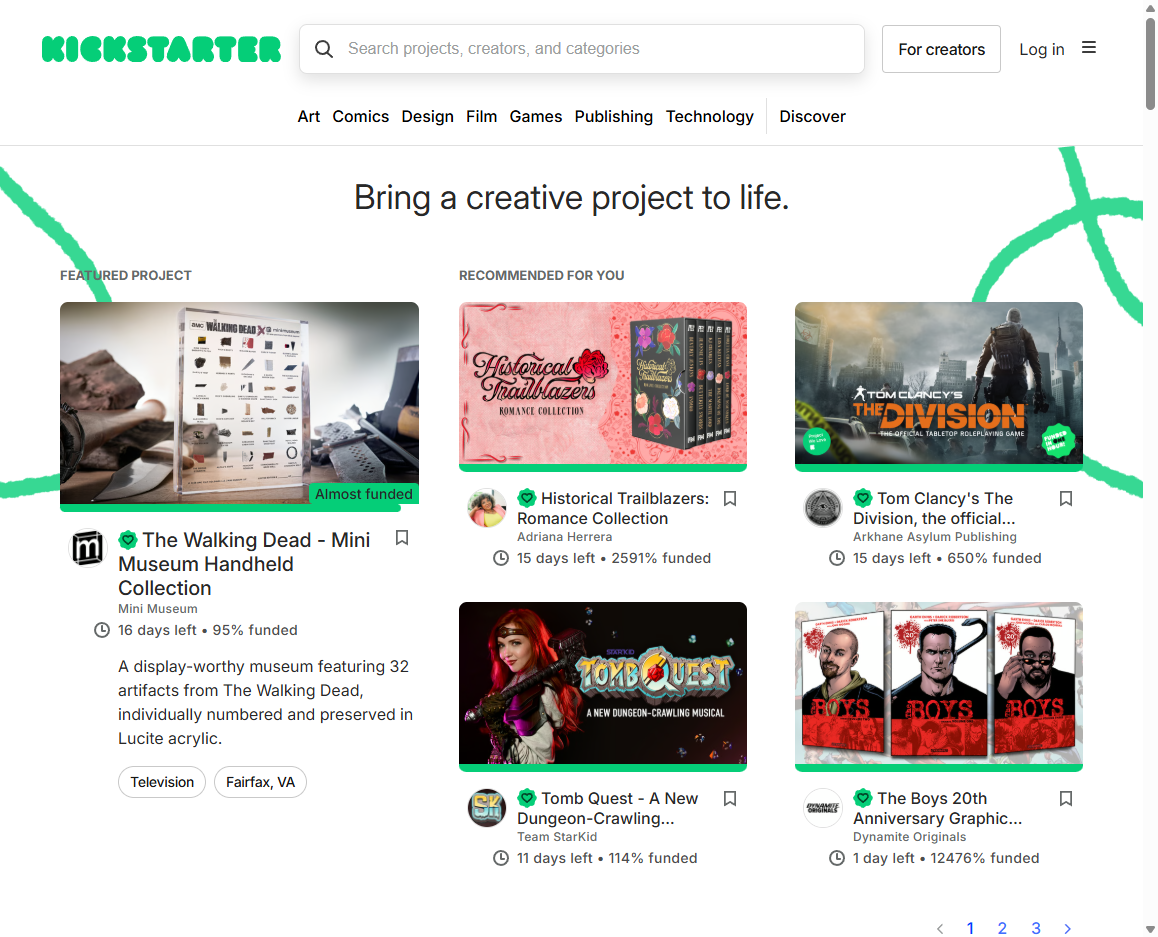
Creative project focus
The platform is built for projects, not general charity or open-ended fundraising. Its categories include areas such as games, design, technology, film, music, publishing, comics, art, food, theater, and photography. That focus gives Kickstarter a different identity from donation, investment, or personal fundraising sites.
All-or-nothing funding
Kickstarterโ€s signature mechanism is all-or-nothing funding. If a project reaches its goal before the deadline, backers are charged and the creator receives funds after fees. If it misses the goal, pledges are not collected. This creates urgency and reduces the chance that creators must attempt a project with only a fraction of the needed budget.
Rewards and backers
Backers are not simply buyers in a normal store. They may receive rewards such as a finished product, a game copy, a print, a book, a thank-you credit, early access, special editions, or behind-the-scenes updates. The relationship mixes pre-order, patronage, community participation, and risk-taking.
Campaign trust
A good campaign has to make a promise believable. Creators need prototypes, budgets, production plans, realistic shipping estimates, clear risks, and honest updates. Backers need to understand that a successful campaign is not a guarantee that the final thing will arrive on time, match expectations, or avoid manufacturing problems.
Public benefit corporation
In 2015, Kickstarter became Kickstarter PBC, a public benefit corporation. That status reflects a stated mission to support creative work, not only maximize shareholder returns. It also gives the company a public identity tied to arts, culture, independent creation, and long-term trust in the platform.
Rise and pressure
Kickstarter rose by giving independent creators a way to test demand and raise production money from fans instead of asking publishers, studios, retailers, or investors first. Its pressure points include failed fulfillment, rising marketing costs, repeat professional campaigners, platform competition, manufacturing shocks, and backers who expect store-like reliability from risky early-stage projects.
Why it matters
Kickstarter matters because it changed how creative work can begin. It let audiences vote with pledges before a product, film, book, game, or design object exists, making demand visible early and giving creators a path around traditional gatekeepers while preserving some of the uncertainty that makes new projects difficult.
WHOIS domain data
Data pulled: May 24, 2026View current WHOIS record
- Domain
- kickstarter.com
- IP address
- 104.18.38.159
- Registrar
- NameCheap, Inc.
- WHOIS server
- whois.namecheap.com
- Referral URL
- http://www.namecheap.com
- Created
- December 15, 1998
- Updated
- November 7, 2022
- Expires
- December 14, 2027
- Nameservers
- isaac.ns.cloudflare.com (173.245.59.177); anastasia.ns.cloudflare.com (162.159.38.227)
- Domain status
- clientTransferProhibited