Last.fm
Last.fm is a popular music tracking and recommendation website built around scrobbling, the practice of recording what people listen to and turning it into profiles, charts, and discovery data.
What Last.fm is
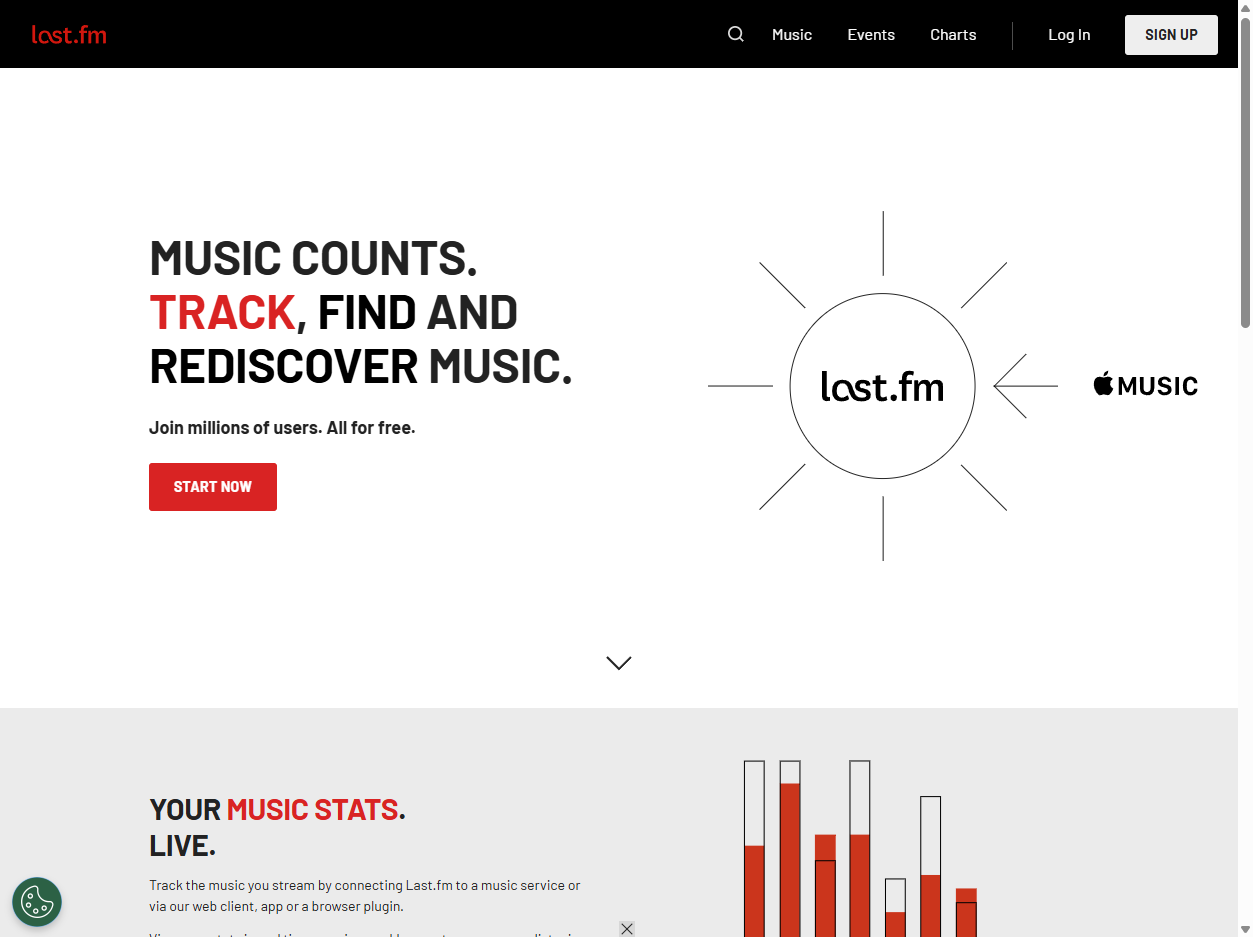
Last.fm is a music tracking, recommendation, and profile website centered on listening history. On Last.fm, users can record what they play, view artist and track charts, explore music pages, compare taste, follow other listeners, and build a long-term record of their music habits. The official Last.fm app is available on the App Store and Google Play.
.svg)

Scrobbling
Scrobbling is the word Last.fm uses for automatically tracking music plays and adding them to a profile. A scrobble can come from a connected streaming service, media player, desktop app, mobile app, browser extension, or another tool that sends listening data to Last.fm.
Profiles and charts
A Last.fm profile turns listening history into visible patterns: recent tracks, top artists, top albums, top tracks, weekly reports, timelines, and personal charts. The appeal is partly memory and partly analysis, because a profile shows what someone actually played rather than what they think they listened to.
Recommendations and discovery
Last.fm uses listening data, artist pages, tags, charts, similar-artist relationships, and community activity to support music discovery. It does not need to be the place where every song is streamed; its value often comes from connecting listening across services into one history.
Tags and music knowledge
Last.fm has long used tags and community-contributed metadata to describe music. Tags can identify genres, moods, scenes, decades, countries, instruments, or fan-created categories, giving the site a discovery layer that is messier but often more human than fixed catalog metadata.
APIs and connected apps
The Last.fm API lets developers build tools that read music information, access user libraries, and submit scrobbles. This helped make Last.fm data useful beyond the site itself, from desktop players and browser scrobblers to visualizers, statistics tools, and personal music dashboards.
Rise, fall, and persistence
Last.fm was once strongly associated with social music discovery and internet radio, then became less central as streaming platforms built their own recommendation systems. Even so, scrobbling persisted because no single streaming service gives users the same cross-platform, long-term music diary.
Why it matters
Last.fm matters because it made listening history feel like a personal archive. It showed that music taste is not only what people buy, stream, or say they like, but a pattern that can be collected over years and used for memory, discovery, identity, and community.
WHOIS domain data
Data pulled: May 24, 2026View current WHOIS record
- Domain
- last.fm
- IP address
- 34.96.123.111
- WHOIS lookup status
- Who.is loaded the domain page, but the raw FM WHOIS response displayed "Error validating query."