SoundCloud
SoundCloud is an audio platform where musicians, DJs, podcasters, labels, fans, and communities upload, share, stream, comment on, promote, and discover music and other sounds. Founded in Berlin in 2007, it became especially important for independent artists and scenes that wanted a fast public place to publish tracks, build audiences, test ideas, and connect directly with listeners before or outside traditional music industry channels.
What SoundCloud is
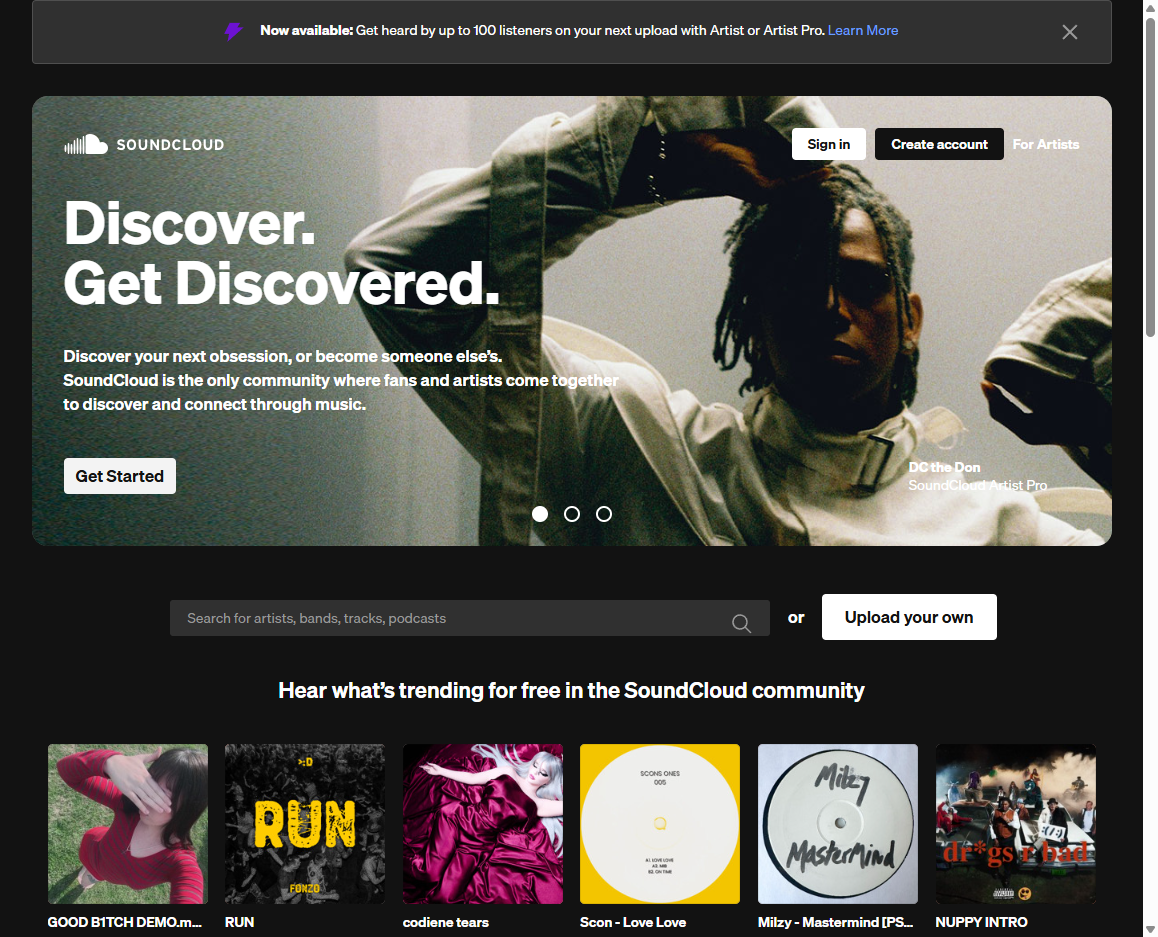
SoundCloud is a music and audio platform built around uploading and sharing sounds. On SoundCloud.com, a creator can publish a track, podcast, DJ mix, demo, or experimental recording, while listeners can stream it, like it, repost it, comment on specific moments, follow the creator, or add it to playlists. The official SoundCloud app is available on the App Store and Google Play.
.svg)

Upload-first culture
SoundCloud became influential because it lowered the friction between making audio and putting it online. Instead of waiting for label approval, physical distribution, or polished release cycles, artists could upload work quickly and let scenes, blogs, friends, and fans react in public.
Discovery and scenes
The platform helped many niche communities form around electronic music, hip-hop, remixes, bedroom pop, local scenes, and experimental sounds. Reposts, follows, tags, playlists, embeds, and comments made discovery feel social, with listeners often finding tracks through creators and communities rather than through official charts.
Comments inside the waveform
One of SoundCloudโ€s signature features is timed commenting. Listeners can leave reactions at particular moments in a track, turning a waveform into a shared listening space. That small interface choice made feedback feel immediate and helped creators see which drops, hooks, jokes, transitions, or lyrics caught attention.
Creator business tools
SoundCloud now mixes social listening with business tools for artists. SoundCloud for Artists offers distribution, monetization, analytics, promotion, and payout features. This gives independent musicians a path from uploading a track to tracking audience response and sending music to other services.
Fan-powered royalties
SoundCloud has promoted a fan-powered royalty model for eligible monetized artists. Instead of pooling revenue across the entire platform and paying by total market share, the model links a listenerโ€s subscription or ad revenue more directly to the artists that listener actually plays.
Rise and pressure
SoundCloud rose as the place where unfinished, independent, and scene-driven music could travel quickly. Its pressure comes from the cost of hosting huge amounts of audio, competition from Spotify, YouTube, TikTok, Apple Music, and Bandcamp, and constant tension between being a free discovery network and a sustainable creator business.
Why it matters
SoundCloud matters because it changed who could release music into public circulation. It gave independent artists, DJs, producers, and listeners a shared space where songs could spread before radio play, playlist placement, label deals, or formal distribution caught up.
WHOIS domain data
Data pulled: May 24, 2026View current WHOIS record
- Domain
- soundcloud.com
- IP address
- 52.84.150.35
- Registrar
- Gandi SAS
- WHOIS server
- whois.gandi.net
- Referral URL
- http://www.gandi.net
- Created
- July 25, 2005
- Updated
- May 8, 2026
- Expires
- June 8, 2027
- Nameservers
- ns-1745.awsdns-26.co.uk (205.251.198.209); ns-799.awsdns-35.net (205.251.195.31); ns-56.awsdns-07.com (205.251.192.56); ns-1445.awsdns-52.org (205.251.197.165)
- Domain status
- clientTransferProhibited
- Registrant contact
- Name redacted for privacy; organization SoundCloud Global Limited & Co. KG; address redacted for privacy, DE
- Registrant email
- 678de9d50fd4aae8db722f8e4fe08fd8-23938965 [at] contact [dot] gandi [dot] net
- Admin contact
- Name, organization, address, phone, and fax redacted for privacy; email 5711304f83e58271642f3b09e52ebfc3-1431577 [at] contact [dot] gandi [dot] net
- Tech contact
- Name, organization, address, phone, and fax redacted for privacy; email 5711304f83e58271642f3b09e52ebfc3-1431577 [at] contact [dot] gandi [dot] net