Mozilla
Mozilla is a technology organization and website best known for Firefox, open-source web software, privacy-focused products, developer resources, and advocacy for an open and trustworthy internet.
What Mozilla is
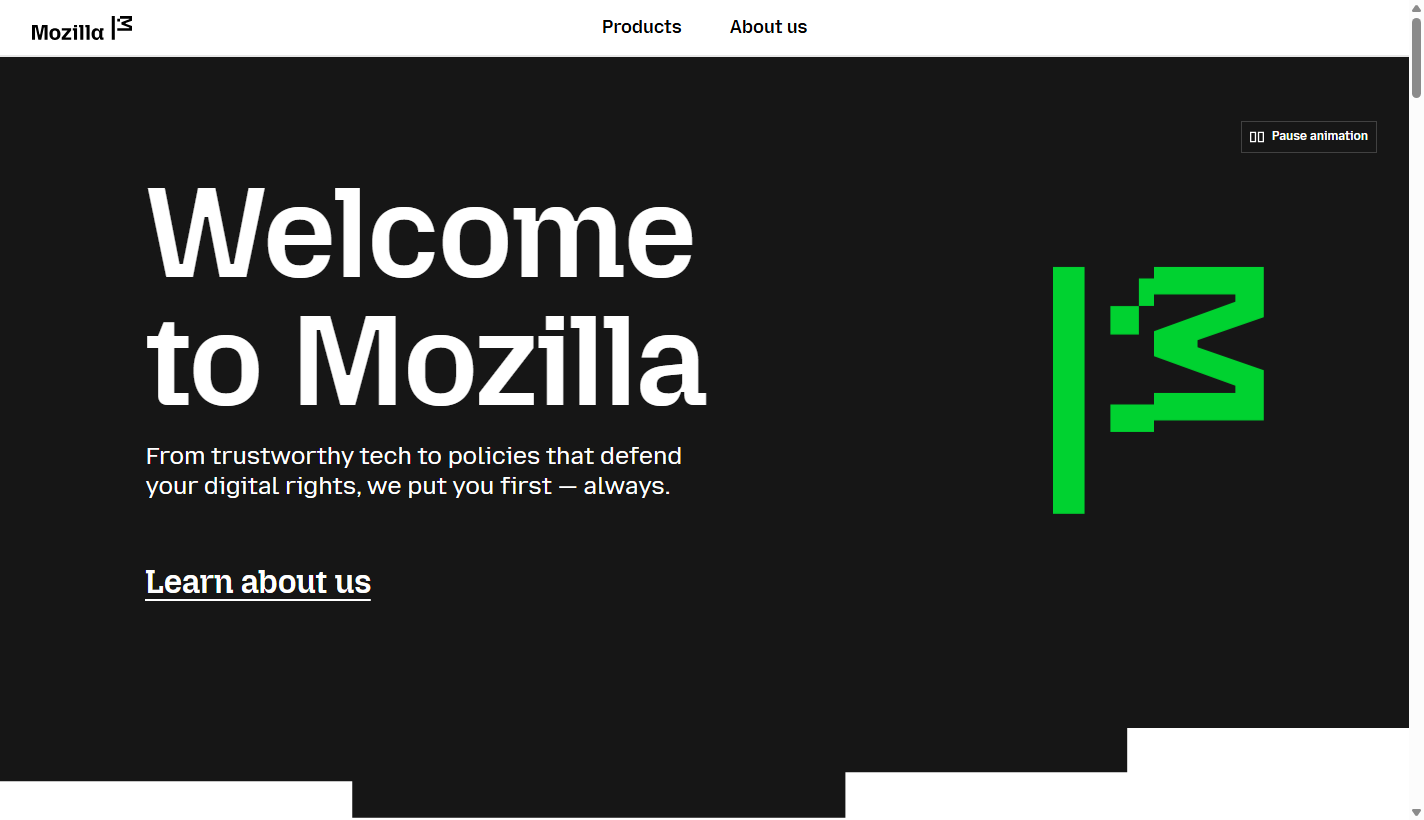
Mozilla is a technology organization and public website focused on web products, privacy, digital rights, and open internet advocacy. On Mozilla.org, visitors can find Firefox, Mozilla VPN, Mozilla Monitor, Firefox Relay, MDN Plus, Thunderbird links, policy work, foundation projects, and information about Mozillaโ€s mission. Official Firefox mobile listings are available as Firefox: Private Web Browser on the App Store and Firefox on Google Play.
.svg)

Firefox and browser choice
Firefox is the product most people associate with Mozilla. It matters because web browsers shape privacy settings, extension systems, rendering engines, search defaults, web standards, and the daily experience of using the internet. Mozillaโ€s browser work has often been framed as a counterweight to more centralized browser control.
Products beyond the browser
Mozillaโ€s website presents a broader product family: privacy and security tools, developer services, email and communication projects, AI-related experiments, advertising work, and learning resources. These products are not all equally prominent, but together they show Mozilla trying to build a portfolio around trust, user agency, and web utility.
Foundation, company, and mission
Mozilla is unusual because it combines a mission-driven foundation with product and business operations. That structure lets it run campaigns, research, grantmaking, and advocacy while also funding software development and services that need engineering, marketing, partnerships, and revenue.
Rise, browser wars, and reinvention
Mozillaโ€s story is tied to the browser wars. It grew from open-source browser work connected to Netscape, helped shift the web away from one-browser dominance with Firefox, and later faced pressure as Chrome became dominant. Since then, Mozilla has had to keep Firefox relevant while expanding into privacy services, developer tools, policy work, and new web debates.
Web standards and developer culture
Mozilla has long been connected to standards-based web development. Its developer documentation and engineering work helped many people learn browser APIs, CSS, JavaScript, accessibility, and compatibility practices. Even when users do not visit Mozilla directly, its influence can show up in how developers understand the open web.
Why it matters
Mozilla matters because the web needs institutions that argue for interoperability, competition, privacy, and public-interest technology. Its influence is not only measured by browser market share; it is also visible in standards debates, developer education, policy work, and the continuing idea that the internet should not be defined only by a few large platforms.
WHOIS domain data
Data pulled: May 24, 2026View current WHOIS record
- Domain
- mozilla.org
- IP address
- 35.190.14.201
- Registrar
- MarkMonitor Inc.
- WHOIS server
- whois.markmonitor.com
- Referral URL
- http://www.markmonitor.com
- Created
- January 24, 1998
- Updated
- December 22, 2024
- Expires
- January 23, 2027
- Nameservers
- ns1-240.akam.net (193.108.91.240); ns4-64.akam.net (84.53.139.64); ns5-65.akam.net (184.85.248.65); ns7-66.akam.net (96.7.49.66)
- Domain status
- clientDeleteProhibited; clientTransferProhibited; clientUpdateProhibited
- Registrant contact
- DNS Admin, Mozilla Corporation; 149 New Montgomery Street, 4th floor, San Francisco, CA 94105, US; phone +1.6509030800; email hostmaster [at] mozilla [dot] com
- Technical contact
- DNS Admin; phone +1.6509030800; email hostmaster [at] mozilla [dot] com
- DNSSEC
- unsigned