Rotten Tomatoes
Rotten Tomatoes is a movie and television review website best known for the Tomatometer, which summarizes the share of positive reviews from approved critics, and the Popcornmeter, which reflects audience ratings. The site turns criticism, fan response, trailers, editorial guides, and streaming discovery into quick signals that shape how many people decide what to watch.
What Rotten Tomatoes is
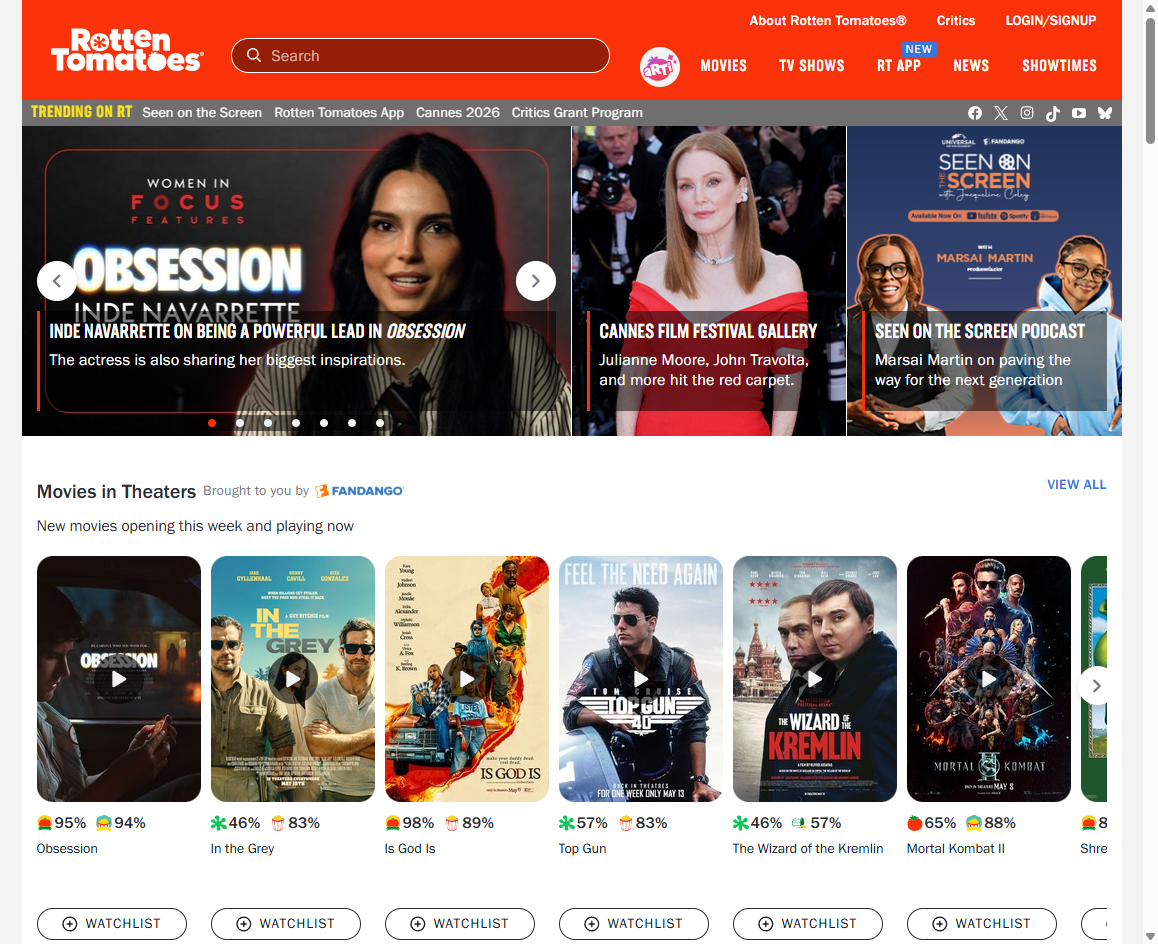
Rotten Tomatoes is a review aggregation and entertainment discovery website for movies and TV. On RottenTomatoes.com, a title page usually combines critic reviews, audience ratings, trailers, cast details, editorial links, release information, and where-to-watch context. The official Rotten Tomatoes app is available on the App Store and Google Play.
.svg)

How the Tomatometer works
The Tomatometer is not an average star rating. It is a percentage: how many approved critic reviews are counted as positive for a given film or TV season. That makes it useful for seeing broad critical consensus, but it does not tell readers how strongly critics liked or disliked a title.
Audience response
The Popcornmeter separates audience reaction from critic reaction. This matters because critics and viewers may value different things: craft, genre pleasure, franchise loyalty, novelty, nostalgia, politics, pacing, or simple entertainment. A wide gap between the two scores can become part of the public conversation around a title.
Curation and criteria
Rotten Tomatoes depends on curation. Reviews come from approved critics and publications, and the site applies rules about review eligibility, score thresholds, critic status, and when a score appears. Those rules are part of why the score feels standardized, but they also make methodology important to understand.
Discovery beyond scores
The site is more than two numbers. It publishes roundups, lists, trailers, interviews, release calendars, streaming guides, and editorial recommendations. For many users, Rotten Tomatoes is a starting point: check the score, scan a few review excerpts, compare audience reaction, then decide whether to watch.
Influence and criticism
Rotten Tomatoes can affect marketing, headlines, fan debates, and first impressions. That influence brings criticism too. A simple percentage can flatten nuanced criticism, encourage score-chasing, or make people treat consensus as quality. The site is most useful when the score leads readers into reviews, not when it replaces them.
Why it matters
Rotten Tomatoes matters because it changed how entertainment criticism travels online. It turned scattered reviews into a compact signal that search engines, trailers, ads, social feeds, and ticketing services can repeat. Whether loved or disliked, the Tomatometer became part of the modern language of movies and TV.
WHOIS domain data
Data pulled: May 24, 2026View current WHOIS record
- Domain
- rottentomatoes.com
- IP address
- 23.48.203.144
- Registrar
- MarkMonitor Inc.
- WHOIS server
- whois.markmonitor.com
- Referral URL
- http://www.markmonitor.com
- Created
- May 14, 1999
- Updated
- April 23, 2026
- Expires
- May 14, 2027
- Nameservers
- a22-67.akam.net (23.211.61.67); a13-65.akam.net (2.22.230.65); a5-66.akam.net (95.100.168.66); a4-66.akam.net (72.246.46.66); udns1.ultradns.net (204.69.234.1); udns2.ultradns.net (204.74.101.1); a2-65.akam.net (95.100.174.65); a1-42.akam.net (193.108.91.42)
- Domain status
- clientDeleteProhibited; clientTransferProhibited; clientUpdateProhibited; serverDeleteProhibited; serverTransferProhibited; serverUpdateProhibited
- Registrant contact
- Organization Versant Media, LLC; address US
- Registrant email
- Select Request Email Form at https://domains [dot] markmonitor [dot] com/whois/rottentomatoes [dot] com
- Tech contact email
- Select Request Email Form at https://domains [dot] markmonitor [dot] com/whois/rottentomatoes [dot] com