Semrush
Semrush is a popular digital marketing website for SEO research, keyword analysis, competitor intelligence, content marketing, PPC research, local marketing, and online visibility workflows.
What Semrush is
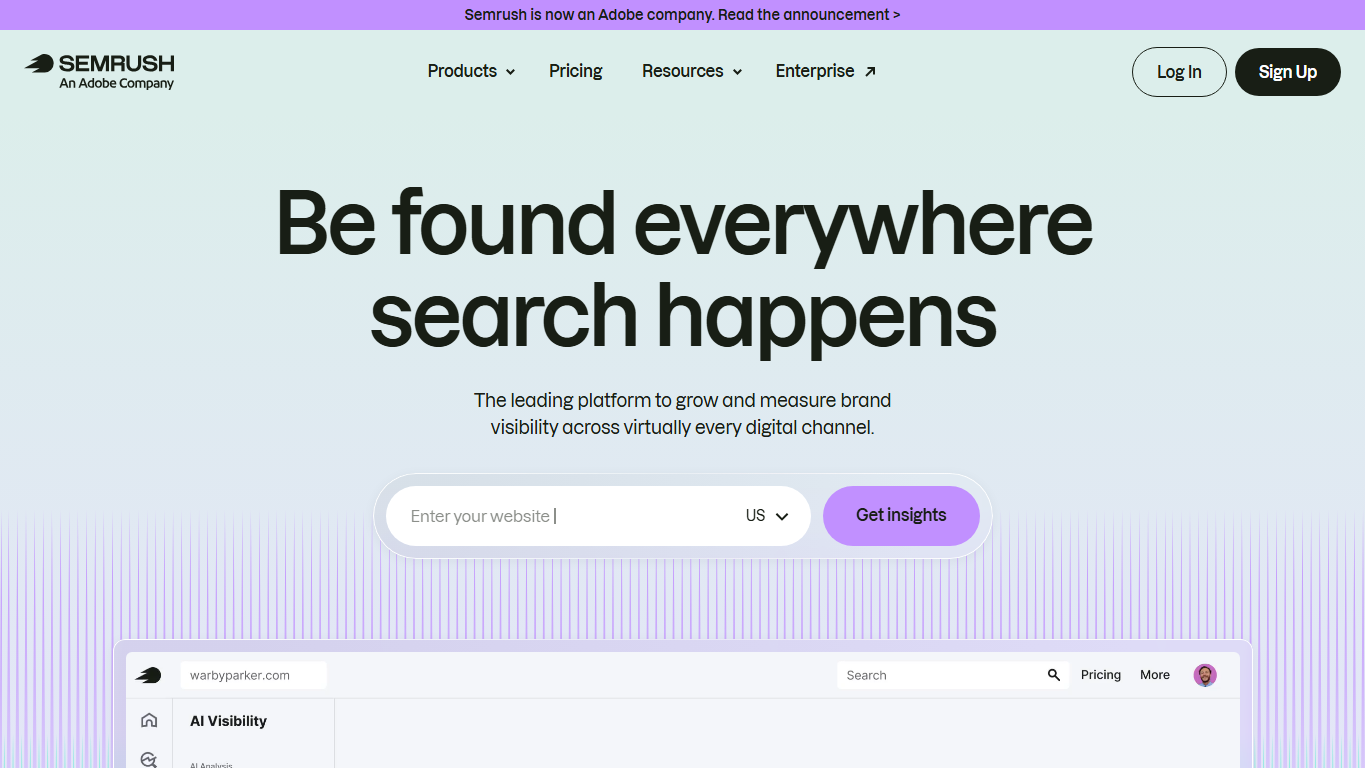
semrush.com is the official website for Semrush, a digital marketing and online visibility platform used for SEO, keyword research, competitor analysis, backlink research, content planning, PPC research, local marketing, and site auditing. The site presents Semrush's tools, pricing, feature pages, company information, learning resources, and account access. Marketers often use it when they need more structured search and competitor data than they can get from a basic website analytics report.
SEO and keyword research
Semrush is closely associated with search engine optimization. Its tools can help teams study keyword demand, ranking difficulty, search intent, current ranking pages, and opportunities for new or improved content. Keyword research is useful when it connects search demand to actual customer questions, not when it becomes a list of terms copied into pages without strategy.
Competitor and market analysis
Digital marketing teams use Semrush to compare websites, traffic estimates, ranking keywords, advertising activity, backlinks, and content patterns. Competitive data can reveal market gaps, common topics, and the level of effort needed to compete in a search category. It should be treated as directional intelligence rather than a perfect measurement of another company's private performance.
Site audits and technical checks
Semrush includes site audit and visibility tools that can flag crawl issues, broken links, duplicate content, metadata problems, performance concerns, internal linking opportunities, and other technical SEO signals. These checks help teams prioritize cleanup work, but they still need human judgment. Not every warning has the same business impact, and some fixes matter more for users than for search engines.
Content and advertising workflows
Semrush also supports content marketing, topic planning, writing workflows, paid search research, and campaign analysis. A content team might use it to identify search demand and competitor articles. A PPC team might use it to research ad copy, landing pages, or keywords. The platform is most useful when SEO, content, and advertising teams share context instead of working from separate spreadsheets.
Local and social visibility
Semrush product areas also touch local marketing and social media workflows. Local visibility work can include listings, reviews, map presence, and location-level performance. Social and content tools can help teams plan, monitor, and report on campaigns. These features make Semrush broader than a keyword database, though different teams may use only the parts that match their marketing mix.
Who uses Semrush
Semrush is used by SEO specialists, content marketers, PPC teams, digital agencies, ecommerce teams, local businesses, startup founders, marketing analysts, publishers, and in-house growth teams. A small business may use it to find search opportunities and fix site issues. A larger organization may use it for competitive intelligence, content operations, paid search research, reporting, and multi-market visibility tracking.
Pricing and setup choices
Semrush pricing depends on plan level, user seats, project limits, data access, add-ons, and the tools a team needs. A sensible setup starts with the main workflow: SEO audits, content planning, competitor tracking, local marketing, PPC research, or agency reporting. Teams should also decide which metrics are decision-making signals and which are background diagnostics.
Strengths and cautions
Semrush's strength is collecting many digital marketing research workflows into one platform. It can shorten the path from question to data for SEO and marketing teams. The caution is that visibility metrics can become a substitute for strategy. Search volume, keyword difficulty, traffic estimates, and audit scores are useful inputs, but they do not automatically prove what customers want or which work will pay off.
Why it matters
Search and digital discovery shape how people find companies, products, articles, tools, and local services. Semrush matters because it gives marketers a structured way to study that discovery layer: what people search for, who already appears, what content exists, and where a site may be weak. Used well, it turns scattered marketing questions into more testable decisions.
WHOIS domain data
Data pulled: May 20, 2026View current WHOIS record
- Domain
- semrush.com
- IP address
- 34.120.45.191
- Registrar
- MarkMonitor Inc.
- WHOIS server
- whois.markmonitor.com
- Referral URL
- http://www.markmonitor.com
- Created
- October 3, 2008
- Updated
- January 26, 2026
- Expires
- October 3, 2035
- Nameservers
- ns-cloud-e1.googledomains.com (216.239.32.110); ns-cloud-e2.googledomains.com (216.239.34.110); ns-cloud-e3.googledomains.com (216.239.36.110); ns-cloud-e4.googledomains.com (216.239.38.110)
- Domain status
- clientDeleteProhibited; clientTransferProhibited; clientUpdateProhibited; serverDeleteProhibited; serverTransferProhibited; serverUpdateProhibited
- DNSSEC
- unsigned
- Contact privacy
- Registrant organization is listed as Semrush Inc; registrant and technical contact email use MarkMonitor request forms.